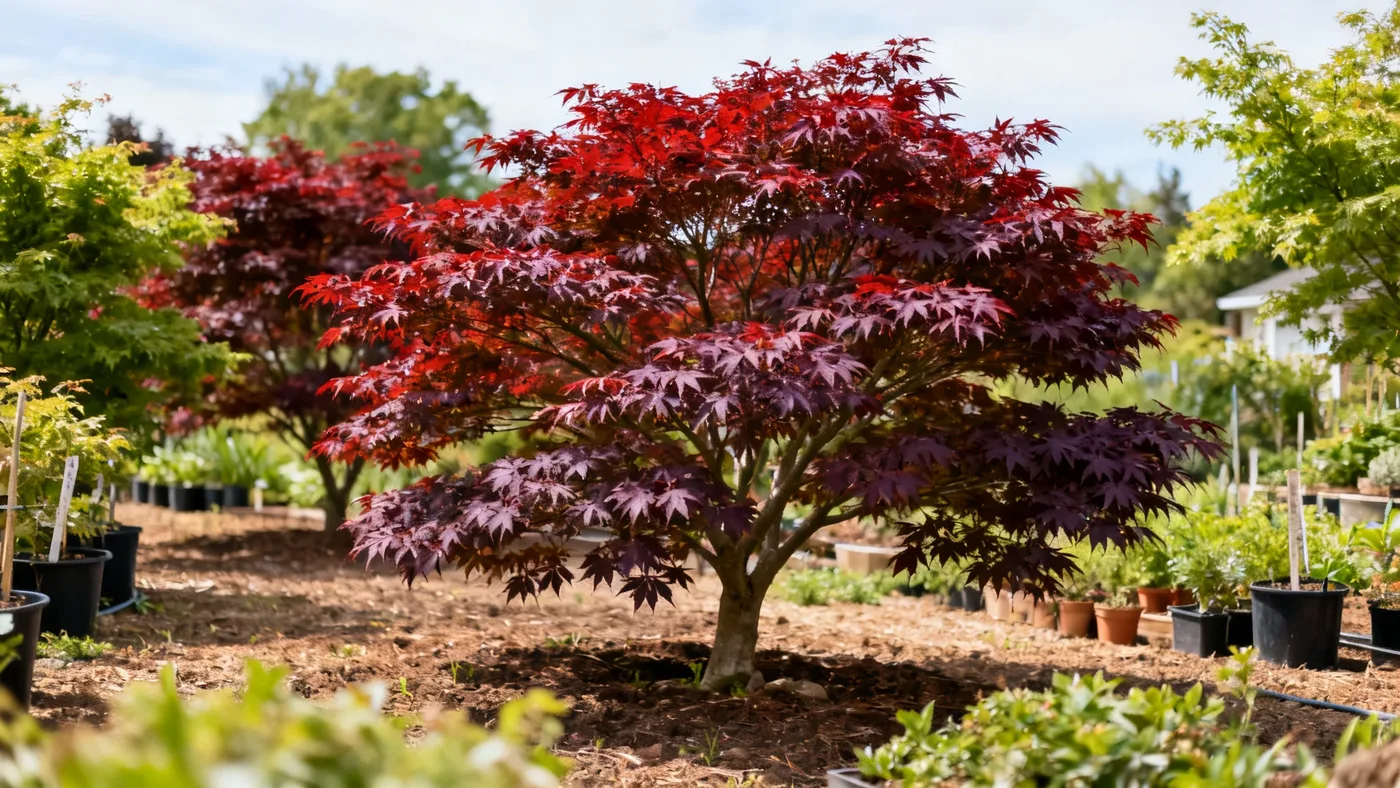
How Big Does a Japanese Red Maple Tree Get and How Fast?
Japanese red maples are prized for their elegant branching structure and vivid autumn color, but their size varies dramatically depending on cultivar and growing conditions. Understanding mature height, spread, and growth rate is essential for planning the right placement in your garden. Whether you are considering a standard upright form or a compact dwarf variety, the answers below will help you choose and site your tree successfully.
Standard Japanese Red Maple Size
How big does a Japanese red maple get?
A standard Japanese red maple typically reaches 15 to 25 feet tall at maturity, with a spread of 12 to 20 feet, creating a broad, rounded canopy. Dwarf and cutleaf cultivars stay much smaller, usually 6 to 10 feet tall with spreads of 8 to 12 feet. The exact mature size depends heavily on which cultivar you have, as some forms are bred specifically for compact growth.
What is the typical mature height and width of a Japanese red maple?
For standard upright red forms, expect a mature Japanese red maple to reach 15-25 feet in height with a 12-20 foot spread. This is the typical range for seedling-grown plants and most named red-leaf cultivars sold at a larger size. Knowing these dimensions helps you plan adequate spacing from buildings, fences, and utility lines.
Is a Japanese red maple considered a small or large tree?
A Japanese red maple is a small to medium tree by landscape standards, far smaller than native oaks or sugar maples that can exceed 50-80 feet. In most residential gardens, red maples function as specimen trees or focal points rather than shade trees. They fit well in yards where a large canopy tree would overwhelm the space and block views or light.
Dwarf and Compact Varieties
Are there smaller versions of Japanese red maples?
Yes, dwarf and weeping cultivars are available and grow to only 6 to 10 feet tall with 8 to 12 foot spreads, making them ideal for tight spaces. Named cultivars like 'Crimson Queen' (a dissectum or weeping form) were selected for restrained growth and elegant drooping branches. These smaller forms still display the vivid red foliage and graceful structure the species is known for.
What is the difference between standard and dwarf Japanese red maple sizes?
Standard upright red forms reach their full potential of 15-25 feet tall with 12-20 foot spreads over time. Dwarf and weeping cultivars top out at 6-10 feet tall with narrower spreads of 8-12 feet, taking up roughly one-third the space. If space is limited, confirm the cultivar name before you buy or ask your nursery for the expected mature size.
How big will a dwarf Japanese red maple get in my garden?
A dwarf Japanese red maple can be expected to reach 6 to 10 feet tall and 8 to 12 feet wide at full maturity. Growth rate slows after 10-15 years, when the tree stabilizes at its intended form. Even within the "dwarf" category, individual cultivars vary, so ask for the specific name and expected size when selecting a plant.
Japanese Red Maple Growth Rate
How fast do Japanese red maples grow?
Japanese red maples grow at a slow to moderate pace, typically adding 6 to 12 inches of growth per year under good conditions. Growth rate depends on soil quality, moisture consistency, and light exposure; maples in rich, well-drained soil with moderate sunlight grow faster than those under stress. Once established, a Japanese red maple may slow its growth, especially in hot or dry conditions.
What is the typical Japanese red maple growth rate per year?
You can expect a Japanese red maple growth rate of roughly 6 to 12 inches annually when the tree is young and conditions are favorable. This slow to moderate pace means a 2-3 foot nursery plant will take several years to reach 10-15 feet. Growth typically slows as the tree ages and approaches its mature size.
How long does it take for a Japanese red maple to reach full size?
A Japanese red maple reaches significant landscape size in roughly 10 to 15 years, though it may continue slow growth well beyond that timeframe. At this timeline, a standard form will be 8-15 feet tall and visibly mature with a well-formed branching structure. Full maturity and the peak red color display often come after 10-15 years of establishment in your garden.
When will my Japanese red maple stop growing?
Japanese red maples typically reach their mature height between 15 and 25 years, after which growth slows dramatically but does not always stop entirely. With a lifespan of 80-100+ years or more, the tree will remain relatively stable in size once mature. Minor new growth, twig extension, and gradual branch thickening may continue throughout its long life.
Spacing and Placement
How much space does a Japanese red maple need?
For a standard upright form, plan on 10 to 15 feet of clearance from buildings, fences, and other trees to allow full canopy development. Dwarf and weeping cultivars need less space, typically 8-12 feet of width, but still benefit from at least 6-8 feet of clearance from structures. Consider the tree's mature spread, not just its height, when choosing a planting location.
Can I plant a Japanese red maple close to my house?
A standard Japanese red maple should be placed at least 10-15 feet away from your house to avoid branch encroachment on rooflines, gutters, and siding as it matures. Dwarf varieties can be positioned slightly closer, roughly 8-10 feet away, and may even work as patio specimens or in courtyards. Always account for the mature spread (not just height) to prevent future conflicts with your home's foundation or underground utilities.
How far apart should I space multiple Japanese red maples?
If planting several Japanese red maples, space standard forms at least 10-15 feet apart to allow each tree's full canopy to develop without crowding. Dwarf or weeping types can be closer, around 6-8 feet apart, depending on the exact cultivar. Closer spacing creates a grove effect but limits individual tree development; wider spacing lets each specimen shine as a focal point.
Size and Growing Conditions
What affects how big a Japanese red maple gets?
Cultivar choice is the biggest factor in mature size, followed by soil quality, moisture consistency, and light exposure. Japanese red maples thrive in rich, well-drained loam with slightly acidic pH around 5.5-6.5 and consistent moisture, conditions that support strong growth. Poor soil, drought stress, or extreme heat can stunt growth and reduce the tree's size potential.
Does sun or shade affect the size of a Japanese red maple?
Japanese red maples grow best in full sun to part shade and can tolerate afternoon shade, especially in hot-summer climates where it prevents leaf scorch. Insufficient light may result in thinner growth and smaller canopy development; excessive heat without shade can cause stress that slows growth. For maximum size and vigor, provide full sun to morning sun with afternoon shade in regions with intense summer heat.
How does soil quality influence Japanese red maple height and width?
Soil quality directly affects growth rate and ultimate size; Japanese red maples prefer rich, organic loam that drains well but retains consistent moisture. Poor drainage leads to root rot and stunted growth, while compacted soil limits root expansion and nutrient uptake. Amending the planting hole with compost and maintaining good drainage and soil moisture supports healthy, full-size development.
Can pruning keep a Japanese red maple smaller?
Light pruning to remove dead or crossing branches will not significantly restrict size, though consistent heavy pruning can slow growth and create an unnatural form. If you need a naturally small tree, select a dwarf cultivar instead; attempting to keep a standard-form Japanese red maple artificially small through pruning often results in a misshapen specimen. For proper pruning techniques and timing, refer to our complete care guide on pruning, which covers structural pruning in late fall to midwinter dormancy to minimize sap bleeding.
Container Growing and Special Situations
Can you grow a Japanese red maple in a pot?
Yes, Japanese red maples are suitable for container growing, especially smaller or dwarf-growing selections, and they work well as patio specimens. Container-grown trees need regular watering, good drainage, and root protection in freezing winters to survive cold climates. A tree in a large pot (at least 15-20 gallons) can stay healthy for years, though it will eventually outgrow the container.
How big will a potted Japanese red maple get?
A potted Japanese red maple will grow smaller than the same cultivar planted in the ground, typically reaching 6-12 feet depending on container size and care. The restricted root space naturally limits growth, but the tree can still develop a full canopy and beautiful form over time. Even in containers, choose dwarf cultivars if you want a compact specimen under 6 feet.
Will a container-grown red maple stay smaller than one planted in the ground?
Container growing naturally restricts size compared to planting in-ground, where roots can expand freely. However, a large pot (20+ gallons) with excellent drainage and frequent feeding can support a sizable, healthy specimen. For true size control, the cultivar matters more than the container; a dwarf form in a pot will stay smaller than a standard form in the ground.
Age, Maturity, and Lifespan
How old is a mature Japanese red maple?
A Japanese red maple is generally considered mature at 15-20 years of age, when it reaches most of its full height and displays strong fall color. At this stage, the branching structure is well established and the tree functions as an attractive landscape feature. After maturity, growth continues very slowly, and the tree may live 80-100+ years with proper care.
How long does a Japanese red maple live?
With good siting and care, a Japanese red maple lives 80 to 100+ years, making it a multi-generational landscape investment. Proper drainage, consistent moisture during establishment, and minimal pruning support long life. A mature red maple that has survived 20-30 years in your garden will likely remain healthy and attractive for decades more.
Why do some Japanese red maples look smaller or larger than others of the same age?
Cultivar genetics play the largest role; a named cultivar like 'Bloodgood' or 'Fireglow' will have a narrower size range than unnamed seedling-grown stock. Growing conditions (soil, water, light, temperature) also significantly affect size; a red maple in ideal conditions grows noticeably faster and larger than one under stress. If you purchased an unnamed seedling-grown "Japanese Red Maple," your tree may show more size variation than a grafted named cultivar.
Understanding What You Have
What is inside a typical quart-size "Japanese Red Maple" from a nursery?
Most quart-size plants labeled "Japanese Red Maple" or "Atropurpureum Group" are seedling-grown rather than grafted named cultivars, meaning their exact mature size and habit can vary. Without a specific cultivar name (like 'Bloodgood' or 'Crimson Queen'), you cannot predict whether your tree will reach 15 feet or 25 feet tall. Ask the nursery whether your plant is a named cultivar or a seedling-grown selection, as this greatly affects size expectations.
Do all red-leaf Japanese maples grow to the same size?
No, red-leaf Japanese maples vary significantly in mature size depending on whether they are standard upright forms (15-25 ft) or dwarf and weeping types (6-12 ft). Specific cultivars have predictable sizes, but unnamed seedlings can range widely. When buying a red maple, confirm the expected mature size with the nursery to avoid surprises.
Quick Reference Guide
| Category | Measurement | Details |
|---|---|---|
| Standard upright height | 15-25 ft | Typical seedling-grown or named red forms |
| Standard upright width | 12-20 ft | Mature spread at full size |
| Dwarf/cutleaf height | 6-10 ft | Compact cultivars or weeping forms |
| Dwarf/cutleaf width | 8-12 ft | Smaller spread than standard types |
| Annual growth rate | 6-12 in/year | Slow to moderate under good conditions |
| Years to landscape size | 10-15 years | Reaches significant maturity in this range |
| Minimum spacing from structures | 10-15 ft (standard); 8-12 ft (dwarf) | Allows full canopy development without crowding |
| Lifespan | 80-100+ years | With proper siting and care |
| USDA hardiness zones | 5-8 | Some cultivars tolerate zone 9 with afternoon shade |
| Ideal soil pH | 5.5-6.5 | Slightly acidic, rich loam with good drainage |