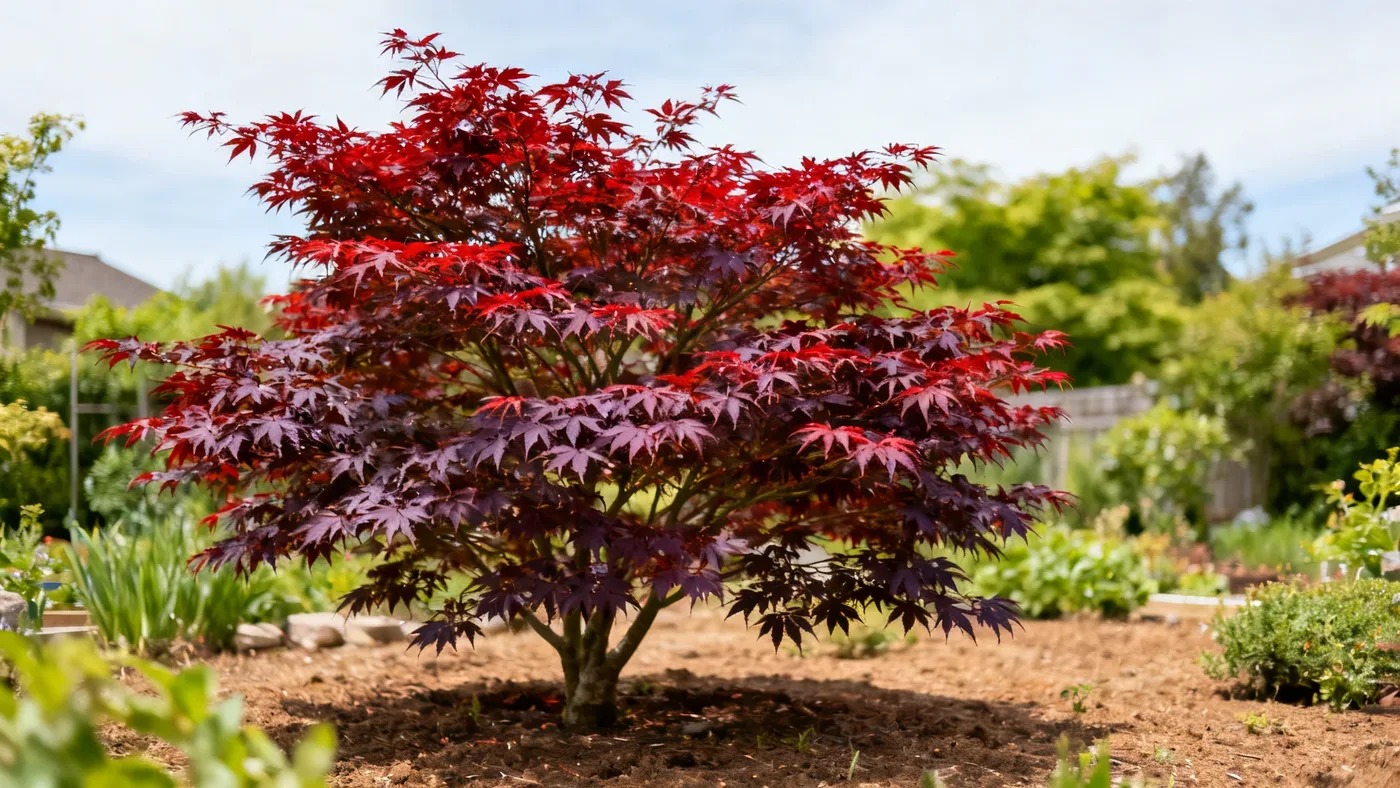
Japanese Red Maple Care Guide: Sun, Water, Soil and Pruning
Japanese Red Maple (Acer palmatum) stands out as one of the most rewarding trees to grow, with its distinctive deep red or reddish-purple palmate leaves and graceful branching structure. Whether you're working with a quart-sized seedling or an established specimen, success comes down to understanding what this tree needs: consistent moisture without waterlogging, appropriate light exposure to maintain color, slightly acidic soil rich in organic matter, and minimal but well-timed pruning. This guide walks you through every aspect of Japanese Red Maple care, from site selection to seasonal maintenance.
Table of Contents
- Choosing Your Planting Site
- Sunlight Requirements and Leaf Color
- Watering Your Japanese Red Maple
- Soil Preparation and pH Management
- Fertilizing Throughout the Year
- Pruning and Winter Dormancy
- Troubleshooting Common Problems
- Quick Reference Care Checklist
Key Takeaways
- Plant in USDA zones 5-8; zones 9 require afternoon shade and consistent moisture
- Provide full sun to part shade, but use afternoon shade in hot-summer climates to prevent leaf scorch
- Water consistently, especially during the first 2-3 years; aim for moist (not soggy) soil
- Use rich, well-drained loam amended with organic matter at slightly acidic pH (5.5-6.5)
- Prune only during late fall through midwinter dormancy to minimize sap bleeding
- Expect slow to moderate growth of 6-12 inches per year
Choosing Your Planting Site
Site selection is the foundation for a healthy, long-lived Japanese Red Maple. Before planting, walk your property and observe light patterns throughout the day, note soil drainage in different areas, and check proximity to structures and utilities.
Space standard upright red forms 10-15 feet away from other trees and structures to allow for mature width of 12-20 feet. Dwarf or weeping cultivars need less room, typically 8-12 feet wide, so adjust spacing accordingly. Planting too close to buildings, patios, or fences forces the tree into an awkward shape and reduces air circulation, which can invite fungal issues.
Timing matters. Plant in early spring or fall, avoiding the heat of summer. A spring planting gives young roots time to establish before the following winter. Fall planting works well in zones 5-7, allowing roots to settle during dormancy. Never plant in peak summer heat, which stresses young trees and makes it harder to maintain the moisture they need during establishment.
When you receive your tree, whether a quart-sized seedling or a larger specimen, examine the root ball. If roots circle the soil surface (rootbound), gently tease them apart before planting. Dig a hole as deep as the root ball and 2-3 times as wide. Place the tree so the top of the root ball sits level with the ground surface. Backfill with amended soil, firm gently, and water thoroughly. A 2-3 inch mulch layer around the base helps retain moisture, but keep it a few inches away from the trunk to prevent rot.
Sunlight Requirements and Leaf Color
Japanese Red Maple performs in full sun to part shade, but the relationship between light and color is nuanced. In ideal conditions, full sun deepens red foliage and creates the vivid color many gardeners seek. However, in hot-summer climates (zones 8-9 or areas with intense afternoon heat), full sun can scorch leaf edges and fade color, making afternoon shade essential.
Think of afternoon shade as a buffer. If you live where temperatures regularly exceed 85°F in summer, position your maple so it receives morning sun (which powers photosynthesis and color development) but gets shade from harsh 2-6 pm sun. This preserves the rich leaf color while preventing damage.
Deep shade (under a dense tree canopy) should be avoided in most regions. Trees in deep shade tend to develop thinner, greener foliage instead of the rich reds you planted for. That said, some cultivars planted in part shade or afternoon shade still display good color, particularly in northern zones where summer heat is moderate. Variable sunlight exposure is one reason why the true color of an unnamed seedling-grown red selection, often sold at quart size, may not fully emerge until year 2 or 3.
Watering Your Japanese Red Maple
Water is where many growers succeed or struggle with Japanese Red Maple. The tree requires moderate, consistent moisture. This means soil that is moist to the touch but never waterlogged or compacted.
During the first 2-3 years after planting, your priority is establishing deep roots. Water deeply 1-2 times per week during dry periods, soaking the soil 8-12 inches deep. This depth encourages roots to grow downward rather than clustering near the surface. A hand-held hose, soaker hose, or drip irrigation works better than frequent, shallow sprinkles. Let the top inch of soil dry slightly between waterings.
Once established (after year 3), Japanese Red Maple is moderately drought-tolerant but still prefers consistent moisture. In a typical growing season with regular rainfall, natural precipitation is often sufficient. During dry spells lasting more than 2-3 weeks without rain, water thoroughly once per week. Mulch helps: a 2-3 inch layer of wood chips or shredded bark regulates soil temperature and reduces evaporation without suffocating roots.
Never allow water to pool around the base or leave the tree sitting in standing water. Poor drainage is one of the quickest ways to invite root rot. If your site has heavy clay or drainage issues, amend the planting hole generously with organic matter and consider raising the planting area slightly.
Soil Preparation and pH Management
Japanese Red Maple thrives in rich, well-drained loam high in organic matter. Before planting, invest time in soil preparation.
If your native soil is clay-heavy, sandy, or depleted, amend the planting hole and surrounding area with compost, aged bark, or other organic matter. Mix amendments into the backfill soil until you achieve a loamy texture that crumbles in your hand without staying compacted. A 50/50 blend of native soil and high-quality compost creates an excellent growing medium.
Soil pH should be slightly acidic, in the range of 5.5-6.5. Most Japanese Red Maples perform well in this window. If your soil tends toward neutral (7.0) or alkaline (above 7.0), you can lower pH by working in sulfur or an acid-forming fertilizer, or by selecting sites where acid-loving plants already thrive. A simple soil test from your local extension service will tell you exactly where you stand.
Organic matter is your friend here. Every year, add a fresh 1-2 inch layer of compost or aged mulch around the tree base (keeping it back from the trunk). As it breaks down, it improves drainage, adds nutrients, and further acidifies the soil naturally over time. This slow, steady approach beats aggressive soil amendments.
Fertilizing Throughout the Year
Japanese Red Maple does not need heavy feeding. Overfeeding promotes weak, leggy growth and can actually reduce the intensity of leaf color. Light feeding in early spring is usually sufficient.
In March or early April, apply a balanced, low-nitrogen fertilizer (such as 5-10-5 or similar formulation) at half strength. Nitrogen spurs leaf growth, so high-nitrogen products can make the tree sprawl and produce pale foliage. A low-nitrogen blend feeds the tree without pushing excessive shoot growth.
If your soil is rich from regular compost or mulch additions, you may skip fertilizer altogether. Trees growing in amended, organic-rich soil rarely need supplemental feeding. Save fertilizer applications for trees in poor soil or those showing signs of sluggish growth.
Do not fertilize in late summer or fall. This can trigger tender new growth that winter cold will kill. Fertilizing weakens the tree heading into dormancy.
Pruning and Winter Dormancy
One of the best aspects of growing Japanese Red Maple is that it requires minimal pruning. The tree naturally develops a beautiful, graceful form. Pruning is a corrective tool, not a maintenance routine.
When pruning is needed (for dead branches, crossing limbs, or crowded structure), timing is critical. Prune only during late fall through midwinter dormancy. This window runs roughly from November through February, depending on your zone. Pruning during dormancy minimizes sap bleeding, which occurs if you cut into new growth in spring. Japanese Red Maples are heavy sap bleeders if pruned at the wrong time, and excessive bleeding weakens the tree and invites disease.
Make clean cuts close to the branch collar (the raised ring where a branch meets the trunk). Remove only truly dead, diseased, or obviously crossing branches. Resist the urge to thin the canopy excessively. The dense, refined branching structure is one of the tree's defining features.
Young trees sometimes develop a single dominant leader and a competing branch. If one is noticeably weaker or wrongly angled, remove the weaker option while the tree is young. This prevents future structural problems and costly corrective pruning. On grafted cultivars (named varieties), remove any shoots arising from below the graft point, as these are rootstock growth and will not be true to the selected form.
Troubleshooting Common Problems
Most Japanese Red Maples, when sited and watered properly, stay healthy. But a few issues appear regularly.
Leaf Scorch and Leaf Edges Browning: This is the most common problem and is almost always environmental, not a disease. Leaf scorch appears as browning or crisping of leaf edges and occurs when the tree cannot take up water fast enough to keep foliage cool and hydrated. Causes include hot sun, drying winds, drought stress, or overly compacted soil. Prevention is the cure: plant in afternoon shade if you're in a hot climate, ensure consistent soil moisture during the first few years, mulch to retain water, and avoid windy sites. Once scorch appears, it won't reverse on affected leaves, but proper watering and shade going forward prevent it on new growth.
Trunk Sunscald on Young Trees: Young trees with thin bark exposed to intense full sun in winter can suffer southwest-facing sunscald. The sun warms the bark during the day; temperature drops at night, causing cracks. On trees in their first few years, a simple tree wrap applied in late fall and removed in early spring (March) provides protection without excessive cost or effort.
Color Fading in Summer Heat or Deep Shade: Red leaves may fade to greenish-red or lose intensity if the tree is in deep shade or endures intense summer heat without afternoon shade. Evaluate your site and consider moving the tree to morning sun with afternoon shade, or thin the canopy above if shade is coming from another tree. Moving an established tree is stressful, so if a young tree is struggling with color, address the light environment first.
Pests: Aphids, scale insects, Japanese beetles, and borers can appear but rarely cause serious damage on healthy, well-watered trees. Inspect foliage and stems occasionally. Spray aphids off with water or use horticultural oil in early spring before new leaves fully expand. A strong tree tolerates a few pests.
Diseases: Verticillium wilt, anthracnose, and root rot are the main disease concerns. Verticillium wilt is rare in residential settings and is not preventable; an affected tree must be removed. Anthracnose (brown blotches on leaves) is minor on Japanese Red Maples and requires no treatment. Root rot only occurs in poorly drained soil, so the best prevention is proper site selection and soil preparation from the start. If you inherit a tree in soggy soil, improve drainage or consider relocation.
Quick Reference Care Checklist
| Care Task | Timing / Frequency | Key Details |
|---|---|---|
| Planting | Early spring or fall | Space 10-15 ft for standard forms; amend soil with organic matter |
| Watering (Year 1-3) | 1-2x per week during dry spells | Water deep 8-12 inches; keep moist, not soggy |
| Watering (Established) | Weekly during dry periods; less in normal rainfall | Allow top inch of soil to dry between waterings |
| Mulching | Applied at planting, refreshed yearly | 2-3 inches; keep back from trunk |
| Fertilizing | Early spring (March-April) only | Balanced, low-nitrogen formula at half strength; skip if soil is rich |
| Pruning | Late fall to midwinter dormancy only | Remove dead, diseased, or crossing branches; minimize cutting |
| Sunlight | Full sun to part shade | Use afternoon shade in hot climates (zones 8-9, >85°F summer avg) |
| Soil pH | Check at planting | Slightly acidic, 5.5-6.5; amend if alkaline |
| Expected Growth | Annual | Slow to moderate, 6-12 inches per year |