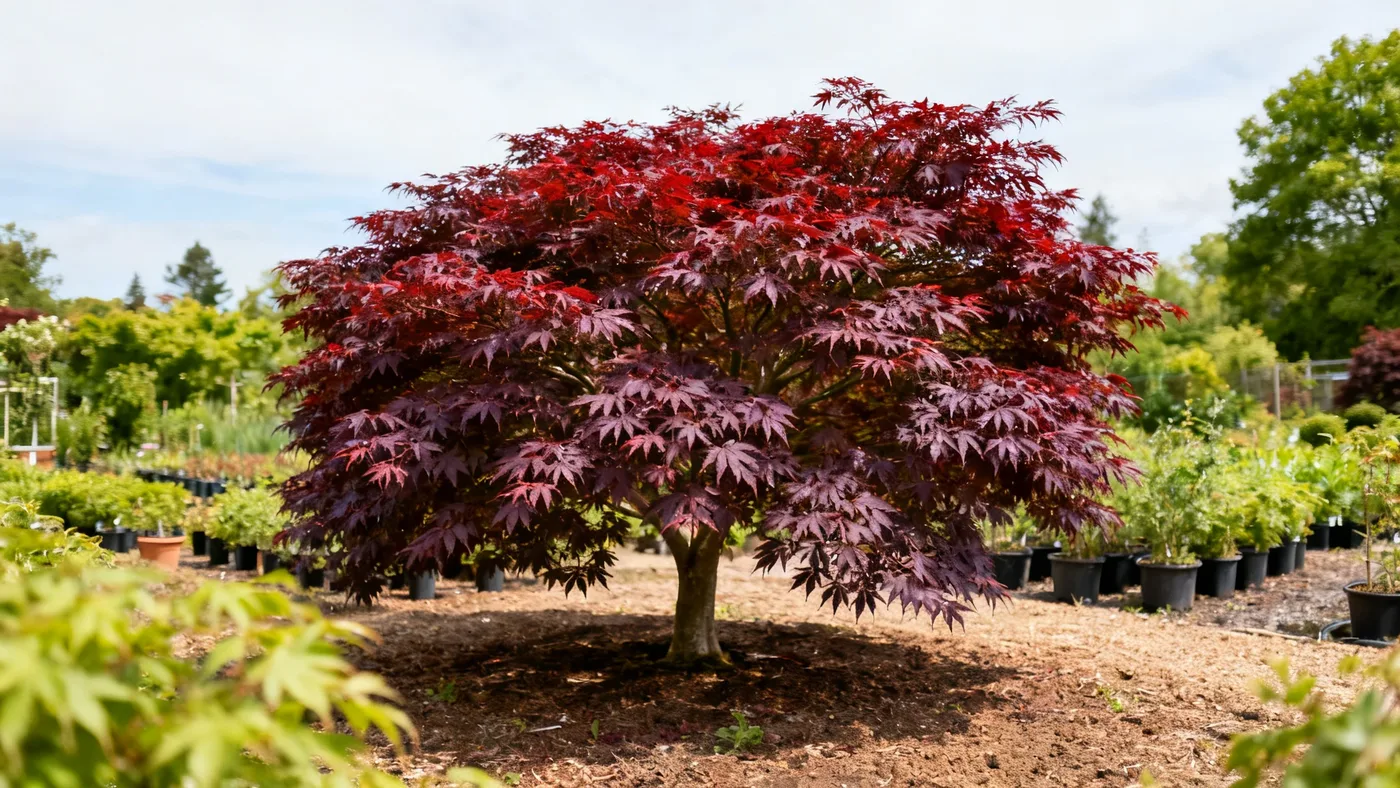
Watering Japanese Red Maple Trees: A Complete Guide
Japanese Red Maple trees need consistent moisture to thrive, but getting the watering right takes more than just reaching for the hose. These trees are sensitive to both extremes: too little water causes leaf scorch and stress, while too much leads to root problems and decline. Understanding your tree's water needs at each stage of growth, and adjusting for your climate and soil type, makes the difference between a healthy specimen and a struggling one.
Understanding Japanese Red Maple Water Needs
Japanese Red Maples prefer consistent, even moisture. The first 2 to 3 years after planting are critical: young trees need regular watering to establish a strong root system. Once established, they can tolerate moderate conditions, though they still lack high drought tolerance and should not be subjected to extended dry periods or standing water.
Soil type matters enormously. These trees grow best in rich, well-drained loam high in organic matter, with a soil pH around 5.5 to 6.5 (slightly acidic). Well-draining soil allows roots to access moisture without sitting in water, which causes root rot. If your soil is clay-heavy or compacted, amending it with compost or peat moss before planting prevents waterlogging.
Water needs also shift with the season. Spring and early summer, when the tree is actively growing and leaves are expanding, demand more frequent watering. Late summer and fall, as growth slows, require less. Winter dormancy means minimal watering, though you should not let the soil dry completely if the winter is unusually dry.
Materials and Tools You'll Need
- Hose or soaker system (drip lines or soaker hoses work best)
- Moisture meter or your finger to check soil depth
- Mulch (2 to 3 inches of organic material: wood chips, pine bark, or shredded leaves)
- Compost or peat moss (for amending soil before planting)
- Watering can (for container-grown trees or spot-watering)
- Optional: soil pH test kit or local extension office soil test
Step-by-Step Watering Instructions
For Newly Planted Japanese Red Maple
If you've just planted a Japanese Red Maple, follow this schedule for the first 2 to 3 years to establish a healthy root system:
- Water immediately after planting. Saturate the planting hole and backfill soil until water runs clear. This settles the soil and removes air pockets around the roots.
- Water deeply twice per week for the first month. "Deeply" means soaking the root zone to 8 to 12 inches deep. A soaker hose at the base is ideal: it delivers water slowly, allowing the soil to absorb moisture without runoff.
- Check soil moisture before each watering. Insert your finger 2 inches into the soil near the drip line (the outer edge of the canopy). If it feels dry at that depth, water. If it feels moist, wait another day or two.
- Transition to weekly watering by mid-summer. Once the tree has been in the ground 6 to 8 weeks and new growth appears, you can often reduce to one deep watering per week, depending on rainfall and heat.
- Continue consistent moisture through fall. Even as growth slows, keep watering until the tree goes dormant (after leaves drop). This helps the roots harden off before winter.
- Reduce frequency in winter. If your region gets regular precipitation, natural rainfall often suffices. If winter is dry, water lightly every 2 to 3 weeks when the soil is not frozen.
For Established Japanese Red Maple (3+ years old)
- Water deeply once per week during the growing season, unless rainfall exceeds 1 inch per week. If you live in a hot-summer climate (USDA zones 8 to 9), water more frequently and provide afternoon shade to prevent leaf scorch.
- Apply a 2 to 3 inch mulch layer around the base. Spread it in a ring from the trunk outward to the drip line, keeping the mulch 2 to 3 inches away from the trunk itself to prevent bark rot. This conserves soil moisture, regulates temperature, and reduces watering frequency.
- Check soil moisture in hot spells. During heat waves or prolonged dry periods, feel the soil 3 to 4 inches deep. If it's dry and hasn't rained in 7 to 10 days, water deeply.
- Water slowly to avoid runoff. Use a soaker hose on low pressure or a watering wand set to gentle flow. Fast watering washes soil away and doesn't allow moisture to penetrate deeply, leaving roots in dry pockets.
- Adjust for container-grown trees. If your Japanese Red Maple is in a pot, check soil moisture daily during the growing season. Container soil dries faster than in-ground soil. Water until it drains from the bottom, and provide afternoon shade in hot climates.
Seasonal Watering Schedule
Spring (bud break through early summer): Water established trees 1 to 2 times per week. Young trees may need more frequent watering if soil is drying out quickly. Begin or refresh the mulch layer once soil is no longer frozen.
Summer (mid-June through August): This is the peak watering season. During hot spells, mature trees may need water every 3 to 5 days. Young trees should not dry out; water every 2 to 3 days in intense heat. Monitor for leaf scorch (brown, papery edges on leaves), a sign of drought stress or too much direct sun.
Fall (September through November): As temperatures cool, reduce watering frequency to once per week or as rainfall allows. Keep watering until the tree goes dormant, even though growth has slowed.
Winter (December through February): Dormant trees need minimal water. If your region receives regular snow or rain, no supplemental watering is usually needed. In dry winters, water lightly every 2 to 3 weeks to keep soil from drying completely.
Signs of Overwatering and How to Fix It
Overwatering is one of the most common mistakes with Japanese Red Maples. Standing water and soggy soil promote root rot, which can kill the tree. Watch for these warning signs:
- Leaves turning yellow or brown and dropping early
- Soft, mushy bark at the base or root collar
- A sour or musty smell near the soil
- Stunted growth even though the tree is being watered regularly
If you suspect overwatering, stop watering for 1 to 2 weeks and check the soil. If it remains soggy, your drainage is the problem. For in-ground trees, you may need to amend the soil with compost or create a raised planting area with better-draining soil. For container trees, repot into fresh, well-draining soil and make sure the pot has drainage holes.
Signs of Underwatering and Drought Stress
Underwatering and drought stress damage Japanese Red Maples, especially young trees and those in full sun with reflected heat from pavement or walls. Symptoms include:
- Leaf scorch: brown or papery edges on leaves, often with a reddish or bronze halo
- Wilting or drooping leaves during the day, even in humid weather
- Leaves curling or dropping prematurely
- Slower growth than expected for the tree's age
If you see drought stress, water deeply and immediately. Then reassess your watering routine and adjust for your soil, climate, and the tree's age. Newly planted trees are especially vulnerable; don't skip watering even if rain is forecast in a few days, because the forecast may change.
Common Mistakes to Avoid
Shallow, frequent watering. Light, daily watering keeps only the top inch of soil moist and encourages weak, shallow roots. Instead, water deeply but less often to encourage roots to grow deeper and access moisture even during dry periods.
Watering on a fixed schedule regardless of weather. If it rained 2 inches yesterday, you don't need to water today. Check the soil first, or adjust your watering schedule based on rainfall and temperature.
Forgetting newly planted trees in fall and winter. Young trees still need water after the growing season ends. Root establishment continues into fall and winter. Dry winters can desiccate even dormant trees.
Planting in poorly drained soil without amendment. If your native soil is clay or compacted, the tree will sit in water no matter how carefully you water. Add compost or amend the planting area before setting the tree in the ground.
Using a sprinkler instead of a soaker hose. Sprinklers wet the leaves and canopy, which promotes fungal issues and wastes water. Direct water to the soil at the base of the tree, where roots need it most.
Special Considerations for Japanese Red Maple
Japanese Red Maples in hot-summer climates (USDA zones 8 to 9) need afternoon shade to prevent leaf scorch. Even with adequate water, full sun in intense heat can damage foliage. Pair afternoon shade with consistent watering to keep these trees healthy in warm regions.
Container-grown Japanese Red Maples require special attention in winter. In freezing climates, pot-bound roots have no insulation from the soil, so roots can freeze and die. Either move containers to a sheltered location (a garage or cold frame) for winter, or bury the pot in the ground before the first hard freeze.
When you plant a Japanese Red Maple tree, investing time in soil preparation and establishing a good watering routine sets up the tree for decades of growth. Poor watering habits in the first few years are hard to overcome.
Monitoring and Adjusting Over Time
Your watering needs will change as the tree matures. A newly planted 1-year-old whip needs water twice a week in summer. By year 4 or 5, the same tree may need water only once a week. Pay attention to your tree and the weather: a hot, dry week demands more water than a cool, cloudy one. Use a moisture meter or the finger test to stay in tune with what the soil actually needs.
For comprehensive care beyond watering, refer to our Japanese Red Maple care guide on sun exposure, soil pH, and pruning to keep your tree thriving season after season.
Quick Reference: Japanese Red Maple Watering Checklist
| Tree Age & Season | Watering Frequency | Depth per Watering | Soil Moisture Target | Key Action |
|---|---|---|---|---|
| Newly planted, first month | 2x per week | 8-12 inches | Consistently moist, not soggy | Use soaker hose; check soil before each watering |
| Newly planted, months 2-3 | 1-2x per week | 8-12 inches | Moist at 2-3 inches depth | Begin mulch layer; reduce to weekly by summer |
| Established, spring to early summer | 1-2x per week | 8-12 inches | Moist but well-draining | Check before rain; increase if no rainfall |
| Established, peak summer | 1x per week (2-3x in heat waves) | 8-12 inches | Moist at 3-4 inches depth | Watch for leaf scorch; provide afternoon shade if zones 8-9 |
| Established, fall | 1x per week or as rainfall allows | 6-10 inches | Moist but not waterlogged | Continue until tree dormant; reduce as temps drop |
| Dormant (winter) | Every 2-3 weeks if dry | 4-6 inches | Slightly moist, not frozen/dry | Let mulch protect soil; water if no rain for 3+ weeks |
| Container-grown, year-round | Check daily; water as needed | Until drains from bottom | Moist but never waterlogged | Provide afternoon shade; mulch surface; protect in winter freeze |