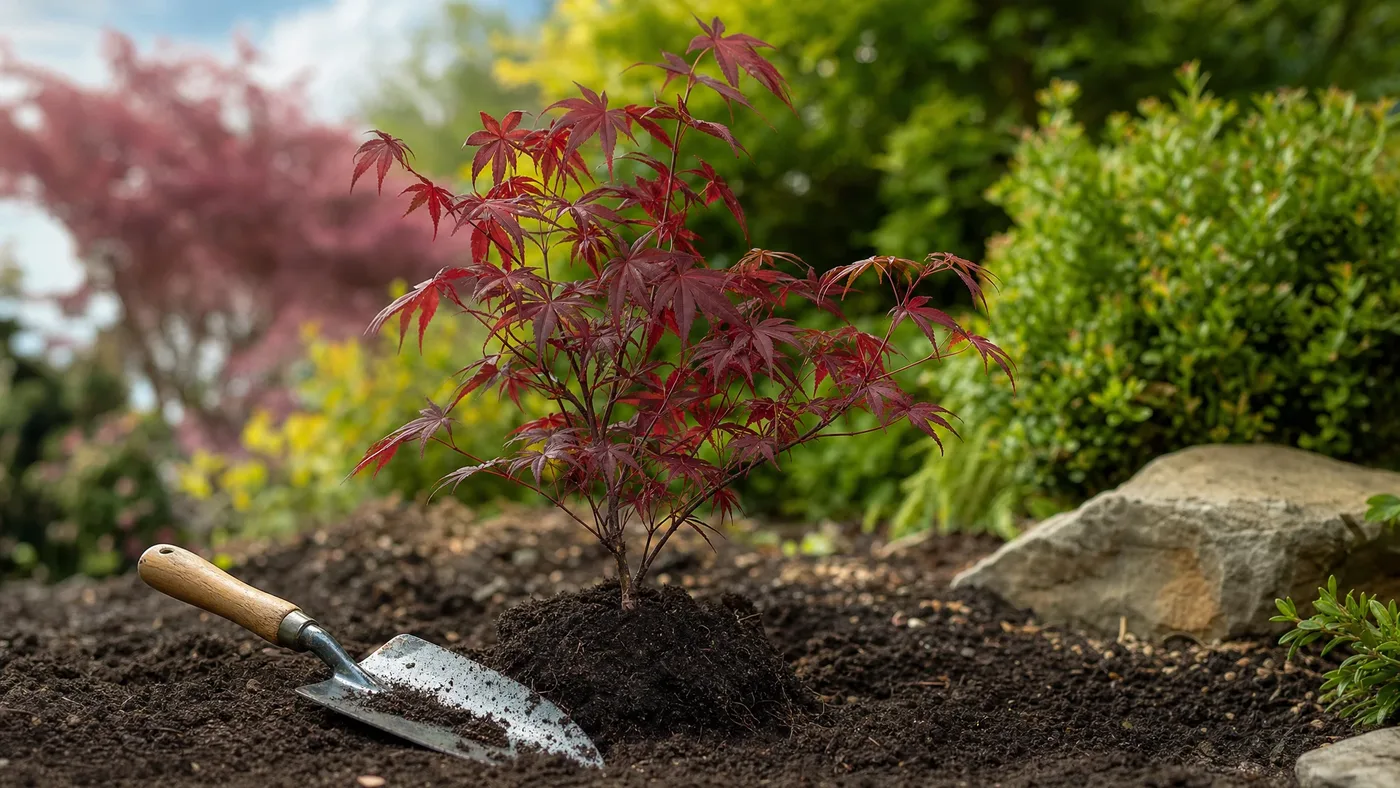
The Best Time to Plant a Japanese Red Maple
For most gardeners in zones 6 to 8, the best time to plant a Japanese red maple is fall, after leaf drop and about 4 to 6 weeks before the ground freezes. In zone 5, plant in early spring instead. Summer works from a container but demands close watering. Whichever season you pick, aftercare matters more than the date.
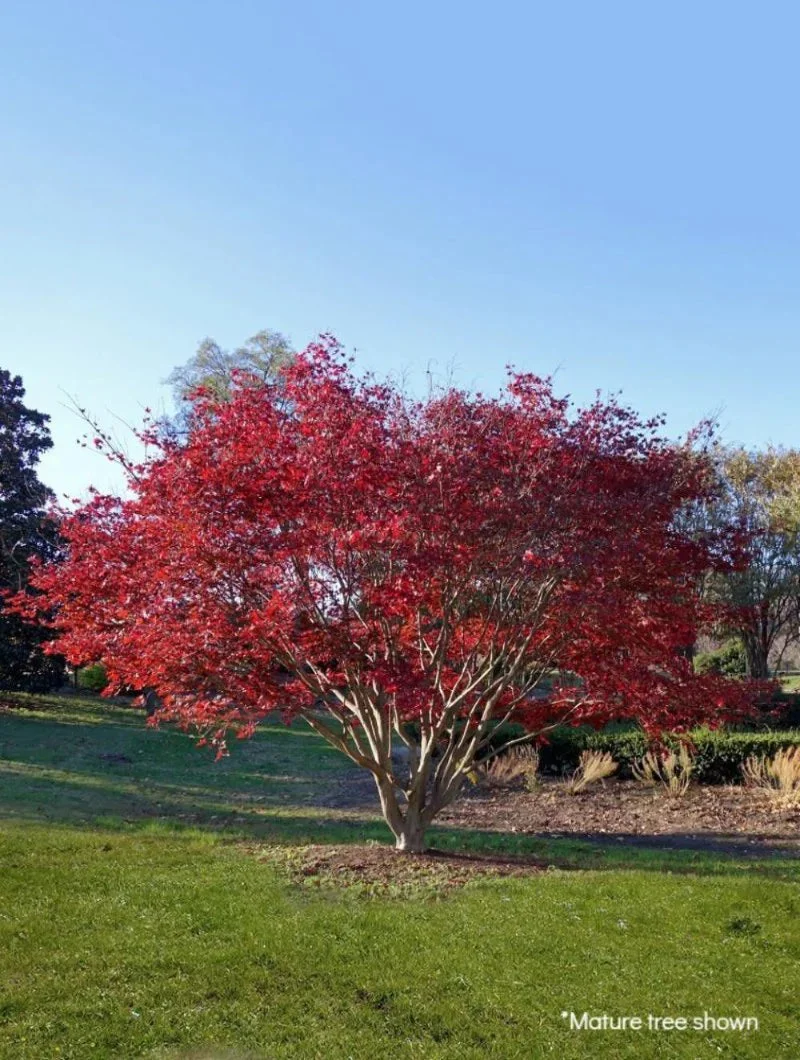
This guide covers the timing decision. For the hole, the root flare and backfill, follow our full walkthrough on how to plant a Japanese red maple tree the right way, then come back here to pick your window.
The Short Version: Season by Season
| Season | Verdict | Main risk |
|---|---|---|
| Fall (after leaf drop) | Best in zones 6-8 | Planting too late, so roots have no time to settle |
| Early spring | Best in zone 5, good everywhere | Summer heat arrives before roots have spread |
| Summer | Possible from a container, not ideal | Leaf scorch and dry root balls; a season of babysitting |
| Winter (frozen ground) | Skip it | You cannot dig a proper hole or settle the soil |
Why Roots Decide the Calendar
A Japanese red maple does not grow roots and leaves on the same schedule. Soil stays workable long after the canopy shuts down, and roots keep growing while the tree above is dormant. Plant in fall and the tree spends its quiet months building roots, with no leaves to feed and no summer sun to survive. By the time buds swell in spring, it is already anchored.
Spring planting reverses the deal. Roots and leaves wake up together, and the young root system has to support a full canopy right as temperatures climb. That is manageable with good watering. It just leaves less margin than a fall planting.
Fall or Spring Planting Japanese Maple: Which Wins in Your Zone?
Our species figures put Japanese red maple in USDA zones 5 to 8, with some cultivars tolerating zone 9 if they get afternoon shade. Not sure where you sit? Our guide to Japanese red maple hardiness zones explains how to read the USDA map for your address.
| Zone | Best window | Acceptable window |
|---|---|---|
| 5 | Early spring, as soon as soil is workable | Early fall, only if you can mulch and protect the first winter |
| 6 | Fall, after leaf drop, 4-6 weeks before ground freeze | Early spring |
| 7 | Fall, after leaf drop, 4-6 weeks before ground freeze | Early spring |
| 8 | Fall, after leaf drop, 4-6 weeks before ground freeze | Early spring |
| 9 (marginal) | Fall, in a spot with afternoon shade | Early spring; ask your extension office |
Treat these as starting points. Confirm your first and last frost dates with your local cooperative extension office, because a zone number is an average and your yard may run warmer or colder.
Why zone 5 flips the rule
In colder zones, a fall-planted tree has less time to anchor before the ground freezes and thaws. Repeated freeze-thaw cycles can heave a shallow-rooted young tree upward, and winter wind can dry out branches it cannot yet resupply with water. Spring planting sidesteps both problems.
What About Summer?
Container-grown trees can go in during summer, and the root ball is not disturbed the way a field-dug tree's is. But our facts sheet is clear that planting should avoid peak summer heat, and the reasons are practical. Leaf scorch from hot sun, wind and drought stress is the most common Japanese maple problem. A freshly planted tree has a small root system to refill those leaves.
If you must plant in summer, choose a cooler stretch, give the tree afternoon shade, and expect to check moisture often. Which brings us to the real point.
The Calendar Matters Less Than the Aftercare
Here is the position we will defend: a summer-planted tree watered faithfully beats a fall-planted tree that gets forgotten. Young trees need regular water for the first 2 to 3 years, and drought tolerance stays low to moderate even once established. A perfect planting date cannot rescue a root ball that dries out. Our complete watering guide covers how to judge moisture, and the habit matters more than the month.
Materials You Will Need
- A nursery-grown Japanese red maple in its container
- Shovel and a garden fork to loosen the hole walls
- Compost or other organic matter, for rich, well-drained loam
- Mulch (shredded bark or similar)
- Hose or watering can
- Stakes only if the site is windy
- Burlap or a shade cloth for scorch-prone sites
Step-by-Step: Planting in Your Window
- Pick the date by soil, not by the calendar. Fall planters in zones 6-8 should aim for after leaf drop and 4 to 6 weeks before ground freeze. Spring planters should wait until the soil can be dug and is no longer soggy.
- Choose the site first. Full sun to part shade works, but in hot-summer climates afternoon shade preserves leaf color and prevents scorch. Allow 10 to 15 feet from structures and other trees for standard forms; dwarf cultivars need less.
- Check drainage. Root rot in poorly drained soil is a documented disease. If water pools in the hole after a rain, choose another spot or plant on a slight rise.
- Prepare the soil. Aim for slightly acidic, organic-rich loam, roughly pH 5.5 to 6.5. A basic soil test tells you where you stand.
- Plant at the right depth. Follow the root flare steps in our planting guide. Set the tree no deeper than it grew in the container.
- Water in thoroughly. Settle the soil, then keep it evenly moist, never waterlogged.
- Mulch. Add a layer around the root zone, keeping it off the trunk itself.
- Hold off on fertilizer. A light, balanced, low-nitrogen feeding in early spring is usually enough in later years. Overfeeding can cause leggy growth and weaker color.
Common Mistakes to Avoid
| Mistake | What goes wrong | Fix |
|---|---|---|
| Planting in a heat wave | Leaf scorch, wilting | Wait for cooler weather or provide shade |
| Fall planting too close to freeze | Roots do not settle; heaving risk | Aim for 4-6 weeks before ground freeze, or wait for spring |
| Fall planting in zone 5 without protection | Heaving and winter desiccation | Plant in spring instead |
| Forgetting to water after planting | Dry root ball, dieback | Check moisture regularly for the first 2-3 years |
| Full-sun exposure on a young trunk | Trunk sunscald | Shade the trunk or site the tree with some protection |
| Heavy fertilizing at planting | Leggy growth, weaker color | Light, low-nitrogen feed in early spring only |
Who Should Wait
If your site is low and soggy, or if your summers are brutal and you have no afternoon shade to offer, hold off. No planting date fixes a wet spot or a scorching western exposure. Fix the site first. Container growing is a reasonable alternative, especially for smaller selections, though container trees need root protection in freezing winters.
Timing a Mail-Order Purchase
Reputable mail-order nurseries ship in planting windows, so check the ship date at purchase and match it to your zone. If you are ready to buy, you can browse the nursery-grown sizes at our shop. A tree that arrives outside your window can wait in its container in a sheltered spot, kept evenly moist, until the right week.
What to Expect
A well-timed planting may help the tree settle with fewer stress symptoms, though results vary by site, cultivar and weather. Growth is slow to moderate, roughly 6 to 12 inches a year, and a tree may take 10 to 15 years to reach significant landscape size. Seed-grown, unnamed red selections can vary in mature color and habit, and fall color ranges from red to orange to crimson depending on the season.
Quick Reference
| Item | Guideline |
|---|---|
| Zones 6-8 | Fall, after leaf drop, 4-6 weeks before ground freeze |
| Zone 5 | Early spring |
| Summer | Possible from containers; needs shade and frequent watering |
| Spacing (standard forms) | 10-15 ft from structures and other trees |
| Soil | Rich, well-drained, pH about 5.5-6.5 |
| Watering | Consistent moisture for the first 2-3 years |
| Fertilizer | Light, low-nitrogen, early spring |
| Confirm locally | Frost dates and zone, via your cooperative extension office |
Japanese Red Maple
Nursery-grown Japanese Red Maple in sizes from 3 Gallon 2-3 ft, shipped to your door.
From $118.33
Shop Now →