Japanese Red Maple
Acer palmatum (red-leaved forms, often sold under 'Atropurpureum Group' or as an unnamed seedling-grown red selection at quart size)
Japanese Red Maple: Vivid Fall Color, Year-Round Beauty
- Vibrant fall color and spring blooms deliver year-round visual interest
- Slow growth means it stays manageable as a featured garden tree
- Thrives zones 5-8; afternoon shade enables zone 9 and prevents heat scorch
About this plant
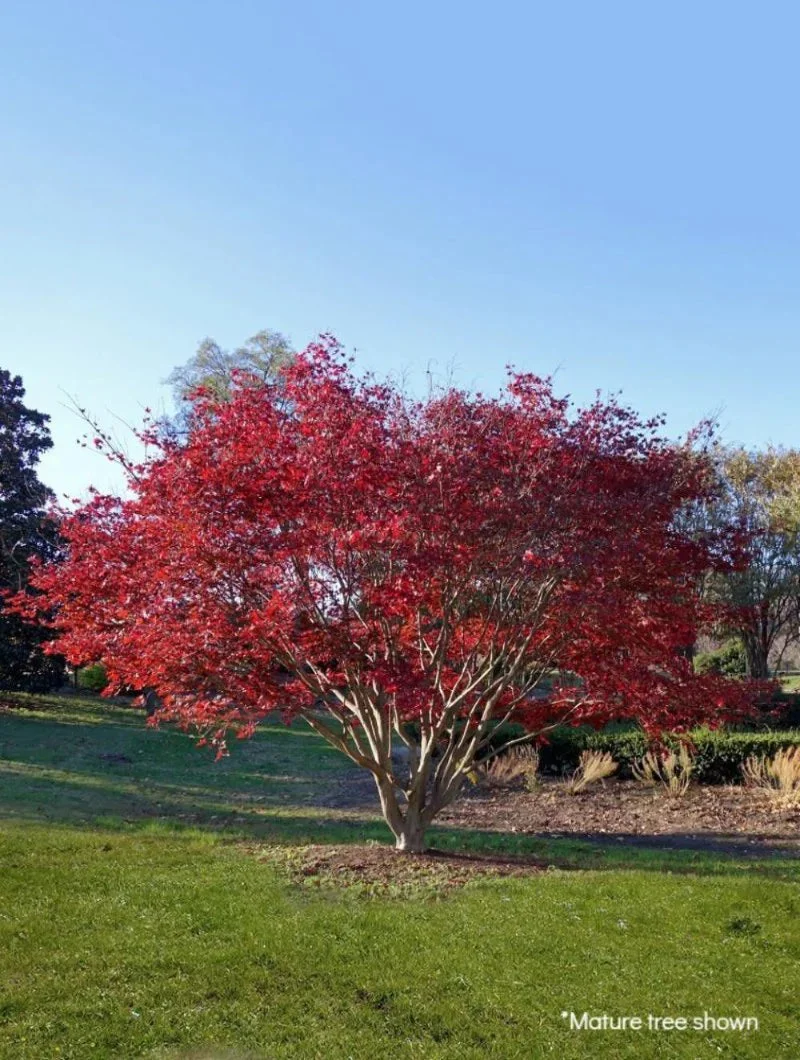
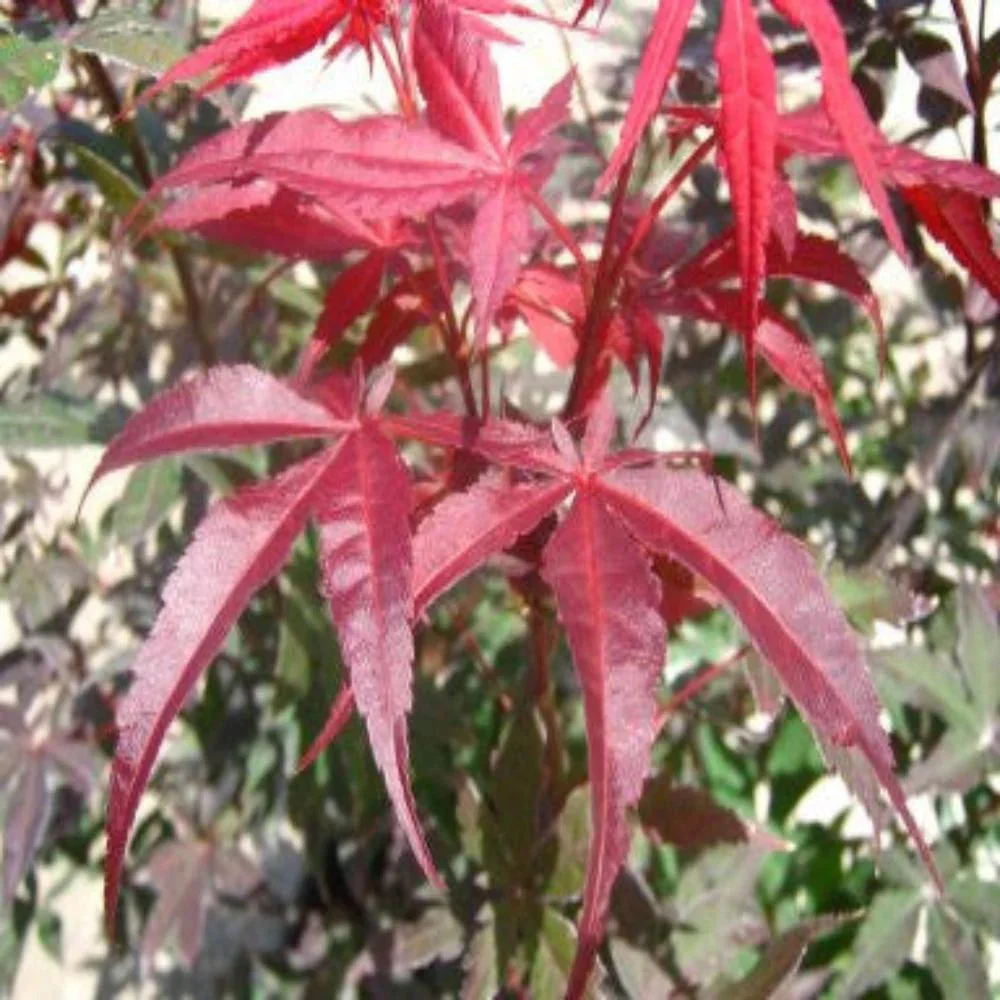
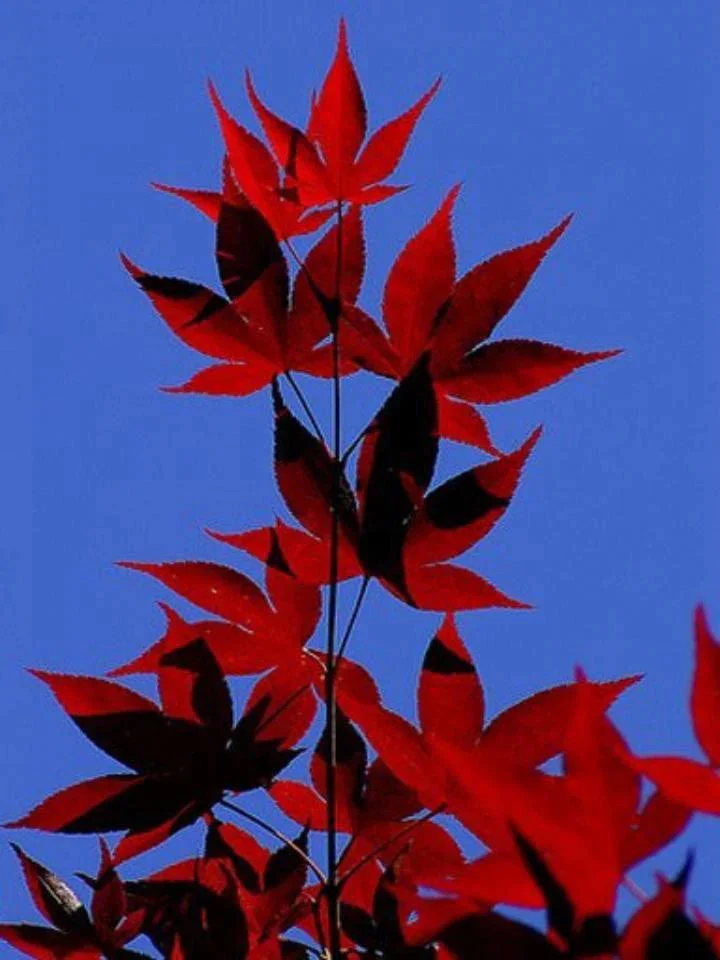
Japanese Red Maple is a deciduous tree prized for vivid fall color and fine texture. It shines as a specimen focal point in Japanese and Zen gardens, courtyard plantings, or framing entryways. The slow-growing form reaches 15-25 feet, offering year-round ornamental value from spring blooms through its spectacular crimson-to-orange autumn display.
Your Japanese Red Maple arrives in a nursery container at the size indicated. Upon arrival, water thoroughly and place in a location with appropriate light for your hardiness zone. Keep soil evenly moist the first 2-3 years as the root system establishes. Avoid standing water or drought extremes. For best fall color in hot climates, provide afternoon shade.
Japanese Red Maple at a glance
| Botanical name | Acer palmatum (red-leaved forms, often sold under 'Atropurpureum Group' or as an unnamed seedling-grown red selection at quart size) |
|---|---|
| Plant type | deciduous tree (large shrub or small tree form) |
| USDA zones | 5-8, some cultivars tolerate 9 with afternoon shade |
| Mature height | 15-25 ft for standard upright red forms; dwarf/cutleaf cultivars often stay 6-10 ft — varies significantly by cultivar |
| Mature width | 12-20 ft, or 8-12 ft for dwarf/weeping types |
| Sun | full sun to part shade; in hot-summer climates, afternoon shade preserves leaf color and prevents scorch |
| Water | moderate; consistent, even moisture, especially first 2-3 years; does not tolerate standing water or drought extremes |
| Bloom time | early-mid spring, before or with leaf-out |
| Bloom color | small, inconspicuous red-purple flowers |
| Growth rate | slow to moderate, roughly 6-12 in/year |
| Deer resistance | moderately resistant, not deer-proof |
| Best planting time | early spring or fall, avoiding peak summer heat |
Container sizes explained
| #1 / 1 Gallon | A trade one gallon pot (about 6.5 inches). One to two seasons older than a quart, with an established root system. |
|---|---|
| #2 / 2 Gallon | A trade two gallon pot. Common for peonies and perennials that need root room; usually blooms the first or second year. |
| #3 / 3 Gallon | A trade three gallon pot (about 10 inches). A well-developed shrub or small tree, often 2 to 4 feet tall on arrival. |
Questions before you buy
Which size should I choose?
Our 3-gallon trees are 2-3 feet tall and offer fastest establishment. The 5-gallon is also 2-3 feet but more developed. The 7-gallon reaches 3-4 feet and requires more mature space. Choose based on your landscape timeline and available room; smaller sizes establish faster.
When should I plant after arrival?
Plant as soon as convenient after arrival. Water immediately and place in a location with appropriate light for your hardiness zone. Spring and early fall offer ideal soil conditions for root establishment.
How large does Japanese Red Maple grow?
Standard upright red forms typically reach 15-25 feet tall and 12-20 feet wide at maturity, requiring 10-15 years for landscape size. Dwarf or cutleaf cultivars stay smaller, often 6-10 feet. Exact dimensions depend on the specific selection and your growing conditions.
How much sun does it need?
Japanese Red Maple prefers full sun to part shade. In hot-summer climates, afternoon shade is beneficial to prevent leaf scorch and preserve deep red foliage color.
Will this grow in my zone?
Japanese Red Maple is hardy in USDA zones 5-8. Some cultivars tolerate zone 9 with afternoon shade. Verify your zone and confirm with your local nursery if you are at a zone boundary.
What does first-year care involve?
Water consistently to maintain even soil moisture for the first 2-3 years as roots establish. Avoid both standing water and drought extremes. Mulch around the base to retain moisture and moderate soil temperature. After establishment, water during extended dry periods.