Japanese Red Maple Landscape Ideas and Companion Plants
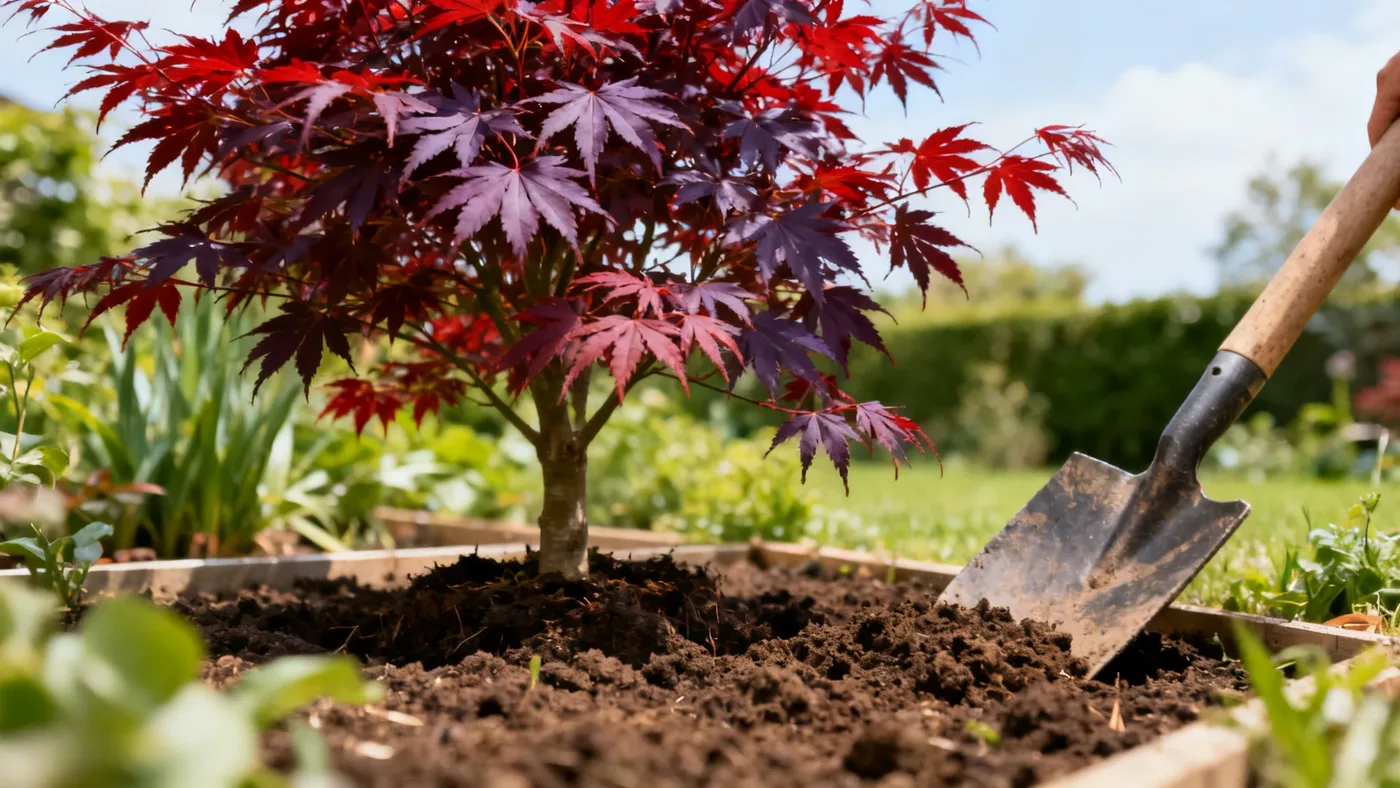
Japanese Red Maple stands out in any landscape. Its crimson foliage, graceful branching, and slow growth make it a natural focal point. Whether you're designing a Zen garden, framing an entryway, or adding depth to a shade border, this tree works because it commands attention without overwhelming the space. The key is knowing where to place it and what companions will let it shine without competing for attention.
1. Specimen Tree in the Front Yard
A single Japanese Red Maple planted as the main focal point transforms a front yard. Position it where it catches morning or mid-afternoon light, ideally within sight lines from your house. The tree's graceful silhouette is at its best when it stands alone or with low plantings around its base, giving viewers an unobstructed view of its form and foliage. Space it 10 to 15 feet from your house, walkway, or driveway to avoid root competition and allow its canopy to develop fully.
Standard upright red forms reach 15 to 25 feet tall and 12 to 20 feet wide at maturity, so a landscape-level focal point is substantial without being overpowering on a residential lot. In zones 5 to 8, this placement is reliable. If you're in zone 9 or warmer, give the tree afternoon shade to preserve its red leaf color and prevent leaf scorch. The tree's winter interest adds value too; once leaves drop, the elegant branching structure becomes visible and decorative through the colder months.
Practical takeaway: Plant in spring or fall in a spot where the tree receives full sun to part shade and can spread to its mature width without crowding. Mulch the base lightly and keep competitors 10+ feet away during establishment.
2. Japanese and Zen Garden Centerpiece
Japanese Red Maple is the heartwood of a Zen or Japanese-style garden. Its palmate, deeply lobed leaves (typically 5 to 7 lobes) echo the aesthetic of traditional Japanese landscape design. The tree's slow growth, roughly 6 to 12 inches per year, means it develops character and presence gradually, allowing you to refine the garden around it over seasons. Plant it as the anchor of a quiet seating area, surrounded by gravel or moss, with low stone lanterns or stepping stones drawing the eye.
Pair the maple with shade-tolerant underplantings like hostas, ferns, and azaleas to create the layered, forest-edge feeling central to Japanese garden philosophy. Leave sight lines open so the tree dominates the visual field. In this context, even a dwarf or weeping cultivar (which stay 6 to 10 feet tall) works beautifully and takes up less footprint than a standard upright form. The garden's stillness and the tree's slow presence reinforce each other.
Practical takeaway: Choose a sheltered spot with morning sun and afternoon shade, especially in warm climates. Ensure consistent, even moisture during the first 2 to 3 years while the tree establishes.
3. Patio or Courtyard Shade Tree
Space is tight on a patio or in a small courtyard, but a Japanese Red Maple fits perfectly. Its moderate size and airy branching structure create dappled shade rather than dense shadow, so plants and seating below don't get dark. Dwarf or weeping cultivars are ideal for courtyards; they stay 6 to 10 feet tall and 8 to 12 feet wide, leaving room for seating and movement. Even standard forms work if your courtyard is large enough and the tree is set back from the edges.
The tree filters harsh afternoon light in summer and allows warmth through in winter when the leaves drop. Position it on the south or west side of the patio to intercept afternoon sun while letting morning light through. The visual effect is dramatic: the tree's crimson canopy backlit by sunlight becomes almost translucent. In zones 5 to 8, this spot gives the tree the light it needs, and in warmer climates, afternoon shade protects leaf color and prevents scorch. Make sure the soil stays consistently moist in summer, especially if the patio surface reflects heat onto the root zone.
Practical takeaway: Plant in rich, well-drained loam high in organic matter and maintain steady watering. Dwarf selections are easier to integrate into tight spaces without constant pruning.
4. Mixed Border with Shade-Loving Companions
Japanese Red Maple creates the backbone of a layered planting scheme. Its dappled shade and moderate water needs make it compatible with many understory plants. Layer azaleas or rhododendrons in front, ferns in the midground, and hostas as groundcover or accent foliage. These companions thrive in the slightly acidic, rich soil that Japanese Red Maple prefers (roughly 5.5 to 6.5 pH) and appreciate the tree's filtered light and moisture retention.
The height variation matters: the maple rises 15 to 25 feet overhead, azaleas and rhododendrons sit at 4 to 8 feet, ferns reach 2 to 3 feet, and hostas spread across the ground. This tiered structure feels full and intentional, not scattered. Spacing becomes critical. Keep shrubs and perennials at least 5 to 10 feet from the tree's trunk to avoid root competition. A 3 to 4 foot mulched circle around the maple's base suppresses weeds and keeps companions at safe distance. This mixed border arrangement works in zones 5 to 8 and is especially striking in early summer when the maple's red foliage contrasts with the whites and pinks of azalea blooms.
Practical takeaway: Layer plants by height and light need. Test your soil pH and amend toward 5.5 to 6.5 if necessary. Mulch heavily to retain moisture and suppress competitive roots.
5. Container or Patio Specimen
Smaller or dwarf-growing selections of Japanese Red Maple thrive in containers, making them portable focal points for patios, decks, or entryways. A 15 to 20 gallon container (or larger) gives roots room; repot every 2 to 3 years into fresh, rich, well-draining soil. Dwarf cultivars stay manageable in pots and develop graceful branching even when confined. The benefit is mobility: move the pot as the sun angle changes through the seasons, or shift it to shelter before harsh winter weather in zones 5 to 6.
Container-grown trees dry faster than in-ground specimens, so water more frequently during hot months. Keep the soil consistently moist but not soggy. In freezing climates, wrap the container or move it against the house wall for root protection over winter. A container tree is ideal for renters or gardeners with limited space, and it gives Japanese Red Maple a front-and-center place where its foliage and form are the entire point. Pair it with complementary foliage plants in smaller pots: silvery-leaved hostas or dark Japanese painted ferns reinforce the tree's color without competing for attention.
Practical takeaway: Use large, well-draining containers and high-quality potting soil. Water frequently in hot weather and protect roots in hard freezes.
6. Entryway Framing and Welcome Focal Point
Frame a front door or gate with Japanese Red Maple and complementary plants to create a natural threshold. A single standard tree positioned to one side of the entry draws visitors' eyes upward and inward. Pair it with a smaller shade plant on the opposite side for balance, or flanked pair of dwarf selections (if your entry is wide enough) creates symmetry without formality. The crimson foliage signals "intentional landscape" and changes seasonally, so the entry never looks static.
Plant the maple far enough from the entry (at least 10 feet) so its canopy doesn't block the door or create excessive shade. Morning and afternoon light hitting the tree's foliage makes the color more vivid as people approach. This placement works in zones 5 to 8 and is especially powerful on a north-facing entry where afternoon shade preserves the tree's red color. The tree's slow growth (6 to 12 inches per year) means it develops character and presence over time without ever looking overgrown or neglected.
Practical takeaway: Space the tree at least 10 feet from the entry. Underplant with shade-tolerant companions that won't block the view of the maple's form.
7. Multi-Layered Woodland Edge
If you have a larger lot with taller shade trees, position Japanese Red Maple as an understory layer. Native trees like oak or hickory overhead create dappled light; Japanese Red Maple (15 to 25 feet) fills the middle layer; and azaleas, ferns, and hakone grass occupy the floor. This woodland-edge design mimics natural forest structure and creates depth. The maple's crimson foliage stands out against darker overhead foliage and lighter understory plants, making it the visual centerpiece of the composition.
Space the maple 10 to 15 feet from larger trees so it's not shaded out or forced to compete for water. In zones 5 to 8, this arrangement is stable and sustainable. The maple's moderate water needs (consistent, even moisture, especially in the first 2 to 3 years) are easier to meet in a woodland setting because the overhead canopy moderates drying. Hakone grass adds fine texture and movement, while ferns echo the maple's palmate form. Azaleas bloom before the maple's leaves fully expand, extending the season of interest.
Practical takeaway: Plan spacing carefully to avoid crowding. Understory trees need light from above and space around the root collar. Mulch heavily to retain moisture in a multi-layered planting.
8. Color Contrast with Silver or Blue Foliage
Japanese Red Maple's crimson leaves pop against cool-toned foliage. Plant silver-leaved hostas, blue-gray ferns, or dusty-leaved Japanese hakonechloa nearby to create visual tension and depth. The contrast isn't just color; it's about mood. Crimson (warm, advancing) paired with silver or blue (cool, receding) makes the maple feel more vibrant and the companions feel more restful. This planting strategy works at any scale, from a small corner to a full border.
Choose hostas with white or chartreuse margins to amplify the effect, or select ferns with naturally glaucous (powdery, blue-gray) fronds. Space plants 5 to 10 feet from the maple's trunk to avoid root conflict, but close enough that their foliage layers visually. This works best in part shade, where both the maple and its cool-toned companions thrive without leaf scorch. In zones 5 to 8, this composition is reliable year-round. Even in winter, when the maple's silhouette is bare, the gray-green persistence of hostas and ferns keeps the visual interest alive.
Practical takeaway: Select foliage companions with natural cool tones. Layer them at varying distances from the maple to create visual depth. Test soil pH (5.5 to 6.5) and adjust if needed; all these plants prefer slightly acidic, rich soil.
Companion Plants That Thrive Beside Japanese Red Maple
Four companions consistently succeed with Japanese Red Maple because they share similar soil and moisture preferences. Azaleas offer seasonal bloom color and fine-textured foliage. Rhododendrons add larger blooms and evergreen structure. Hostas fill ground space with varied foliage colors and patterns. Ferns create airy, layered texture and thrive in dappled shade. All four prefer rich, slightly acidic, well-drained soil (roughly 5.5 to 6.5 pH) and consistent moisture. Plant them 5 to 10 feet from the maple's trunk to minimize root competition.
Hakone grass (Japanese forest grass) is a fifth, underused companion. Its fine, cascading foliage texture contrasts beautifully with the maple's palmate leaves. It tolerates part shade and moderate moisture, fitting seamlessly into the maple's root zone. Its slow growth mirrors the maple's pace, so the planting matures gracefully without one element overwhelming the others.
Quick Reference: Japanese Red Maple Landscape at a Glance
| Use | Best Size | Spacing | Light | Companion Plants |
|---|---|---|---|---|
| Specimen focal point | Standard, 15-25 ft | 10-15 ft from structures | Full sun to part shade | None nearby; low groundcover acceptable |
| Zen garden center | Any size | 5-10 ft from underplanting | Morning sun, afternoon shade | Hostas, ferns, moss |
| Patio/courtyard shade | Dwarf, 6-10 ft | Edge of hardscape | South or west exposure | Shade-tolerant perennials below |
| Mixed border | Standard or dwarf | 5-10 ft from companions | Part shade | Azaleas, rhododendrons, ferns, hostas |
| Container specimen | Dwarf, 6-10 ft | Large pot (15-20 gal +) | Any (mobile) | Container foliage plants in smaller pots |
| Entryway frame | Standard or dwarf | At least 10 ft from door | Full sun to part shade | Single shade plant opposite |
| Woodland understory | Standard, 15-25 ft | 10-15 ft from canopy trees | Dappled sun | Ferns, hakone grass, azaleas below |
| Color contrast planting | Any size | 5-10 ft from companions | Part shade | Silver or blue-gray hostas and ferns |
Your Japanese Red Maple works hardest as a focal point. Its job is to anchor the space and command attention, so give it room, light, and companions that support rather than compete. For more details on planting, watering, and ongoing care, see our Japanese Red Maple care guide.