What to Plant Under a Japanese Red Maple
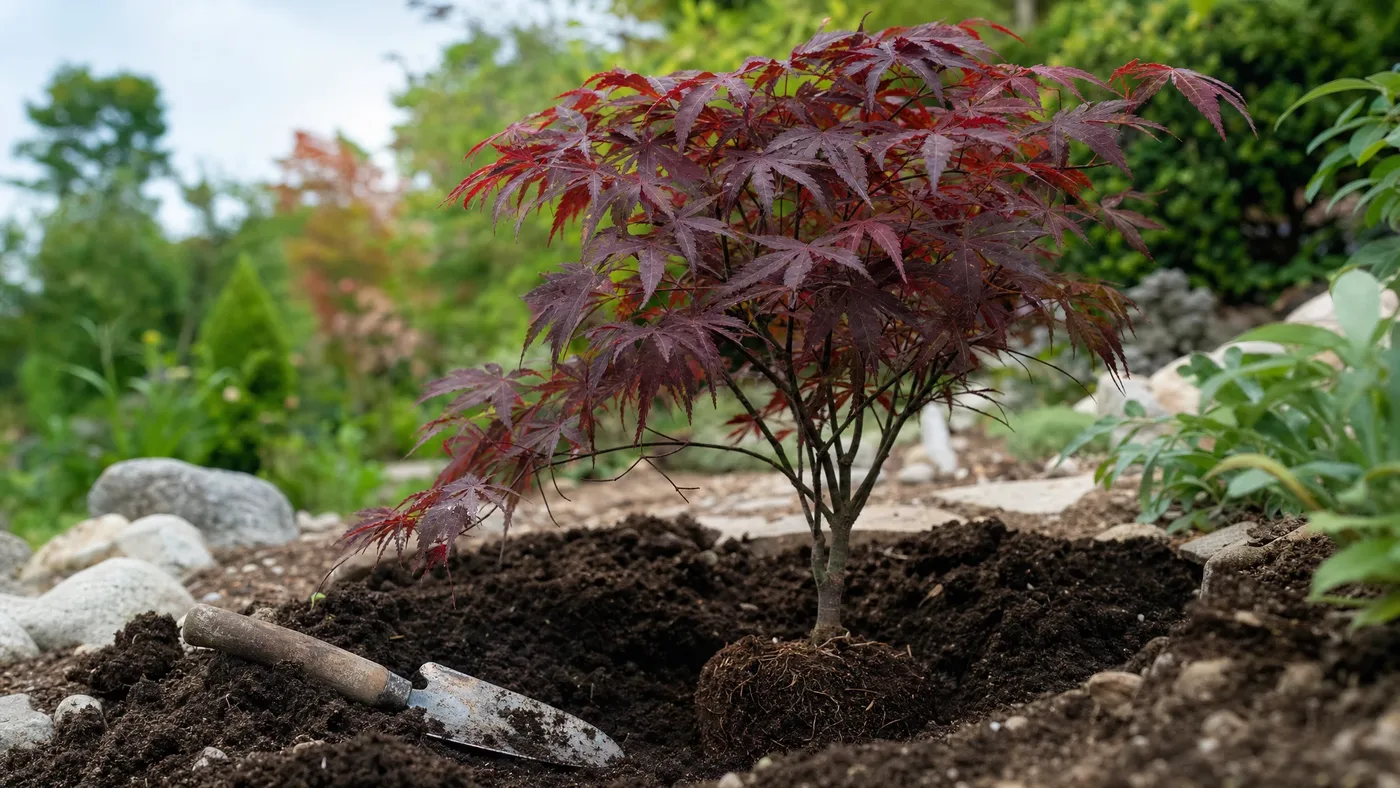
Most underplanting advice starts with a plant list. A designer starts with constraints, and so should you. A Japanese red maple sits on a shallow, fibrous root mat, wants even moisture, and prefers acidic, mulched soil. Anything you put beneath it has to live inside those limits. If you want the wider picture of how the tree fits into a whole garden, our landscape ideas and companion plants guide covers layout. This article is the narrow version: what goes directly under the canopy, and how to get it in the ground without hurting the tree.
Our position, stated up front: the best japanese maple underplanting is sparse. A crowded skirt of perennials looks generous in June and steals water from the maple's root zone in August, when the tree can least afford it.
The Three Constraints You Are Designing Around
Dry, dappled shade
Under a maple canopy, light is filtered and the soil is often drier than it looks, because the tree is pulling moisture from the same top layer your companions will use. Plants sold as "shade perennials" often assume moist woodland soil. Under a maple, choose the ones that tolerate some dryness once settled.
A shallow root mat
Japanese maples root near the surface. Digging, trenching or rototilling under the canopy cuts roots and invites stress. Every planting method below is built around that fact.
Acidic, mulched soil
The tree prefers slightly acidic soil, roughly pH 5.5 to 6.5, rich in organic matter and well drained. That already suits azaleas, rhododendrons, ferns and hostas. It rules out anything that needs lime or sharp drainage in dry gravel.
Materials You Need
- Small plants: plugs, 4-inch pots or divisions, not large gallon-size perennials
- A hand trowel (not a spade)
- Leaf mold, shredded leaves or composted bark for topdressing
- A watering can or a soaker hose
- String or flags to mark the drip line
Companions by Role
Think in jobs rather than favorites. Each role below has one named example, and any similar plant that fits the constraints will do.
| Role | Plant group | Example | Why it works |
|---|---|---|---|
| Groundcover | Moss, low carpeting perennials | Moss, sweet woodruff | Shallow, light-footprint cover that suits acidic, shaded soil |
| Texture | Ferns | Autumn fern | Fine fronds contrast with the maple's palmate leaves |
| Contrast | Hostas, blue and gold types | Blue or gold-leaved hostas | Bold, cool or bright foliage against red |
| Early season | Spring bulbs | Snowdrops, crocus | Finish before the canopy closes, so they compete little for summer water |
| Evergreen structure | Dwarf conifers, hellebores | Dwarf conifers for form, hellebores for winter | Keep the bed from looking empty when the maple is bare |
Hakone grass is another option that appears on many Japanese maple companion plants lists, and it suits the same dappled conditions. Azaleas and rhododendrons share the maple's soil preference, but give them room so they do not crowd the trunk.
Color Logic: Let the Canopy Be the Red
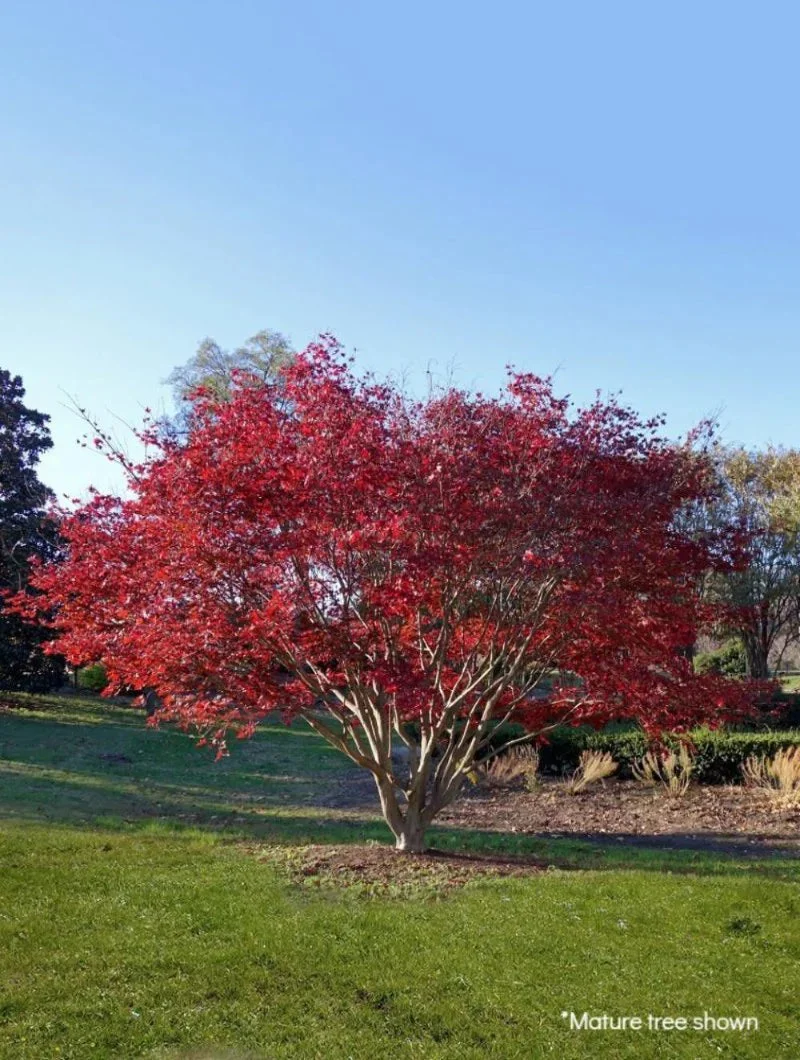
The leaves are red or reddish-purple, and in fall they turn red, orange or crimson (intensity varies by cultivar and season). Do not compete with that. Below the tree, work in chartreuse, gold, blue-green and white. A gold hosta or a pale variegated edge lights up the shade, and blue foliage cools the red above it. Red-flowered or burgundy-leaved plants underneath tend to blur the tree into the bed instead of setting it off.
How to Underplant Step by Step
- Mark the drip line. Lay string where the outer branches end. The outer half of this zone is where companions can go. Keep the area immediately around the trunk open.
- Check the tree's age and condition first. Young maples are still building roots, and extension guidance for newly planted trees generally stresses even watering over the first 2 to 3 years. If your tree is that young, wait a season before adding anything beyond mulch. Our watering guide explains why.
- Clear weeds by hand. Pull them; do not dig them out with a spade.
- Plant small plugs between roots. Use a trowel to open a hole only as wide as the plug. If you hit a root, stop and move over a few inches. Never cut through a woody root to make a planting hole.
- Keep the soil level where it was. Do not mound extra soil or compost over the root zone to make planting easier. Raised soil over the roots can smother them. Topdress lightly with leaf mold instead, and keep it off the trunk.
- Water new plants in by hand. Give each plug its own water at planting and through its first weeks, rather than flooding the whole bed.
- Place thirsty companions at the drip line, not the trunk. A plant that needs steady moisture belongs near the outer edge, where irrigation does not keep the trunk base wet. Persistent wet soil at the base of a maple raises the risk of root rot in poorly drained ground.
- Stop planting while there is still bare mulch. Leave visible gaps. They will fill partially by themselves.
Why Sparse Beats Full
Common garden advice says to plant densely so weeds have no room. That works in a perennial border. It works against you here. The maple is moderately drought tolerant at best, and low to moderate once established, so it needs reliable moisture in summer. A dense mat of hostas and perennials takes water from the exact top layer the tree's fine roots occupy. A thin, patterned planting leaves the tree its share and still looks finished once a layer of mulch ties everything together.
A reasonable rule: leave the trunk collar and the inner root zone mostly open, then use groups of one plant in odd-numbered clusters toward the edge. Let moss and bulbs do the filling.
Sun, Deer and Other Site Checks
If your tree gets strong afternoon sun, the shade beneath it may be thinner than you think. Companions rated for deep shade can scorch. Read our sun requirements guide before choosing plants.
Deer matter too. The maple is moderately resistant but not deer-proof, and hostas are widely reported as a favorite deer food. If deer visit your yard, see whether Japanese red maples are deer resistant and consider ferns or hellebores in place of hostas. For region-specific plant choices, your local cooperative extension office is the best source.
Tips and Common Mistakes
| Mistake | What goes wrong | Do this instead |
|---|---|---|
| Rototilling the bed | Shreds shallow roots | Hand-trowel individual plugs |
| Adding a foot of soil on top | Smothers roots, can promote rot | Thin topdressing of leaf mold only |
| Planting large gallon-size perennials | Large holes mean cut roots | Use plugs and 4-inch pots |
| Mulch piled against the trunk | Holds moisture against bark | Pull mulch back from the trunk |
| Heavy fertilizer for the bed | Overfeeding the maple can cause leggy growth and weaker color | One light, balanced, low-nitrogen feeding in early spring |
| Planting red or burgundy companions | Competes with the canopy | Chartreuse, blue, gold or white |
Who Should Skip Underplanting
Not every maple needs a bed. Containers, young trees in their first 2 to 3 years, and trees in poorly drained or very dry soil are better with mulch alone. A clean ring of mulch is a perfectly good design.
What to Expect
A sparse, well-placed planting may fill in modestly over two or three seasons, and many gardeners find the bed looks settled by then. Results vary with light, soil and the specific tree. Your maple's own growth is slow to moderate, roughly 6 to 12 inches a year, so the scale of the bed will change gradually. Standard upright forms reach significant size in 10 to 15 years and need 10 to 15 feet from structures, so check that your underplanting still makes sense as the canopy widens.
Quick Reference
| Item | Guideline |
|---|---|
| Soil pH | Slightly acidic, roughly 5.5 to 6.5 |
| Planting tool | Hand trowel only; no tilling or trenching |
| Plant size | Plugs and small pots |
| Soil level | Do not raise it over the roots |
| Trunk zone | Keep open; mulch pulled back |
| Thirsty plants | Outer drip line only |
| Colors | Chartreuse, blue, gold, white |
| Groundcover | Moss, sweet woodruff |
| Texture | Autumn fern, blue or gold hostas |
| Early bulbs | Snowdrops, crocus |
| Winter structure | Dwarf conifers, hellebores |
| Density | Sparse; leave bare mulch showing |
Japanese Red Maple
Nursery-grown Japanese Red Maple in sizes from 3 Gallon 2-3 ft, shipped to your door.
From $118.33
Shop Now →