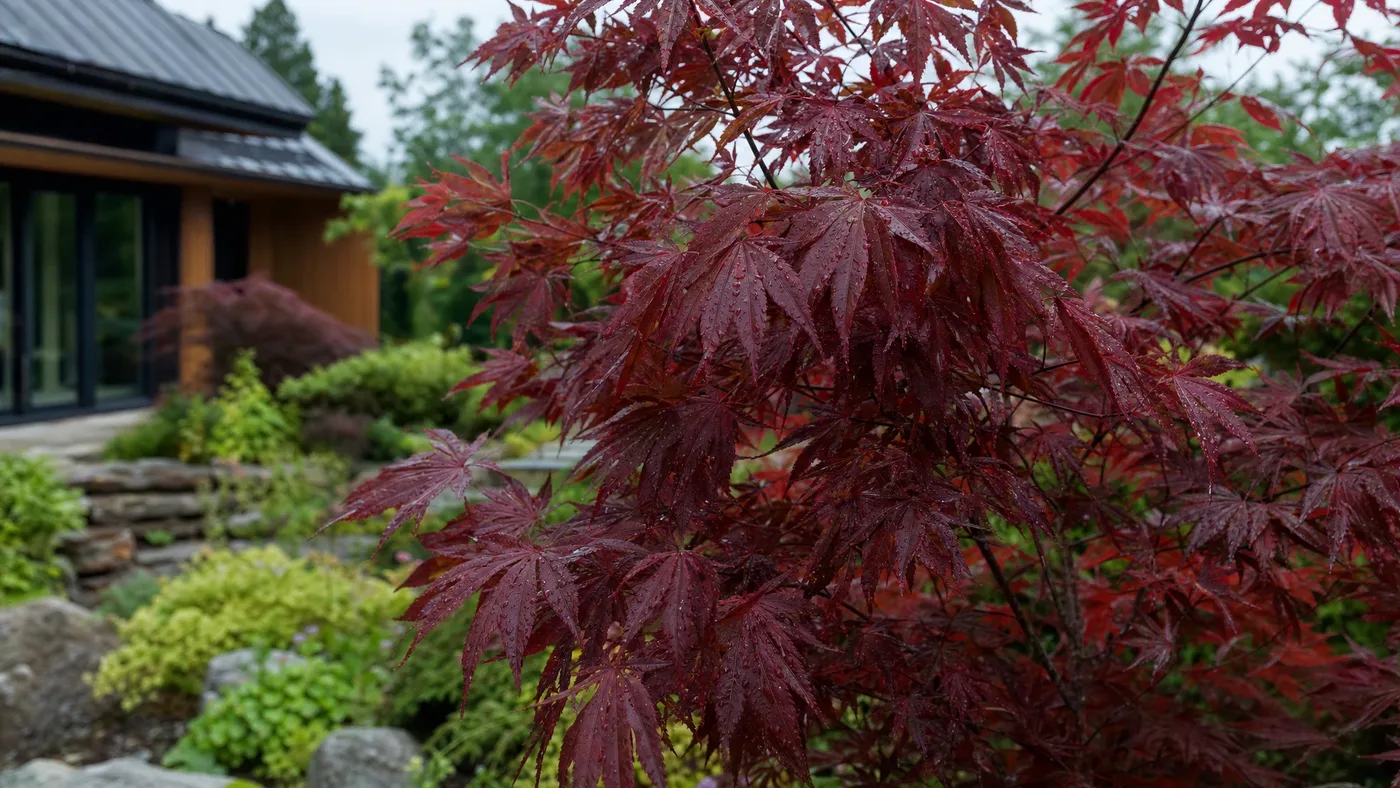
Are Japanese Red Maples Deer Resistant?
Japanese red maples are moderately deer resistant, not deer-proof. Rutgers rates Japanese maple 'Seldom Severely Damaged' (grade B), so deer usually pass it for tastier plants. Hungry deer in a hard winter will browse it, young trees are the likeliest targets, and bucks rub small trunks in fall.
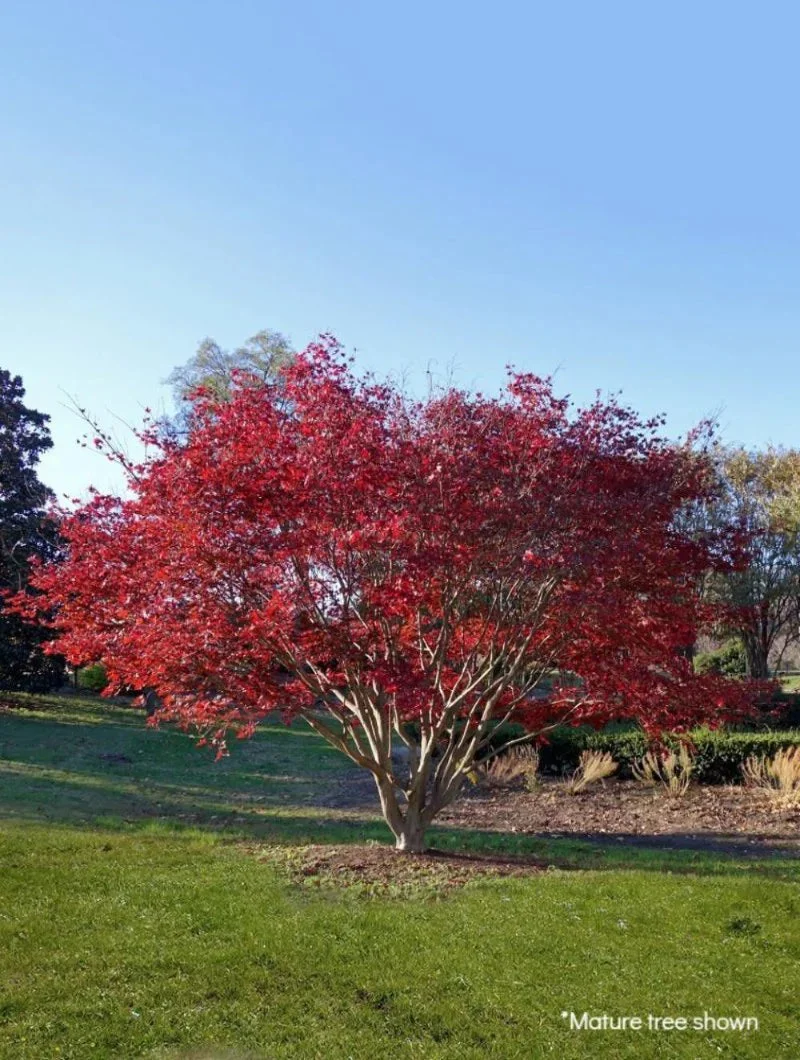
That nuance matters because the damage that kills a young maple is rarely the leaf-nibbling. It is the girdled trunk. Everything below is organized the way we would walk you through it: what deer actually do, how to read the damage, then how to protect the tree. For the rest of the tree's needs, see our Japanese red maple care guide.
Reading the Damage: Quick Symptom Table
| What you see | Likely cause | Usual season |
|---|---|---|
| Ragged, torn twig tips and missing tender shoots | Deer browse (deer tear rather than cut) | Late winter, spring |
| Bark shredded in strips on a small trunk, branches snapped | Buck antler rub | Fall |
| Clean, angled cuts on low stems | Rabbits or similar small browsers | Winter |
| Crisp brown leaf edges, no missing tissue | Leaf scorch (heat, wind, drought) | Summer |
| Lacy, skeletonized leaves | Japanese beetles | Summer |
The Basic Questions
Are Japanese maples deer resistant?
Moderately. The Rutgers deer-resistance system grades Japanese maple B, 'Seldom Severely Damaged'. That is a probability, not a promise.
Do deer eat Japanese maples?
Yes, when conditions push them to. Deer pressure, a hard winter, and the soft new growth on young trees are the usual triggers. Mature trees with plenty of bark and height usually shrug off an occasional nibble.
What does Rutgers grade B actually mean?
Rutgers grades plants from A (rarely damaged) through D (frequently severely damaged). Grade B means deer can and do browse it, but severe damage is the exception. Even A-grade plants get eaten in a bad winter, so treat every grade as odds.
Does a plant tag saying 'deer resistant' mean I can skip protection?
No. A tag is marketing, and it rarely says which deer, which winter, or how hungry. Rutgers grades are the only ratings worth reading, and they still describe tendencies.
Does the red leaf color change how deer treat it?
We have no source showing that it does. Rutgers rates the species, not individual cultivars or leaf colors. Plan on the same protection whether you buy 'Bloodgood', 'Emperor I', or an unnamed seedling-grown red selection.
When and How Deer Damage Japanese Maples
When is deer damage to a Japanese maple most likely?
Two windows: late winter into spring, when other food is scarce and new buds swell, and fall, when bucks rub. A mild year with plenty of acorns and lawn can pass with no damage at all.
Why are young trees at more risk?
A small tree has little wood and few leaves to lose, so one pass can strip it. Its trunk is also the right diameter for a buck to rub. Growth is slow, roughly 6-12 in per year, so lost branches take seasons to replace.
Is buck rub worse than browsing?
Usually, yes. Browsing removes shoots, but a rub strips bark and can girdle the trunk, cutting off the flow between roots and canopy. A girdled trunk often means the tree above the damage dies.
Will my maple recover from deer browsing?
Often, if the buds and main leader survive. Wait until the next growing season to see what leafs out. Do any corrective pruning in late fall to midwinter dormancy to avoid heavy sap bleed, and cut only dead or damaged wood.
Can a rubbed trunk be saved?
It depends on how much of the circumference is gone. Trimming ragged bark edges is reasonable, but a fully girdled trunk is usually a loss. Your local cooperative extension office can assess regional options.
How do I tell deer damage from leaf scorch?
Scorch browns the leaf margins but leaves the tissue in place. Deer remove it. Hot sun, wind, and drought stress cause scorch, so check watering before blaming wildlife.
Protecting the Tree: The Ladder
What is the cheapest protection that works?
A wire cage. Cage young trees for the first 2-3 years: a simple ring of wire fencing, staked, wide enough that leaves do not touch it and tall enough that deer cannot reach over. It beats every spray, and it also blocks buck rub.
Do deer repellents work?
Sometimes, as a backup. Rotate products so deer do not habituate, and reapply after rain. Always read and follow the pesticide label; the label is the law.
Should I rely on repellents alone?
Not for a young tree. Repellents reduce the odds of browsing, but they do nothing to a buck rubbing a trunk. Use a cage first and repellents second.
Is fencing the whole yard worth it?
Only if deer pressure is heavy and you have many vulnerable plants. For a single maple, a cage costs far less. Ask your extension office what deer pressure is typical in your area.
Which companion plants help?
Surround the maple with plants deer dislike. Ferns and hakone grass are generally rated resistant, while hostas are deer favorites and azaleas and rhododendrons are hit or miss, so check each on the Rutgers list. Our landscape ideas and companion plants guide covers combinations.
Does a container help?
A patio or courtyard setting, close to the house and activity, can reduce deer visits. It does not remove the risk, and container trees need root protection in freezing winters.
Fit, Safety and Buying
Who should not plant one in an open, deer-heavy area?
If deer cross your yard daily and you cannot cage the tree for the first 2-3 years, wait or choose another plant. An unprotected seedling-sized tree in a high-pressure area is the setup most likely to fail.
Is Japanese red maple poisonous to deer, pets, or horses?
Acer palmatum is not generally listed as toxic to pets or people. Its relative Acer rubrum, the native red maple, is a different species and is toxic to horses when leaves are wilted. Read our toxicity guide, and call your veterinarian or the ASPCA Animal Poison Control Center if an animal has eaten any.
Does a bigger tree survive deer better?
Generally yes. More wood, a thicker trunk, and higher branches mean deer damage a smaller share of the tree. Our nursery-grown trees at /shop/ come in 3-gallon (2-3 ft), 5-gallon (2-3 ft, more developed), and 7-gallon (3-4 ft) sizes, and the larger ones give you a head start.
Quick Reference
| Item | Detail |
|---|---|
| Rutgers rating | Seldom Severely Damaged (grade B) |
| Cage young trees | First 2-3 years |
| Worst damage | Buck rub on small trunks in fall (girdling) |
| Browse risk | Hard winters, high deer pressure, tender spring growth on young trees |
| Repellents | Rotation-only backup; follow the label |
| Repair pruning | Late fall to midwinter; dead or damaged wood only |
| Companions | Check each plant's Rutgers grade; ferns and hakone grass are generally resistant |
Japanese Red Maple
Nursery-grown Japanese Red Maple in sizes from 3 Gallon 2-3 ft, shipped to your door.
From $118.33
Shop Now →