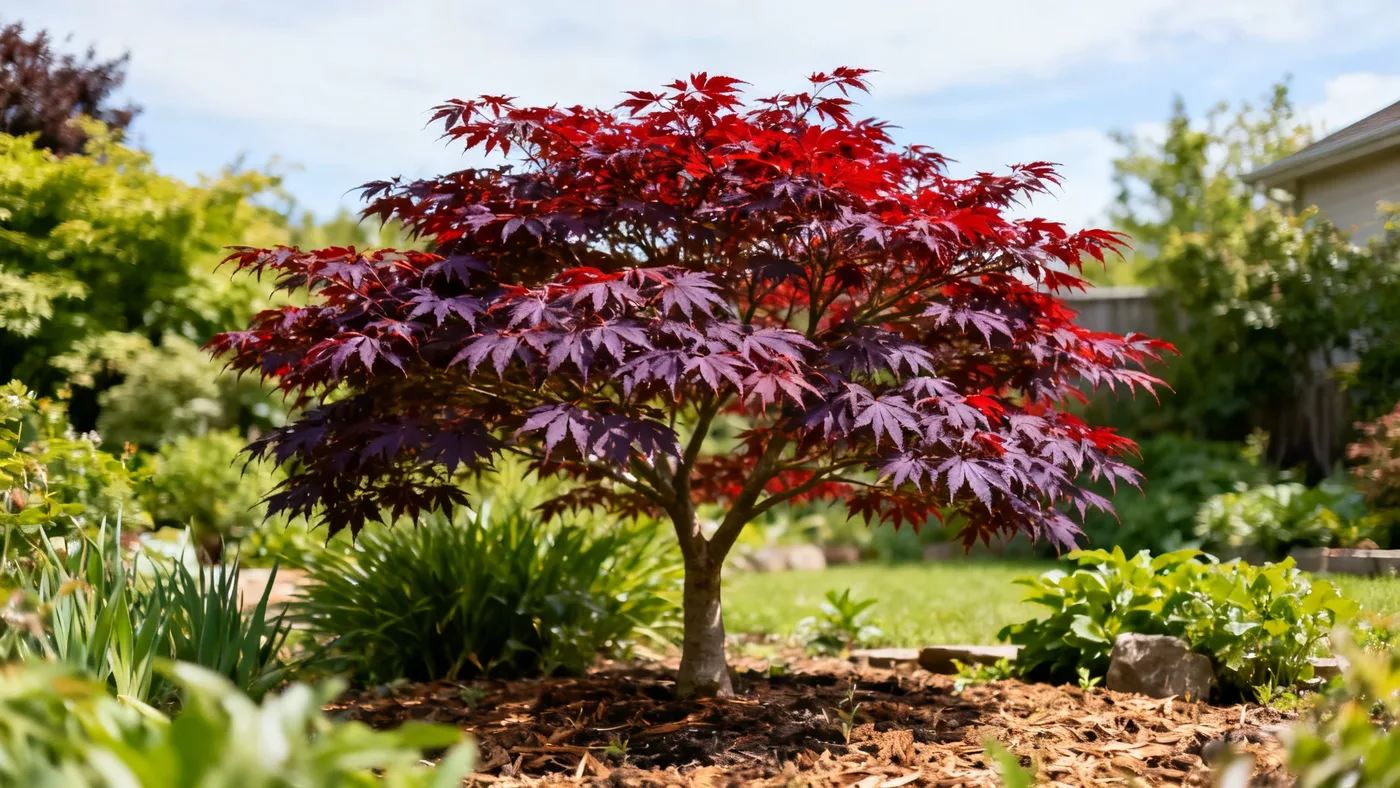
Is Japanese Red Maple Toxic to Dogs, Cats or Horses?
Japanese Red Maple (Acer palmatum) is not generally listed as toxic to dogs, cats, horses, or people. However, confusion often arises because a native North American tree with a similar common name, Acer rubrum (commonly called "red maple"), IS toxic to horses and can cause serious health issues if leaves are ingested, especially when wilted or dried. This guide clarifies the facts about Japanese Red Maple pet safety and explains how to distinguish between the two species.
Toxicity Overview
The most important distinction for pet owners is this: Acer palmatum (Japanese Red Maple, the ornamental tree typically grown in home gardens) has no known toxicity to pets or people. Acer rubrum (the native North American red maple, a large shade tree), on the other hand, contains toxins that can harm horses. Because both trees share the word "red" and "maple" in their common names, veterinary and gardening resources often get confused in casual conversation. If you planted a Japanese Red Maple ornamental from a nursery, your pets are not at risk from toxicity.
Dogs and Japanese Red Maple
Is Japanese Red Maple toxic to dogs?
No. Acer palmatum is not listed as toxic to dogs by major veterinary sources including the ASPCA and Pet Poison Helpline. A Japanese Red Maple in your landscape poses no poisoning risk to dogs.
Can dogs safely eat Japanese Red Maple leaves?
While Japanese Red Maple leaves are not toxic, they are not food and offer no nutritional value to dogs. Dogs that chew on leaves or bark may experience mild digestive upset from the plant material itself (not toxins), similar to eating grass or other non-food plants. Monitor your dog if it shows interest in chewing the tree.
What should I do if my dog chews on the Japanese Red Maple?
If your dog has chewed a small amount of leaves or bark, no emergency action is necessary since the plant is not toxic. If your dog eats a large quantity of plant material, watch for signs of mild digestive upset like vomiting or loose stools. Contact your veterinarian if symptoms persist or worsen.
Are Japanese Red Maple seeds dangerous for dogs?
Japanese Red Maple produces small winged seeds (samaras) that are not toxic. Dogs are unlikely to eat them in quantity, but if your dog swallows a few seeds, there is no poisoning risk. The seeds pose no known health concern.
Cats and Japanese Red Maple
Is Japanese Red Maple toxic to cats?
No. Acer palmatum is not toxic to cats. Cats can safely be around Japanese Red Maple trees without risk of poisoning from the plant itself.
Can cats climb or rest on Japanese Red Maple branches?
Yes, cats can safely climb and rest on Japanese Red Maple branches from a toxicity standpoint. However, consider the tree's structure and size when deciding if it is a suitable climbing tree. Dwarf or weeping cultivars typically grow 6-10 feet tall, while taller forms reach 15-25 feet.
What if my cat eats Japanese Red Maple leaves?
Small amounts of leaves pose no toxicity risk. Cats are less likely than dogs to chew on plants, but if your cat does nibble leaves, no emergency action is needed. Large quantities of plant material might cause mild digestive upset; contact your vet if your cat shows vomiting or appetite changes.
Should I be concerned about Japanese Red Maple pollen?
Japanese Red Maple produces inconspicuous red-purple flowers in early to mid-spring with no notable fragrance. The pollen is not considered an allergen risk for cats or dogs. Cats with seasonal allergies are far more likely to react to grass, tree pollen from other sources, or environmental triggers.
Horses and Japanese Red Maple
Is Japanese Red Maple toxic to horses?
No. Acer palmatum (Japanese Red Maple) is not toxic to horses. The confusion arises because Acer rubrum (native North American red maple, a much larger shade tree) IS toxic to horses and can cause serious illness or death. If you have planted an ornamental Japanese Red Maple from a nursery, your horses are not at risk.
How can I tell the difference between Japanese Red Maple and the toxic native red maple?
Japanese Red Maple (Acer palmatum) is a small to medium ornamental tree, typically 15-25 feet tall when mature, with deeply lobed palmate leaves (usually 5-7 lobes). The native toxic red maple (Acer rubrum) is a much larger shade tree, often 40-60 feet tall, with simpler, less-deeply-lobed leaves. If your tree is an ornamental landscape specimen from a nursery, it is almost certainly the safe Japanese Red Maple.
Can horses eat Japanese Red Maple bark or leaves?
While Japanese Red Maple is not toxic, it is not suitable forage for horses and offers no nutritional benefit. Horses should not be allowed to strip bark or strip and consume leaves as a routine behavior. Nutritional needs should be met with appropriate hay and pasture.
What are the signs of toxicity from native red maple poisoning in horses?
The native red maple (Acer rubrum) toxin causes hemolytic anemia in horses when wilted leaves are ingested. Signs include depression, lethargy, dark urine, pale gums, weakness, and potentially death. If you suspect your horse has eaten leaves from a native red maple (not the ornamental Japanese Red Maple), contact an equine veterinarian immediately.
General Pet Safety Around Japanese Red Maple
Are any parts of Japanese Red Maple toxic?
No. Leaves, bark, seeds, roots, and flowers of Acer palmatum are all non-toxic. Every part of the plant can safely be around pets without risk of poisoning.
What should I do if my pet repeatedly eats Japanese Red Maple leaves?
No special feeding or treatment is needed from a toxicity standpoint. If your pet is eating the tree repeatedly, this is usually a behavioral or boredom concern rather than a health risk. Consult your veterinarian about behavioral management if consumption continues.
Can Japanese Red Maple cause allergic reactions in pets?
No. Acer palmatum is not known to cause allergic reactions in dogs, cats, or horses. If your pet shows signs of allergies (itching, runny nose, respiratory distress) around the tree, environmental allergens or other plants are more probable culprits.
Is Japanese Red Maple safer than other ornamental trees for pets?
Japanese Red Maple is as safe as any commonly grown ornamental shade tree. Many popular landscape trees are non-toxic to pets, including dogwoods, ash, and most maples (except the native red maple). If pet safety is your priority, consult your veterinarian for a list of pet-safe trees suitable for your region.
What companion plants grow well with Japanese Red Maple that are also pet-safe?
Japanese Red Maple pairs well with non-toxic companion plants including azaleas, rhododendrons, hostas, ferns, and hakone grass. Many of these understory plants are also safe for pets. Always verify individual plant toxicity if you have specific concerns about species in your landscape.
What to Do If Your Pet Ingests Japanese Red Maple
If my pet eats Japanese Red Maple, is emergency veterinary care needed?
No emergency care is needed for eating Japanese Red Maple alone, since the plant is non-toxic. If your pet has eaten only leaves, bark, or seeds from an ornamental Japanese Red Maple, toxicity is not a concern. Monitor your pet for signs of mild digestive upset.
When should I call a veterinarian if my pet eats Japanese Red Maple?
Call your veterinarian if your pet shows vomiting, diarrhea, loss of appetite, or lethargy lasting more than a few hours after eating plant material. These signs are usually related to eating plant fiber, not toxins from Japanese Red Maple. Your vet can assess whether other causes are at play.
What information should I give my vet if my pet ate a maple tree?
Tell your veterinarian the exact species name (Acer palmatum, Japanese Red Maple) if you know it, not just "maple." Provide details about how much was eaten and when. If you are uncertain whether the tree is an ornamental Japanese Red Maple or the native red maple, take a photo of leaves or branches to show your vet.
Should I remove my Japanese Red Maple if I have pets?
No removal is necessary based on toxicity concerns. Acer palmatum is safe for pets and makes an excellent ornamental choice for homes with dogs, cats, or horses. Focus instead on providing proper care for your tree, including consistent watering and appropriate sun exposure, as outlined in our Japanese Red Maple care guide.
Quick Reference Table
| Pet or Concern | Toxicity Risk |
|---|---|
| Dogs eating Japanese Red Maple | No toxicity risk |
| Cats eating Japanese Red Maple | No toxicity risk |
| Horses eating Japanese Red Maple | No toxicity risk |
| Japanese Red Maple pollen or flowers | No known allergen |
| Seeds or bark ingestion | No toxicity risk |
| Native red maple (Acer rubrum) to horses | TOXIC: hemolytic anemia, potentially fatal |
| Emergency vet visit needed for Japanese Red Maple ingestion | Only if other symptoms develop |
| Tree removal for pet safety | Not necessary for toxicity |
Related Resources
For more information about Japanese Red Maple growing and care, explore these guides: