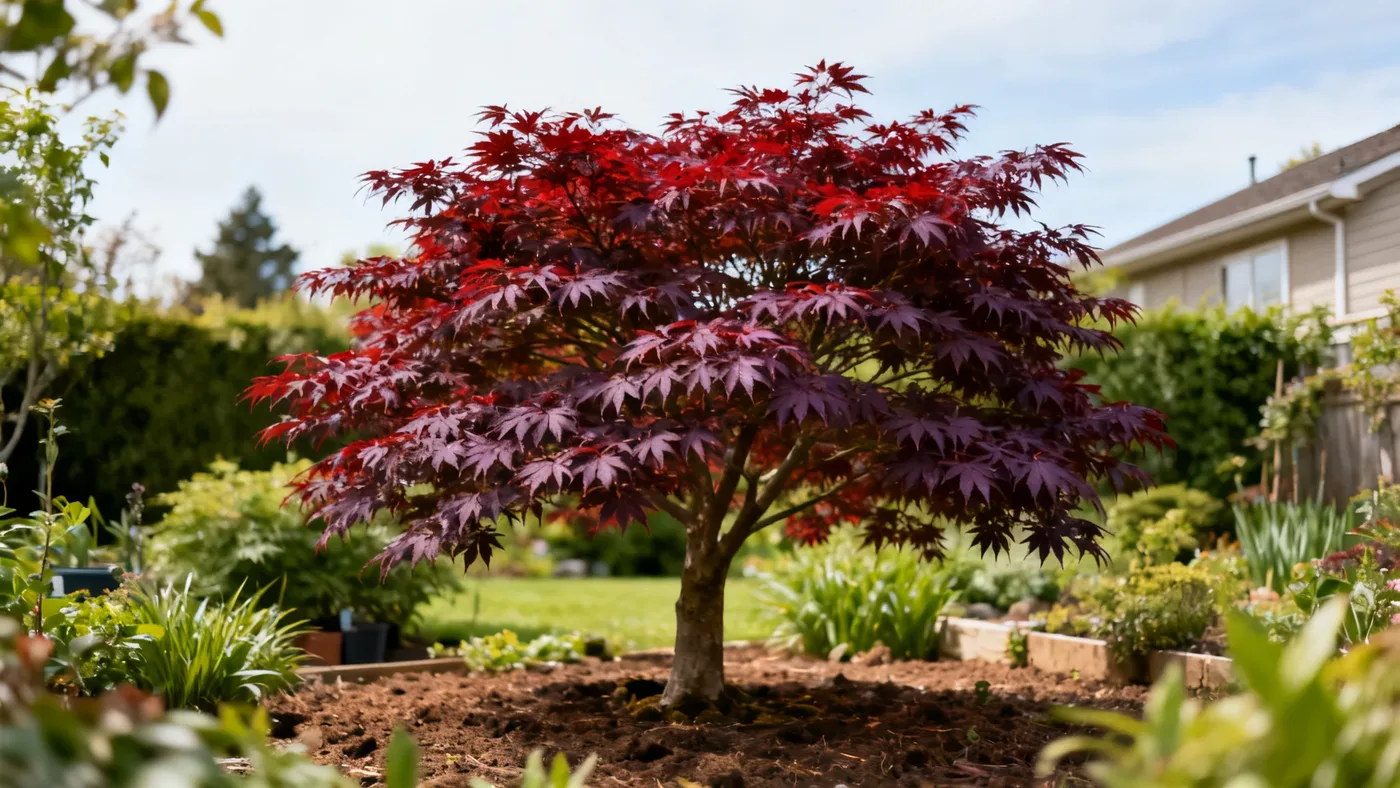
Japanese Red Maple vs Red Maple: What's the Difference?
Despite their similar common names, Japanese Red Maple and Red Maple are entirely different species with very different needs, sizes, and landscape roles. Confusing the two is easy, both have red foliage and "maple" in their names, but they require different care and serve different purposes in a yard.
This guide walks through the key differences so you can choose the right tree for your space and climate.
Quick Species Overview
Japanese Red Maple is Acer palmatum, a small deciduous tree native to Japan, Korea, and parts of China. Red Maple (often called native red maple) is Acer rubrum, a large shade tree native to eastern and central North America. They share almost nothing except the color red and the word "maple."
The confusion happens because nurseries and online retailers sometimes use "red maple" loosely, and the common names don't clarify which species you're getting. Always check the botanical name on the plant label: Acer palmatum (Japanese) or Acer rubrum (Red Maple).
Side-by-Side Comparison
| Attribute | Japanese Red Maple (Acer palmatum) | Red Maple (Acer rubrum) |
|---|---|---|
| Botanical Name | Acer palmatum (red-leaved forms) | Acer rubrum |
| Native Range | Japan, Korea, China | Eastern and central North America |
| Mature Height | 15–25 ft (dwarf forms 6–10 ft) | 40–60 ft (often taller) |
| Mature Width | 12–20 ft (dwarf forms 8–12 ft) | 25–40 ft |
| Growth Rate | Slow to moderate (6–12 in per year) | Moderate to fast |
| USDA Hardiness Zones | 5–8, some cultivars 9 with shade | 3–9 |
| Sun Requirements | Full sun to part shade; afternoon shade in hot climates | Full sun to part shade |
| Soil Preference | Rich, well-drained loam, slightly acidic (pH 5.5–6.5) | Adaptable; tolerates wet soils better |
| Drought Tolerance | Low to moderate; needs consistent moisture | Moderate to good; more forgiving |
| Leaf Shape | Delicate, palmate (5–7 lobes), finely dissected on some cultivars | Simple, opposite; coarser texture |
| Fall Color | Vivid red, orange, or crimson | Red to orange (variable by cultivar) |
| Toxicity to Horses | Not listed as toxic | Toxic if leaves are wilted or dried |
| Landscape Role | Specimen, focal point, patio tree, Japanese gardens | Shade tree, naturalized planting, large screens |
Growth Habit and Scale
The most dramatic difference is size. Japanese Red Maple reaches 15–25 feet tall at maturity (some dwarf cultivars stay 6–10 feet). Red Maple typically grows 40–60 feet tall, sometimes taller. This is not a small difference. A Japanese Red Maple fits in a front yard or patio corner. A Red Maple demands a large property or park setting.
Japanese Red Maple grows slowly to moderately, adding roughly 6–12 inches per year. Red Maple grows faster, so it reaches full size sooner. If you want a tree that fills your landscape in 10–15 years without overwhelming it, Japanese Red Maple is predictable. Red Maple will eventually dominate.
Growing Requirements
Japanese Red Maple prefers consistently moist, well-drained soil rich in organic matter, with a slightly acidic pH around 5.5–6.5. It does best with afternoon shade in hot-summer climates to prevent leaf scorch and preserve color. It has low to moderate drought tolerance, especially when young, so regular watering during the first 2–3 years after planting is essential.
Red Maple is more adaptable. It tolerates wet soils and even some flood conditions, which Japanese Red Maple cannot. It also has better drought tolerance once established. This makes Red Maple useful in landscapes with poor drainage or variable moisture. However, Red Maple still prefers full sun to part shade and typically grows in zones 3–9, making it hardy in cooler climates than Japanese Red Maple.
Year-Round Appeal
Both trees offer red foliage, but the leaf texture differs significantly. Japanese Red Maple has delicate, deeply lobed palmate leaves that create an airy, refined appearance. The foliage is often the focal point of the entire tree. Fall color is vivid red, orange, or crimson, depending on the cultivar and season. Winter reveals an elegant, graceful branching structure.
Red Maple has simpler, opposite leaves with a coarser texture. Its red flowers appear in early spring before the canopy leafs out. Fall color is also red to orange, though it is often less consistent or saturated than Japanese Red Maple. Red Maple's broad canopy provides more summer shade and winter interest comes from its larger branch structure.
Landscape Suitability
Japanese Red Maple excels as a specimen tree or focal point. Use it to frame an entryway, anchor a patio, or create a Japanese or Zen-style garden. It pairs well with azaleas, rhododendrons, hostas, ferns, and ornamental grasses. It's also suitable for containers, especially dwarf selections, so it works even in small spaces.
Red Maple is a shade tree for large landscapes. Plant it to screen views, naturalize a wooded edge, or provide canopy over a lawn. It works in parks, golf courses, and conservation plantings. Its faster growth and larger size make it impractical for small residential yards where a focal-point tree is needed.
A Critical Toxicity Note
Red Maple (Acer rubrum) leaves are toxic to horses if the leaves are wilted or dried. This is a serious concern if horses graze your property or nearby. Japanese Red Maple (Acer palmatum) is not generally listed as toxic to horses or other pets. If you have horses or livestock, always verify the species before planting and consult your veterinarian if a tree is nearby.
Pros and Cons at a Glance
Japanese Red Maple
Pros:
- Compact size fits most residential yards
- Exquisite leaf shape and refined appearance
- Stunning fall color
- Works as a specimen, focal point, or container tree
- Not toxic to horses
- Dwarf cultivars available for small spaces
Cons:
- Slower growth rate (patience required)
- Needs consistent soil moisture and afternoon shade in hot climates
- Poor drought tolerance when young
- Hardier only to zones 5–8 (some cultivars zone 9 with shade)
- Requires well-drained soil; poor in wet conditions
Red Maple
Pros:
- Much larger, provides substantial shade
- Faster growth reaches mature size sooner
- Adaptable to wet or poorly drained soils
- Better drought tolerance once established
- Hardy in zones 3–9, works in colder climates
- Naturalized plantings and large-scale landscapes
Cons:
- Becomes a very large tree; needs substantial space
- Toxic to horses if leaves are wilted or dried
- Coarser leaf texture; less refined appearance
- Too large for most residential focal-point uses
- Fall color can be inconsistent by cultivar
Best For: Choosing Your Tree
Choose Japanese Red Maple if:
- You want a compact tree for a residential yard
- You're looking for a focal-point or specimen tree
- You need elegant foliage and refined appearance
- Your yard is 0.5 acres or smaller
- You have well-drained soil and can provide consistent moisture
- You want to plant in a Japanese garden or patio setting
- You have horses and need a non-toxic option
- Your climate is USDA zones 5–8
Choose Red Maple if:
- You have a large property and need substantial shade
- Your site is wet or has poor drainage
- You want a fast-growing canopy tree
- You're naturalizing a wooded edge or conservation area
- Your climate is USDA zones 3–9 (including colder zones)
- You need a shade tree for a park, golf course, or large landscape
- You want a native tree for wildlife value
Need Help Caring for Japanese Red Maple?
If you've chosen Japanese Red Maple, check the Japanese Red Maple Care Guide for detailed instructions on sun, water, soil, pruning, and year-round maintenance.
Quick Reference
| Question | Answer |
|---|---|
| Are Japanese Red Maple and Red Maple the same tree? | No. Japanese Red Maple is Acer palmatum (Asian). Red Maple is Acer rubrum (North American native). Completely different species. |
| Which is smaller? | Japanese Red Maple (15–25 ft). Red Maple is much larger (40–60+ ft). |
| Which is toxic to horses? | Red Maple (wilted or dried leaves). Japanese Red Maple is not listed as toxic. |
| Which works in a residential yard? | Japanese Red Maple as a focal point. Red Maple only on large properties. |
| Which tolerates wet soil? | Red Maple. Japanese Red Maple needs well-drained soil. |
| Which has finer foliage? | Japanese Red Maple has delicate, palmate leaves. Red Maple has simpler, coarser leaves. |
| Which is hardy in colder zones? | Red Maple (zones 3–9). Japanese Red Maple is zones 5–8 (some cultivars zone 9). |
| Which grows faster? | Red Maple. Japanese Red Maple is slow to moderate. |