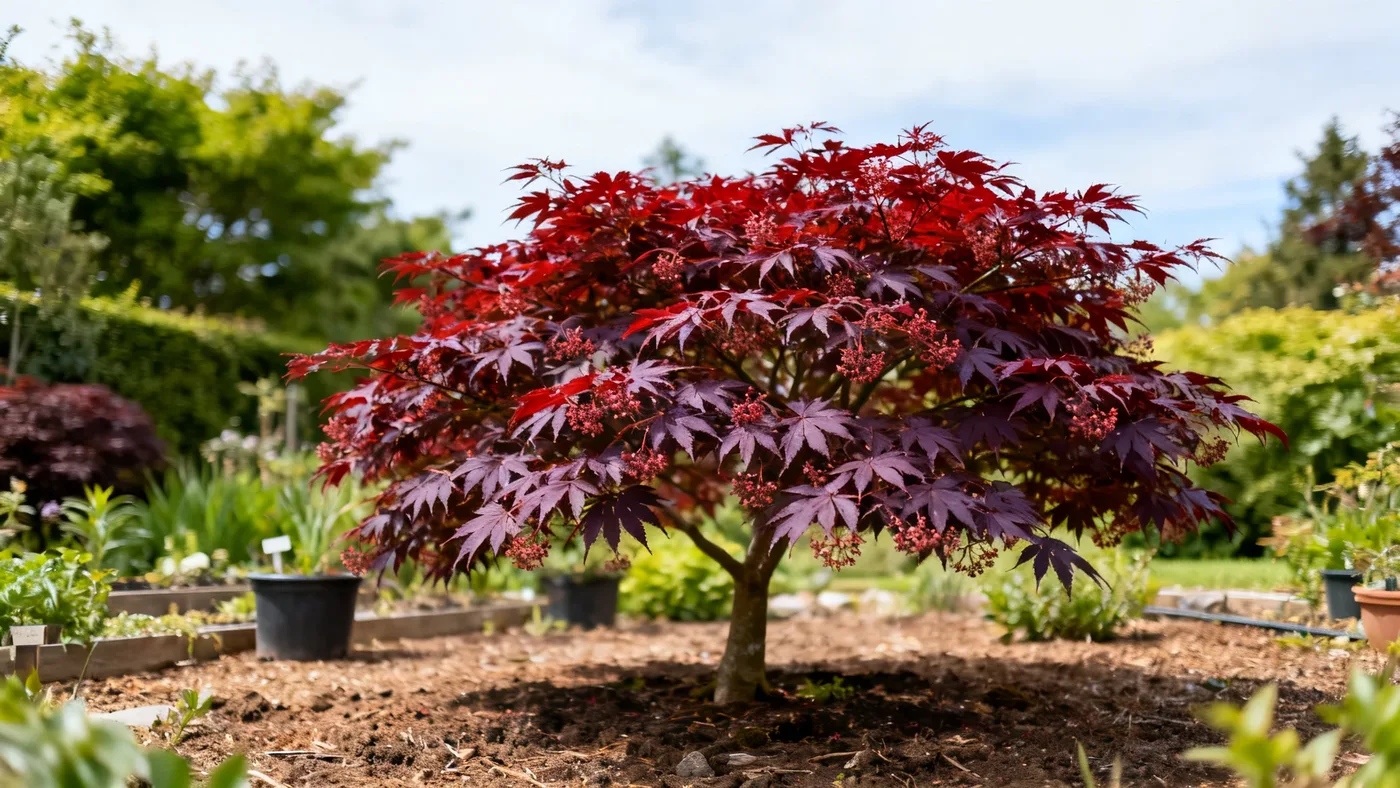
Japanese Red Maple Varieties and Cultivars Compared
If you are shopping for a Japanese Red Maple, you have likely noticed that nurseries sell them under many names: 'Bloodgood', 'Crimson Queen', 'Emperor I', and often just a generic "Japanese Red Maple" in a quart container. These are not all the same tree. Understanding the key differences between Japanese Red Maple varieties and cultivars will help you choose one that fits your space, climate, and design goals.
Grafted Cultivars vs. Seed-Grown Selections
The fundamental distinction among types of red Japanese Maple trees is how they are propagated. Grafted named cultivars like 'Bloodgood' and 'Crimson Queen' are genetically identical to their parent tree, so they will reach a predictable mature height and width, hold consistent color year to year, and perform reliably in your hardiness zone. Seed-grown red selections, often sold simply as "Japanese Red Maple" or under the Atropurpureum Group label, can vary significantly in their mature size, exact color, and heat tolerance, even within the same nursery batch. This is not a defect, but a fact worth knowing if consistency matters to your landscape.
Cultivars also differ in growth habit. Some grow as upright, vase-shaped trees reaching 15 to 25 feet tall and 12 to 20 feet wide. Others are dwarf or cutleaf (dissectum) types that stay much smaller, often 6 to 10 feet tall and 8 to 12 feet wide, with deeply lobed or thread-like foliage and a graceful, sometimes weeping branching pattern. Growth rate across the genus is slow to moderate, roughly 6 to 12 inches per year, so size is less about speed and more about the genetic ceiling of that particular cultivar.
Standard Upright Red Japanese Maple Cultivars
Upright forms are the classic Japanese Red Maple tree shape: a structured branching pattern with a clear central leader, reaching 15 to 25 feet at maturity depending on cultivar. These work well as specimen trees, focal points, or small shade trees in residential yards.
'Bloodgood' is one of the most widely available best Japanese Red Maple cultivars. It holds a deep crimson color from spring through summer, rarely fading green even in afternoon shade, and turns brilliant scarlet in fall. At maturity, 'Bloodgood' typically reaches 20 to 25 feet tall and 15 to 20 feet wide. It tolerates heat better than many other cultivars and remains reliably hardy in zones 5 to 8. Always grafted, it ensures true-to-type color and performance. However, young specimens can show trunk sunscald in full winter sun during harsh climates.
'Emperor I' is another popular grafted upright form with deep reddish-purple foliage that holds color through summer heat better than many seedling-grown selections. It shares a similar mature height and width to 'Bloodgood', 15 to 25 feet tall and 12 to 20 feet wide, and is equally hardy in zones 5 to 8. 'Emperor I' tends to have a slightly more compact branching pattern when young, which some gardeners prefer for tighter urban spaces.
'Fireglow' is prized for an especially vivid red summer color that deepens in fall. This cultivar tends toward the smaller end of the standard range, often staying 15 to 20 feet tall rather than the full 25 feet. It is grafted and reliable in zones 5 to 8.
Atropurpureum Group seedlings are what you typically see sold as a generic "Japanese Red Maple" in quart or 1-gallon containers at big-box nurseries. These are seed-grown, which means color, ultimate height, and branching can vary. Some will be deep red; others may lean more purple or shift green in deep shade or peak summer heat. Mature height can range anywhere from 15 to 25 feet, and you will not know the full potential until the tree has grown for several years. Seed-grown trees are usually less expensive than named cultivars, which appeals to budget-conscious gardeners, but they lack the predictability of grafted stock.
Dwarf and Weeping Japanese Red Maple Varieties
If space is limited or you want a specimen for a container or small patio, dwarf and cutleaf varieties offer the Japanese Red Maple look at a smaller scale. These cultivars stay 6 to 10 feet tall and 8 to 12 feet wide at maturity.
'Crimson Queen' is the iconic dwarf Japanese Red Maple, especially prized for its dissectum (weeping) form. Its foliage is finely cut into threadlike segments, giving the tree an airy, almost lacey appearance. Color is typically rich crimson-red that holds through summer and deepens in fall. 'Crimson Queen' is reliably hardy in zones 5 to 8 and widely available as grafted stock. Its weeping habit makes it excellent for focal planting, entrances, or containers. The tradeoff is that fine foliage is more prone to leaf scorch in hot, windy, or drought-stressed conditions, so afternoon shade and consistent moisture are more critical than with upright forms.
Any time you see a dwarf Japanese Red Maple marketed with a name, verify with the grower whether it is grafted and what its mature height is expected to be. Grafted dwarf cultivars will be consistent; seed-grown dwarfs may or may not stay as compact as advertised.
Side-by-Side Comparison: Bloodgood vs. Crimson Queen vs. Seed-Grown
| Cultivar or Type | Mature Height | Mature Width | Summer Color | Fall Color | Hardiness Zones | Best For |
|---|---|---|---|---|---|---|
| 'Bloodgood' | 20-25 ft | 15-20 ft | Deep crimson, reliable | Brilliant scarlet | 5-8 | Specimen, shade tree, heat tolerance |
| 'Emperor I' | 15-25 ft | 12-20 ft | Deep reddish-purple | Crimson | 5-8 | Compact urban space, specimen |
| 'Fireglow' | 15-20 ft | 12-18 ft | Vivid red | Deep red | 5-8 | Color intensity, moderate size |
| 'Crimson Queen' | 6-10 ft | 8-12 ft | Crimson, fine foliage | Deep red | 5-8 | Containers, small patios, focal point |
| Atropurpureum Group (seed-grown) | 15-25 ft (variable) | 12-20 ft (variable) | Red to purple (variable) | Red to orange (variable) | 5-8 | Budget-conscious, less critical placement |
Pros and Cons by Category
Standard Upright Grafted Cultivars ('Bloodgood', 'Emperor I', 'Fireglow')
- Pros: True-to-type color and size; reliable performance across seasons; mature dimensions predictable; hardy zones 5 to 8.
- Cons: Higher cost than seed-grown stock; slower initial growth than some seedlings; young trees may show trunk sunscald in harsh winter sun.
Dwarf/Weeping Cultivars ('Crimson Queen')
- Pros: Compact size ideal for small spaces and containers; distinctive lacey foliage and graceful weeping form; reliable grafted stock; excellent focal point impact.
- Cons: Fine foliage more susceptible to leaf scorch in heat, drought, or wind; needs consistent moisture; less canopy for shade.
Seed-Grown Red Selections (Atropurpureum Group)
- Pros: Lower cost; widely available in quart sizes at mass-market nurseries; some seedlings perform beautifully.
- Cons: Height, width, and color are variable; may fade green in deep shade or summer heat; unpredictable performance until mature.
Which Japanese Red Maple Cultivar Is Right for You
For guaranteed color and size consistency: Choose a grafted named cultivar like 'Bloodgood' or 'Crimson Queen'. You pay more upfront, but you know exactly what you are getting.
For heat tolerance in zone 8 or warmer parts of zone 7: 'Bloodgood' has a proven track record of retaining vibrant color even in afternoon heat. Afternoon shade still helps, but this cultivar is more forgiving than 'Crimson Queen'.
For limited space or container planting: 'Crimson Queen' or another dwarf cultivar is the clear choice. At 6 to 10 feet tall and 8 to 12 feet wide, it fits courtyard and patio settings where a 20-foot tree would overwhelm the area.
For budget-conscious planting and some color variation is acceptable: A seed-grown Atropurpureum red maple is a reasonable option. Many perform beautifully, and you will spend significantly less than a grafted cultivar.
For the deepest, most reliable fall color: All grafted cultivars described here deliver excellent autumn displays. 'Bloodgood' and 'Crimson Queen' are especially consistent.
Once you have selected your cultivar, refer to our detailed Japanese Red Maple care guide for planting, watering, and soil requirements. For information on maintaining the shape and health of your tree over time, see our guide to pruning.
Quick Reference: Cultivar Selection at a Glance
| Your Priority | Choose This | Why |
|---|---|---|
| Predictable color year to year | Any grafted cultivar ('Bloodgood', 'Emperor I', 'Fireglow', 'Crimson Queen') | Genetically identical to parent; no variation |
| Heat tolerance and summer color hold | 'Bloodgood' | Proven performance in zone 8 and afternoon sun |
| Small space or container | 'Crimson Queen' or other dwarf grafted form | Stays 6-10 ft tall; ideal for patios and entries |
| Lower cost | Atropurpureum Group seed-grown seedling | Less expensive than named cultivars |
| Maximum fall color impact | 'Bloodgood' or 'Crimson Queen' | Both reliably deliver brilliant red to crimson autumn |
| Moderate upright tree for urban site | 'Emperor I' | Compact branching; 15-25 ft range fits tight spaces |