Emperor I vs Bloodgood: Which Red Japanese Maple to Plant?
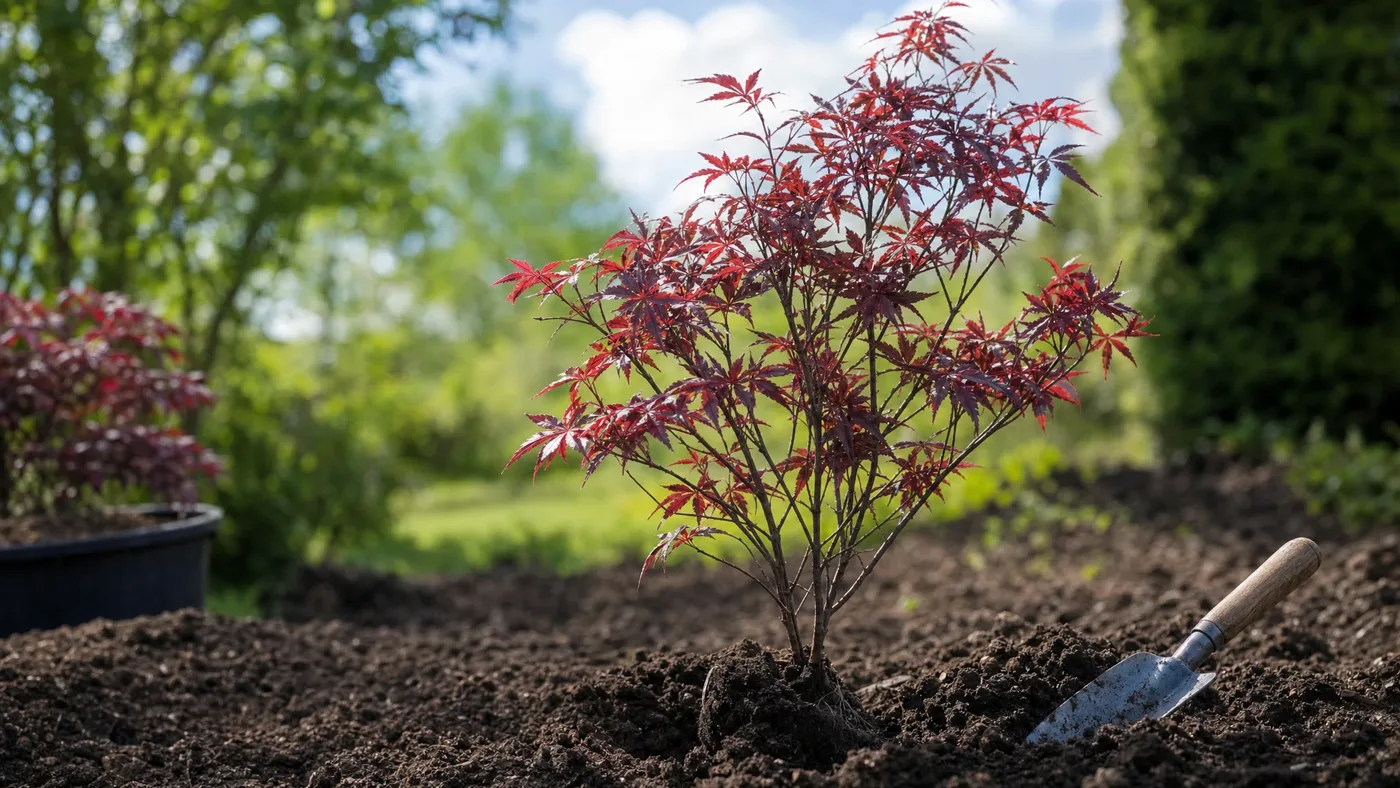
The short verdict: choose by your last-frost pattern, not by color. Both trees are upright reds listed for zones 5-8, and at 2 ft tall in a pot you cannot verify which one has the brighter leaf anyway. The one difference that matters is timing. Emperor I commonly leafs out about two weeks later than Bloodgood, so its new growth often misses the late freeze that burns Bloodgood's. If your yard does not get those freezes, Bloodgood is the proven default.
Why the "emperor 1 vs bloodgood" question is mostly about frost
Most comparison pages argue about shades of red. That is a weak basis for a decision. Color descriptions in catalogs and plant profiles are written about mature trees under good conditions, and leaf color shifts with sun, heat and season. Species-level guidance for Japanese red maples says foliage can shift greener in deep shade or summer heat, which applies to both of these trees.
Timing is different. Growers and extension sources commonly report that Emperor I breaks bud roughly two weeks after Bloodgood. Japanese maple new growth is tender. A hard freeze after leaf-out blackens the young leaves and can set the tree back for the season. Two extra weeks of dormancy is real protection in a frost pocket, which is a low spot or hollow where cold air settles on clear spring nights.
One caution: this is sourced reasoning from grower and extension descriptions, not a side-by-side timing log. Your microclimate will move the dates in both directions.
Head-to-head comparison table
Cultivar figures below are commonly listed ones, such as those in Missouri Botanical Garden (MBG) profiles and extension sources. Treat them as typical ranges, not promises.
| Attribute | 'Bloodgood' | 'Emperor I' |
|---|---|---|
| Habit | Upright | Upright |
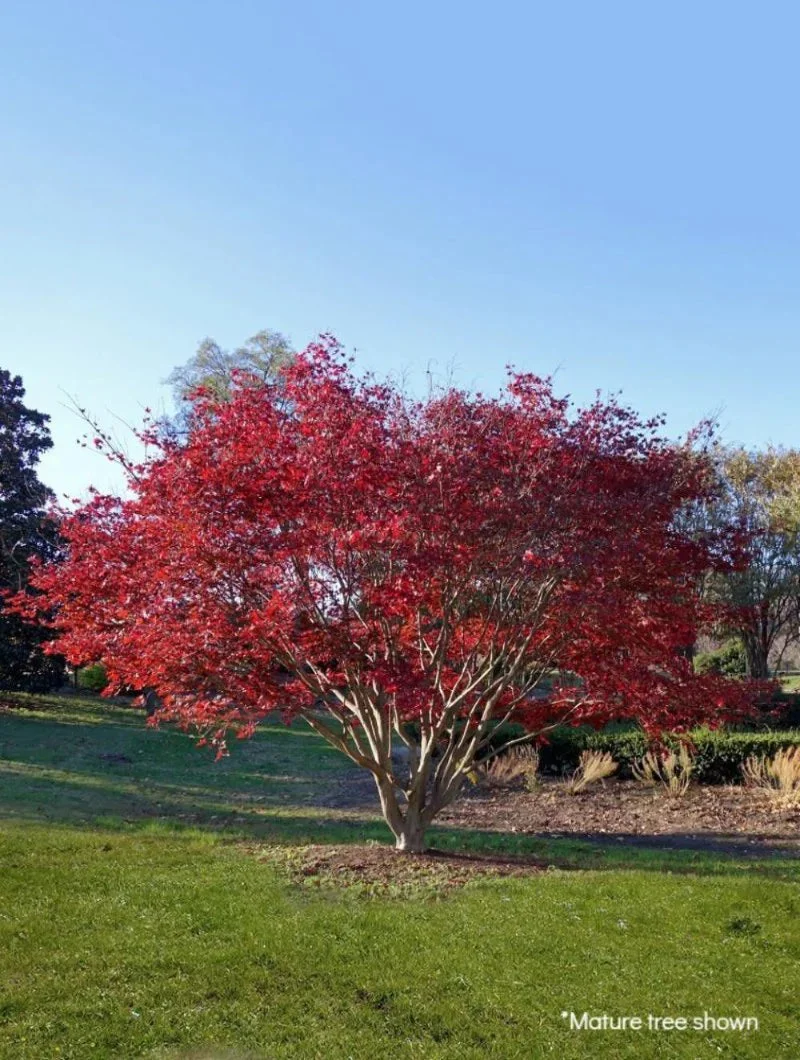
| Mature size (commonly listed) | 15-20 ft tall and wide | Around 15 ft |
| USDA zones | 5-8 | 5-8 |
| Leaf-out timing | Standard early spring | Roughly two weeks later (commonly reported) |
| Color hold | Deep burgundy that holds in sun | Holds color in heat; often described as slightly brighter red |
| Young-tree form | Upright, open | Often described as slightly more compact when young |
| Fall color | Scarlet | Red tones; intensity varies by season |
| Track record | One of the oldest proven upright reds | Newer, valued for late leaf-out |
Read that table twice and you will see how little separates them. Size, zones and habit overlap almost completely. Only the leaf-out row changes your planting decision.
Bloodgood: pros and cons
Pros
- Long track record. It is one of the oldest proven upright reds, so there is plenty of regional experience to lean on.
- Color that holds in sun. Deep burgundy foliage that stays dark through summer is its main selling point.
- Scarlet fall color to close the season.
- Larger finished size. At 15-20 ft tall and wide it fills a focal-point spot well.
Cons
- Earlier leaf-out. In late-frost regions or low spots, new growth is more exposed to a freeze.
- It needs room. Species guidance is 10-15 ft from structures and other trees for standard forms. A 20 ft spread will crowd a small courtyard.
Emperor I: pros and cons
Pros
- Later leaf-out. Roughly two weeks of extra protection from late frosts, as commonly reported.
- Heat-tolerant color. It is described as holding red in warm summers.
- Slightly smaller. Around 15 ft suits mid-size yards, and young trees are often described as more compact.
Cons
- Less history. Fewer decades of regional performance data than Bloodgood.
- The late start is not a cure-all. A late freeze that arrives after Emperor I has leafed out will hurt it too.
- The brighter red is soft evidence. It is a description, not a guarantee, and it will not be visible on a small plant.
Choose this if: a scenario guide
| Your situation | Better pick | Why |
|---|---|---|
| Low spot or hollow where cold air pools | Emperor I | Later bud break dodges many spring freezes |
| Region with frosts into late spring | Emperor I | Extra two weeks of dormancy |
| Warm, sheltered yard with reliably early springs | Bloodgood | Frost timing is not your problem, so take the longer track record |
| Large lot, you want the biggest focal tree | Bloodgood | 15-20 ft tall and wide |
| Mid-size yard or entryway framing | Emperor I | Around 15 ft, often more compact when young |
| Hot summers | Either, with afternoon shade | Both are described as holding color, but afternoon shade still prevents scorch |
Who should pick neither
Be honest about fit before you buy. Neither tree suits zone 4 or colder. Zone 9 is a stretch and only works with afternoon shade, and even then performance can shift by a full zone depending on the genetic line. Neither tolerates standing water, and both want rich, well-drained soil with a slightly acidic pH of roughly 5.5-6.5. Salt tolerance is poor, so skip them beside a salted road or driveway.
If you have a tight space, an upright 15-20 ft tree is the wrong scale. Look at smaller reds instead:
- 'Fireglow': upright and smaller, commonly listed at 12-15 ft.
- 'Shaina': dwarf upright, commonly 4-6 ft, dense and shrubby.
- 'Crimson Queen': weeping dissectum, 8-10 ft tall by 10-12 ft wide, holding summer red better than most laceleafs.
- 'Tamukeyama': weeping dissectum, 6-8 ft by 8-12 ft, widely regarded by Southern growers and extension sources as the most heat-tolerant red dissectum.
- 'Inaba Shidare': dissectum, commonly 5-7 ft, purple-red with a more upright-arching habit.
- 'Red Dragon': compact dissectum, commonly 7-8 ft, often described as holding red in more sun than older laceleafs.
For a wider look at all of these, see our Japanese red maple varieties and cultivars compared.
What commonly goes wrong with both
- Leaf scorch. Hot sun, wind or drought stress browns leaf edges. Afternoon shade and even moisture are the fix.
- Trunk sunscald on young trees in full sun. Shade the trunk while it is thin.
- Wet feet. Root rot follows poor drainage. Improve the soil or plant a little high.
- Overfeeding. Too much nitrogen causes leggy growth and weaker color. A light, balanced, low-nitrogen feed in early spring is usually enough.
- Late-fall freeze or deep winter cold in pots. Container trees need root protection. Our winter care guide for Japanese red maple covers the steps.
Growth is slow to moderate, roughly 6-12 in per year. A tree reaches significant landscape size in 10-15 years, so neither one will be at its listed size soon. Plan the spacing for the finished tree, not the pot.
A note on buying: the species form
If you search for an emperor one japanese maple or a named Bloodgood, remember that named cultivars are grafted, while unnamed red seedlings are grown from seed and can vary in color and habit. We offer nursery-grown Japanese Red Maple in the species form (not these named cultivars) in 3-gallon (2-3 ft), 5-gallon (2-3 ft, more developed) and 7-gallon (3-4 ft) sizes, shipped to the door. Seed-grown red stock can differ from a named clone in mature size and fall color, so check your local extension office if you need a precise match. If you are deciding between named forms, the cultivar comparison guide linked above is the better starting point.
Bloodgood vs Emperor Japanese maple: bottom line by decision
If you remember one thing from the bloodgood vs emperor japanese maple debate, make it this: the contest is closer than the internet suggests. Look at your own yard's last-frost history. Frost late and often, pick Emperor I. Frost rarely and you want maximum size, pick Bloodgood. Everything else on the spec sheet is a tie.
Quick reference
| Question | Answer |
|---|---|
| Zones for both | 5-8 (zone 9 only with afternoon shade) |
| Bigger tree | Bloodgood, 15-20 ft tall and wide (commonly listed) |
| Later leaf-out | Emperor I, roughly two weeks (commonly reported) |
| Best for frost pockets | Emperor I |
| Best for a proven track record | Bloodgood |
| Smaller red upright | Fireglow, commonly 12-15 ft |
| Soil | Rich, well-drained, pH roughly 5.5-6.5 |
| Spacing | 10-15 ft from structures and other trees |
| Growth rate | Roughly 6-12 in per year |
| Pruning | Late fall to midwinter dormancy, dead and crossing wood only |
Japanese Red Maple
Nursery-grown Japanese Red Maple in sizes from 3 Gallon 2-3 ft, shipped to your door.
From $118.33
Shop Now →