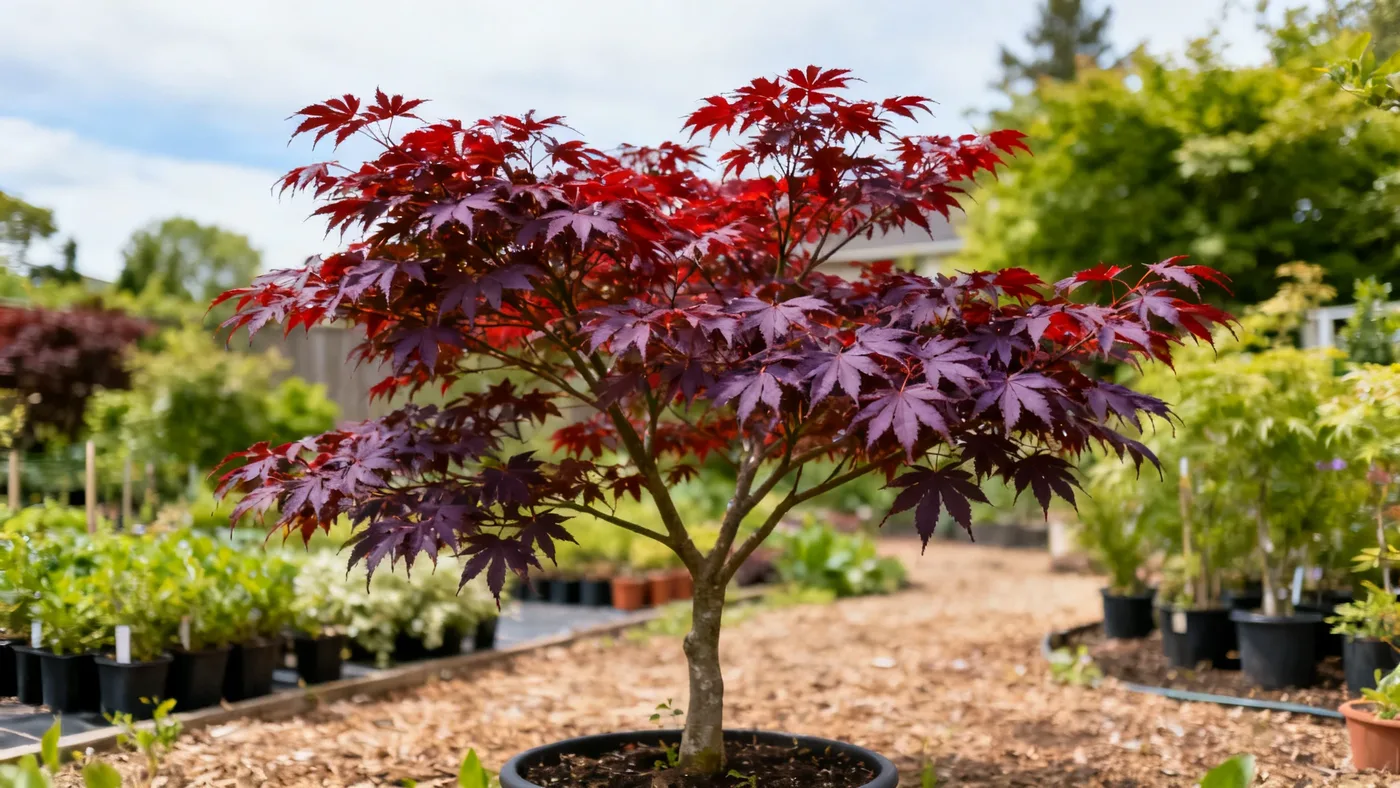
Winter Care for Japanese Red Maple: Cold Protection Tips
Japanese Red Maple lives through winter as a leafless skeleton of fine branching. That delicate silhouette can handle cold, but only if you address three winter vulnerabilities: root freezing in containers, trunk sunscald on young trees, and moisture stress from wind and cold. A few hours of preparation in late fall prevent costly damage and keep your tree vigorous through spring leaf-out.
Understanding Japanese Red Maple Cold Hardiness
Japanese Red Maple grows reliably in USDA zones 5 through 8. Some cultivars tolerate zone 9 with afternoon shade, but cold hardiness varies by the specific genetic line you own. If you purchased a quart-size seedling-grown red selection at a local nursery, your exact variety is unknown, so assume the middle of the range and plan for zone 5 or 6 conditions in your area.
The tree itself survives freezing well. The real winter danger is environmental stress: young trees suffer trunk sunscald when winter sun heats the bark during the day, then freezing nights crack it. Container trees can freeze solid at the root ball if exposed to temperatures below 0°F for multiple days. Established trees in the ground handle cold better because soil insulation protects roots, but they still appreciate thoughtful siting and care.
Winter protection also prevents a secondary problem: freeze-thaw cycles cause soil to heave, which loosens tree roots and exposes them to drying wind. This is especially common in zones 5 and 6 where ground freezes and thaws repeatedly across a single winter.
Materials You'll Need
- Frost cloth or burlap (3 to 4-ply, 4 feet by 8 feet or larger for standard trees)
- Wooden stakes or bamboo poles, 3/4 inch diameter, 6 feet long (at least 3 per tree)
- Natural twine or soft plant ties (avoid wire or plastic)
- Mulch: shredded bark or wood chips, coarse and well-aged (not fresh or dyed)
- Insulation collar or burlap wrap (optional, for extra trunk protection)
- Packing peanuts or straw (for container trees)
- Landscape fabric (for ground-level drainage and root protection)
- Heavy burlap or wood crate (for small container specimens, optional)
Step-by-Step Winter Protection for In-Ground Trees
Step 1: Prune in Late Fall
Prune your Japanese Red Maple in late fall through midwinter dormancy to avoid heavy sap bleed. Remove only dead, diseased, crossing, or crowded branches. Do not top or hard-cut the tree. Pruning prepares the canopy to shed snow load without damage and improves winter appearance.
Make clean cuts at branch collars (the slight swelling where a branch meets the trunk). Avoid leaving stubs or flush cuts. Allow cut surfaces to air-dry; do not apply pruning sealer, as it traps moisture.
Step 2: Water Thoroughly Before Ground Freezes
Water your tree deeply in mid-fall, when soil is cool but not yet frozen. Saturate the soil to at least 12 inches deep, extending the water line to the drip line (directly under branch tips). Water moves slowly in cold soil, so this deep watering 4 to 6 weeks before the first hard freeze ensures roots have adequate moisture through dormancy.
Japanese Red Maple does not tolerate standing water or drought extremes. Winter dormancy reduces water uptake, but root tissue still needs hydration. If your region enters a winter drought (no snow or rain for 3 weeks), water again during a thaw, at least once or twice through the season.
Step 3: Apply Mulch Around the Base
Spread 3 to 4 inches of coarse, well-aged mulch (shredded bark or wood chips) in a circle around the tree, starting 6 inches from the trunk and extending to the drip line. Mulch insulates shallow roots and moderates freeze-thaw cycles that heave soil and expose roots.
Do not pile mulch against the trunk. This creates a habitat for rodents and can encourage rot and disease at the base. Keep mulch 6 inches clear of bark. In spring, when soil thaws, pull mulch back a bit more to allow the area to dry.
Step 4: Wrap the Trunk for Young Trees Only
If your Japanese Red Maple is less than 5 years old and planted in full sun, wrap the trunk with burlap or tree wrap starting in early December. This protects bark from sunscald.
Measure the trunk circumference at chest height. Cut burlap into a single strip 12 inches wide and wrap it spirally around the trunk from the soil line to the lowest branch, overlapping each layer by 2 inches. Secure the wrap loosely with natural twine, never wire. Leave a 1/4-inch gap between wrap and bark to prevent moisture buildup and girdling.
Remove the wrap in early April when daytime temperatures consistently stay above 40°F. Leaving wrap on too long keeps bark moist and invites fungal disease. Established trees (over 5 years old) rarely need wrapping unless they sit in extreme direct winter sun.
Step 5: Stake Young Trees for Wind Protection
If your tree is less than 3 years old, stake it loosely to reduce wind rock that can loosen roots. Drive 3 wooden stakes 2 to 3 feet into the ground, positioned 3 to 4 feet from the trunk in a triangle pattern.
Attach the trunk to stakes at the lowest third of its height using soft tree ties or fabric strips, leaving 1 to 2 inches of slack. The tree should move slightly in wind, not rigidly. Tight staking weakens trunk diameter and delays establishment. Remove stakes in early spring once soil is firm.
Winter Care for Container Japanese Red Maple
Container-grown trees need root protection in freezing winters. Roots in pots freeze solid much faster than in-ground roots, and sustained freezing below 0°F kills roots outright.
Relocation Strategy
Move container trees to a sheltered microclimate: an unheated garage, shed, or cold frame where temperatures stay between 20°F and 40°F. This keeps roots cool and dormant without freezing them solid. If relocation is impossible, apply multiple layers of insulation.
Insulation Method
Wrap the entire container pot (not the tree canopy) in burlap, straw, or landscape fabric, creating a 4-inch-thick insulation layer. Secure wrapping with twine. Surround the pot with packing peanuts or straw bales. Group multiple containers together to create a warmer microclimate.
If your tree sits on a deck or patio exposed to wind, move the pot against a south-facing wall or under building overhang. The shelter reduces wind-induced moisture loss and reflects a bit of solar warmth.
Watering Container Trees
Reduce watering frequency, but do not skip it entirely. Dormant trees need far less water, but soil should never dry to powder. Check soil moisture every 2 to 3 weeks by inserting a finger 1 inch deep. If soil is bone-dry, water lightly around the base until moisture penetrates 2 to 3 inches. Water on a mild day when soil can absorb it, not during hard freezes.
Container trees in heated homes dry out quickly. If your tree spends winter indoors near a heater, water slightly more often and mist foliage once weekly to prevent desiccation.
Tips & Common Mistakes to Avoid
Mistake 1: Wrapping the Canopy
Never wrap branches or canopy in burlap or plastic. Wrapping canopy traps moisture, invites fungal disease, and damages delicate twigs when you remove it. Burlap goes on the trunk only, and only for young trees in direct sun.
Mistake 2: Applying Fresh or Dyed Mulch
Fresh mulch (wood chips less than 6 months old) or dyed mulch can acidify soil and release toxins as it decomposes. Use only well-aged, natural mulch. Let mulch season in your yard for at least 6 months, or purchase aged bark from a reputable landscape supplier.
Mistake 3: Leaving Pruning Sealer On
Pruning sealer traps moisture inside wounds and slows healing. Do not apply it. Fresh pruning cuts expose wood, which air-dries and naturally compartmentalizes. Sealers delay this process.
Mistake 4: Over-Fertilizing in Fall
Late-season fertilizing encourages tender new growth that freezes easily. Stop fertilizing by late August. Resume light feeding with a balanced, low-nitrogen fertilizer in early spring after bud break.
Tip 1: Monitor for Winter Burn
Winter burn appears as brown, dried leaf scars on evergreen tissue or browning needle tips on young growth. It results from drying wind, sun, and frozen root uptake. If you see winter burn in spring, prune out affected branches in late April once you can see the extent of damage. Do not prune immediately after winter; wait to assess which growth is truly dead.
Tip 2: Inspect for Rodent Damage
Mice and voles can girdle bark under snow and mulch. In late fall, inspect the base of your tree and remove any existing mulch piles or debris that create rodent habitat. Reapply mulch carefully, keeping it 6 inches clear of trunk.
Tip 3: Shovel Snow, Never Salt
Japanese Red Maple has poor salt tolerance. Shovel snow away from the tree, but never apply road salt or salt-based ice melt nearby. Snow itself is excellent insulation; leave it if it is not blocking access to the tree.
Expected Results & Timeline
A properly protected Japanese Red Maple shows no winter dieback beyond normal dormancy. You may see some browning of older leaves before they fall, but this is not damage. In spring, bud break occurs in early to mid-spring when daytime temperatures consistently reach 50°F, roughly 6 to 8 weeks before your region's last frost date.
Container trees protected indoors or heavily insulated often show faster spring growth than trees left exposed, because root temperature stays more stable. Expect leaf-out in 4 to 6 weeks after buds begin to swell.
Young trees that were staked will show stronger trunk diameter growth in their second year after you remove stakes. Wrapped trunks may show slight bark scarring where ties rubbed, but this is minor and heals by mid-summer.
When to Call It Winter Damage
Not all spring browning is winter damage. Some bud dieback is normal, especially if your region experienced extreme temperature swings. True winter damage typically appears as sunscald (long, vertical cracks on the south-facing trunk), girdled branches (where bark is completely stripped), or branch death above a certain height (from sun exposure).
If your tree shows these signs, prune out dead branches in late April or May once you can assess which limbs are truly dead. Remove affected limbs flush at the branch collar. The tree may look sparse at first, but Japanese Red Maple fills in quickly with new growth from latent buds.
For more year-round care strategies and pruning details, see our complete Japanese Red Maple care guide.
Quick Reference: Winter Care Checklist
| Task | Timing | Details |
|---|---|---|
| Prune dead/crossing branches | Late fall to midwinter | Minimal cuts only; avoid flush or stub cuts |
| Water deeply | 4-6 weeks before ground freezes | Saturate to 12 inches deep; repeat if winter drought |
| Apply mulch | After ground cools (late October/early November) | 3-4 inches; keep 6 inches clear of trunk |
| Wrap young tree trunk | Early December to early April (young trees only, full sun) | Burlap, spiral wrap, loose ties; remove in spring |
| Stake young tree | Fall installation; remove in early spring | Loose ties at lower third; allow slight movement |
| Insulate container pot | Before first hard freeze | 4-inch burlap wrap or 4 inches packing peanuts; relocate if possible |
| Check soil moisture (containers) | Every 2-3 weeks | Light water if dry 1 inch deep; never saturate in dormancy |
| Remove wraps and stakes | Early April (when temps stay above 40°F) | Do not rush; left-on wraps invite fungal disease |
| Monitor for winter damage | Late April/early May | Assess branch death once all buds have broken; prune only confirmed dead wood |