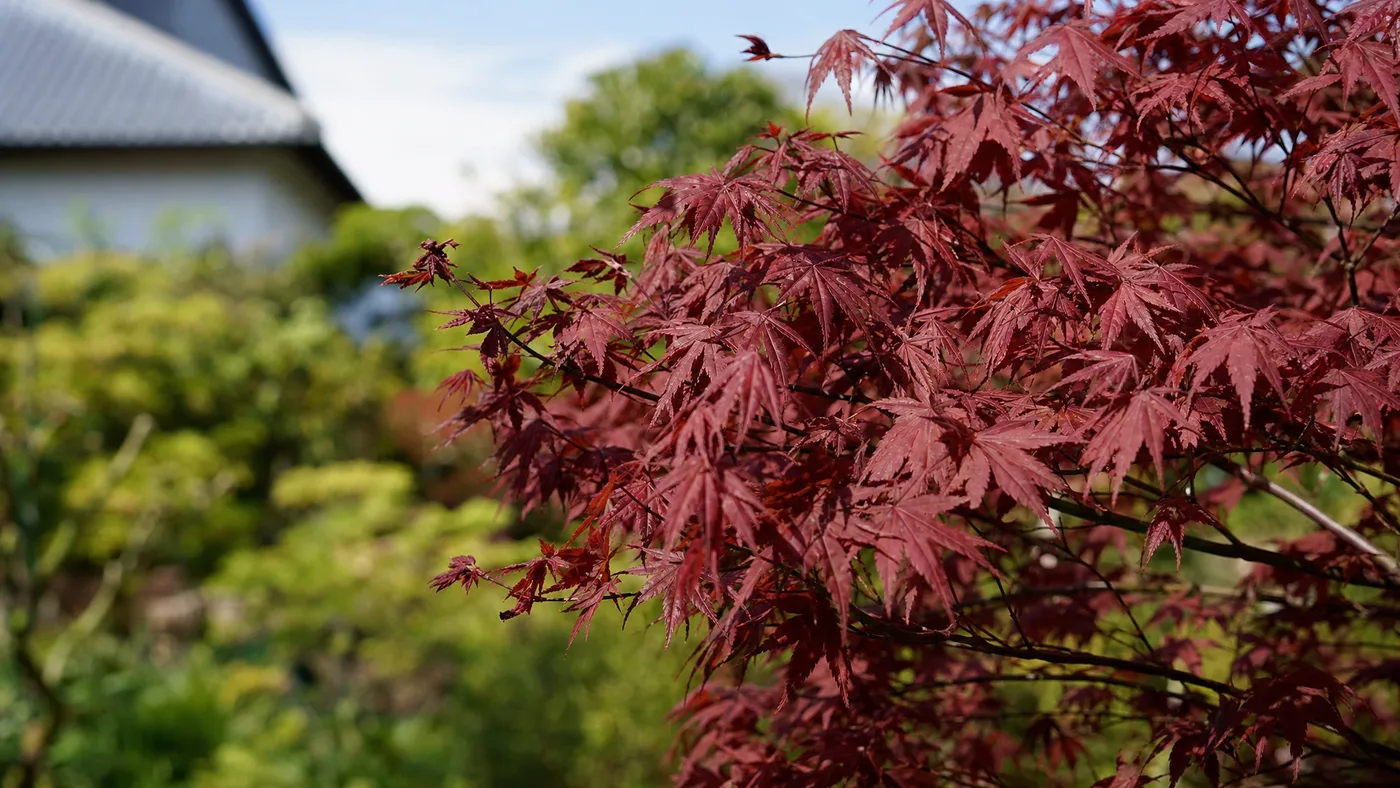
Cold-Hardy Red Japanese Maples for Zone 5
The most dependable cold hardy Japanese maple reds for zone 5 are the standard upright forms: Bloodgood, Emperor I, and seedling-grown Atropurpureum Group trees. The species is rated to zone 5, but siting beats cultivar choice. Give a young tree an east exposure and wind shelter, and midwinter lows are rarely what hurts it.
Check your zone on the USDA Plant Hardiness Zone Map before you buy. If you want the full cultivar breakdown, our Japanese red maple varieties and cultivars compared guide is the pillar for this list. This post narrows it to what survives a zone-5 winter and a zone-5 spring.
What Actually Hurts a Japanese Maple in Zone 5
Gardeners tend to chase the lowest hardiness number. In zone 5 that is the wrong target. The species is rated to zone 5 (PLANT FACTS and the USDA map agree), so the trouble comes from three other places.
| Problem | When it hits | What it looks like | Fix |
|---|---|---|---|
| Late spring frost | After leaf-out | Blackened, limp new leaves | East exposure, later-leafing cultivar, cover on frost nights |
| Winter wind desiccation | Midwinter to early spring | Brown, crisp leaf and twig tips | Windbreak, mulch, even soil moisture before freeze-up |
| Sunscald on young trunks | Sunny winter days | Split or sunken bark on the south side | Trunk wrap on young trees |
Notice that none of these is a deep-cold problem. That is why the list below ranks trees partly by how forgiving they are of a bad site.
1. Bloodgood: The Proven Upright
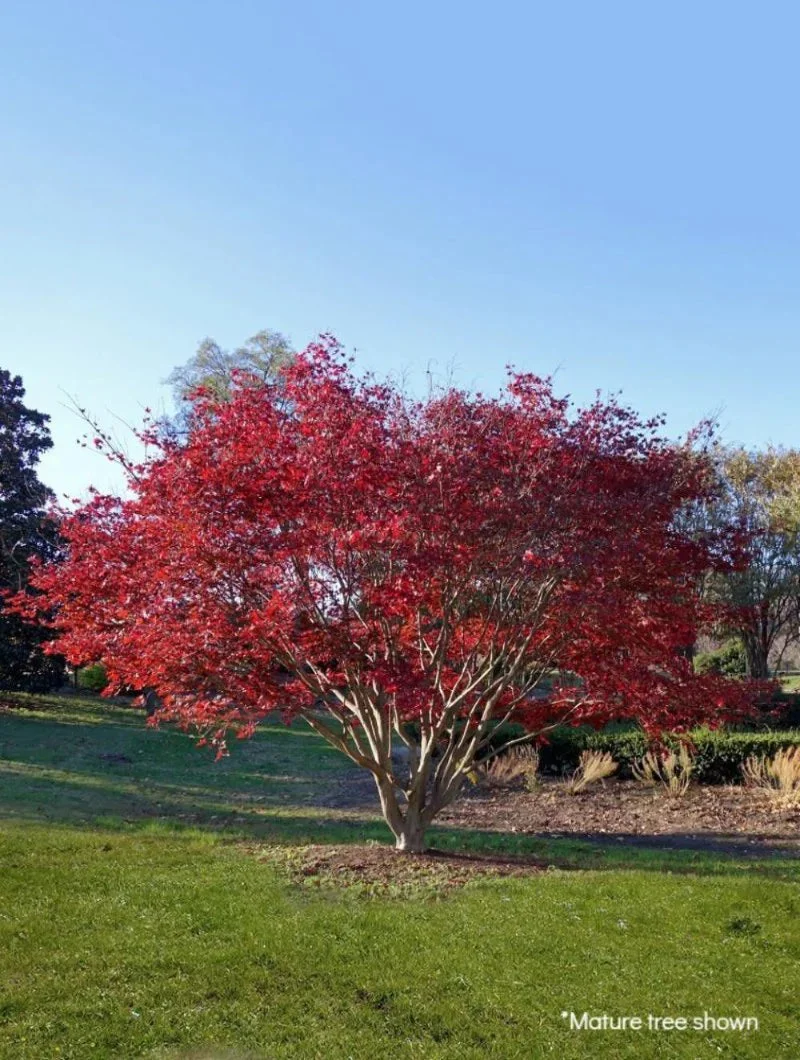
Bloodgood is the standard zone-5 recommendation, and it earns it. It is an upright red form, and standard uprights of this type typically reach 15-25 ft tall and 12-20 ft wide, growing roughly 6-12 in a year. Named cultivars are grafted, so you get the leaf color the name promises instead of a lottery.
Its weakness is the same one every red maple has: afternoon heat and wind. In a hot, windy spot the leaves scorch and the red can drift toward green. In zone 5, scorch is usually a wind and dry-soil issue, not a cold one.
Practical takeaway: Choose Bloodgood if you want the lowest-risk red upright, and plant it where a house or fence breaks the prevailing winter wind.
2. Emperor I: The Late-Frost Hedge
Emperor I is also a standard upright, but it is commonly described as leafing out later than many other reds. In zone 5 that matters. New leaves are soft, and one hard frost in late April can blacken a whole flush. A tree that waits an extra week or two simply has less exposed in a bad year.
A frost-burned maple usually re-leafs, but it spends stored energy doing it, and a young tree has little to spare. If your area is known for warm spells followed by cold snaps, that later start is a real advantage. We break down the head-to-head in Emperor I vs Bloodgood.
Practical takeaway: Pick Emperor I for frost-prone sites, such as low spots where cold air settles, and confirm the leaf-out timing with your local cooperative extension office.
3. Seedling-Grown Atropurpureum Group Trees
Many nursery-grown red maples, including quart-size stock, are seed-grown Atropurpureum Group trees rather than named grafts. They carry the species' zone 5 rating, but color and habit can vary. One tree may hold deep red all summer. Its neighbor may shift greener in heat or shade.
That variability is the honest trade-off. You gain a lower entry cost and a tree adapted to a wider range of genetics. You lose a guarantee on mature size and exact color, and heat and cold tolerance can shift by a full zone depending on the genetic line. If you want a nursery-grown tree shipped to the door, our Japanese Red Maple shop offers 3-gallon (2-3 ft), 5-gallon (2-3 ft, more developed), and 7-gallon (3-4 ft) sizes.
Practical takeaway: Buy a seedling-grown red if you can accept some color variation, and put it in your best-protected spot to offset the uncertainty. Do not buy it if you need a precise, matched color for a formal planting.
4. Laceleaf and Weeping Reds: Only in Shelter
Crimson Queen, a dissectum (laceleaf) weeping form, is a lovely tree. It is also more marginal in exposed zone-5 sites. Dwarf and cutleaf types stay around 6-10 ft, and weeping types spread 8-12 ft wide, but the fine, drooping foliage catches wind and dries out fast.
In a walled courtyard, an entry alcove, or the lee of a building, a laceleaf can do well. On an open lawn in a windy zone-5 county, it is the wrong pick. If you are not sure which side of that line your yard falls on, choose an upright instead.
Practical takeaway: Plant a laceleaf only where wind is blocked on at least two sides. Otherwise, choose Bloodgood or Emperor I.
5. Any Red Maple in a Container: The Zone-4 Path
Zone 4 in-ground is a gamble, and we do not recommend it. The honest route for colder gardens is a smaller or dwarf-growing selection in a container, moved to an unheated garage for winter. Container roots sit above the insulating soil, so they need protection in freezing winters.
Containers also work in zone 5 for gardeners who want a patio specimen without committing to a 15-25 ft tree. The steps for overwintering a potted tree are covered in our winter care for Japanese red maple guide.
Practical takeaway: In zone 4, buy a container-suited selection and plan the garage space before you plan the purchase.
The Zone-5 Planting Playbook
- Plant in spring, not fall. A spring planting gets a full growing season to root before the first freeze.
- Choose an east exposure. Morning sun, afternoon shade, and shelter from the prevailing wind.
- Space 10-15 ft from structures and other trees for standard forms.
- Mulch a ring over the root zone, kept off the trunk itself.
- Wrap the trunk of young trees to prevent sunscald.
- Skip fall fertilizer. It pushes tender growth that winter will kill. Feed lightly with a balanced, low-nitrogen fertilizer in early spring only.
- Water through dry autumns. Even moisture before the ground freezes helps buffer wind desiccation.
- Avoid road-salt spray. Salt tolerance is poor.
For a deeper look at zone limits, see where Japanese red maple grows best.
Quick Reference
| Pick | Zone 5 fit | Best for | Watch out for |
|---|---|---|---|
| Bloodgood | Proven | Reliable red upright | Wind and afternoon scorch |
| Emperor I | Proven | Frost-prone sites (later leaf-out) | Confirm timing locally |
| Seedling-grown Atropurpureum Group | Rated to zone 5 | Budget-friendly specimen | Variable color and habit |
| Laceleaf or weeping (Crimson Queen) | Marginal when exposed | Sheltered courtyards | Wind drying fine foliage |
| Container tree | Works in zones 4-5 | Patios, garage overwintering | Roots need freeze protection |
Japanese Red Maple
Nursery-grown Japanese Red Maple in sizes from 3 Gallon 2-3 ft, shipped to your door.
From $118.33
Shop Now →