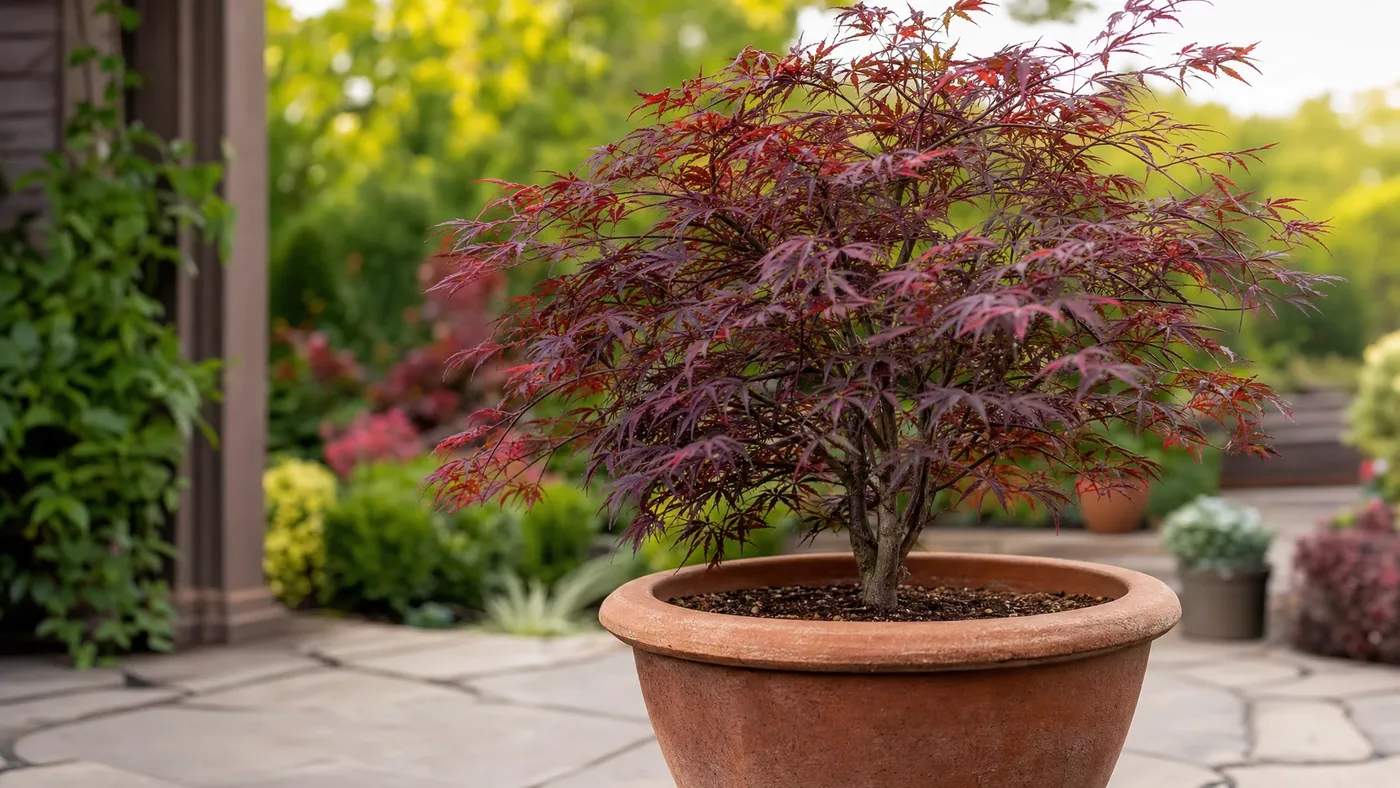
Overwintering a Potted Japanese Red Maple
To overwinter a potted Japanese red maple, protect the roots, not the branches. Roots in a pot feel air temperature, so assume the tree is about two zones less hardy than its tag. In zones 7-8, shelter the pot against a north wall. In zone 6, insulate it. In zone 5 and colder, move it to an unheated garage.
That one adjustment explains most winter losses. If you are still choosing a pot size or soil mix, start with our guide to growing Japanese red maple in pots and containers, then come back here before the first hard freeze. For the in-ground version of this advice, see winter care for Japanese red maple.
Why a Pot Changes the Zone Math
Japanese red maple is rated for USDA zones 5-8. In the ground, soil buffers the roots, so they stay warmer than the air above them. In a pot, the root ball is surrounded by thin walls and cold air on every side, so it freezes and thaws with the weather. Extension container guidance is to treat a potted tree as roughly two zones less hardy than its tag.
Do the subtraction. A tree hardy to zone 5 in the ground winters like a zone 3 tree in a pot. Unprotected pots die in climates where the same tree in a border would sail through.
Pick Your Winter Setup by Zone
| Your zone | Setup | Why |
|---|---|---|
| 7-8 | Pot against a sheltered north wall | Wall blocks wind and keeps winter sun from thawing the root ball repeatedly |
| 6 | North wall plus pot insulation (bubble wrap, mulch mound, or pot-in-pot) | Buffers the root ball against a pot that behaves like zone 4 |
| 5 and colder | Unheated garage or shed after leaf drop | A dormant tree does not need light, and walls keep the roots out of deep cold |
Not sure which zone you are in? Check the USDA Plant Hardiness Zone Map by ZIP code, and ask your local cooperative extension office how cold your site really runs.
What You Need
- A pot with real drainage holes (a trapped, soggy root ball is the second-biggest winter killer after cold)
- Pot feet or bricks to lift the pot off the ground
- Bubble wrap, or old blankets, plus twine or tape (zone 6)
- Shredded bark or leaf mulch (zone 6)
- A spare, larger container or a spade for pot-in-pot (zone 6, optional)
- An unheated garage or shed (zone 5 and colder)
- A watering can
Step-by-Step: Overwintering a Potted Japanese Maple
1. Let the tree go dormant first
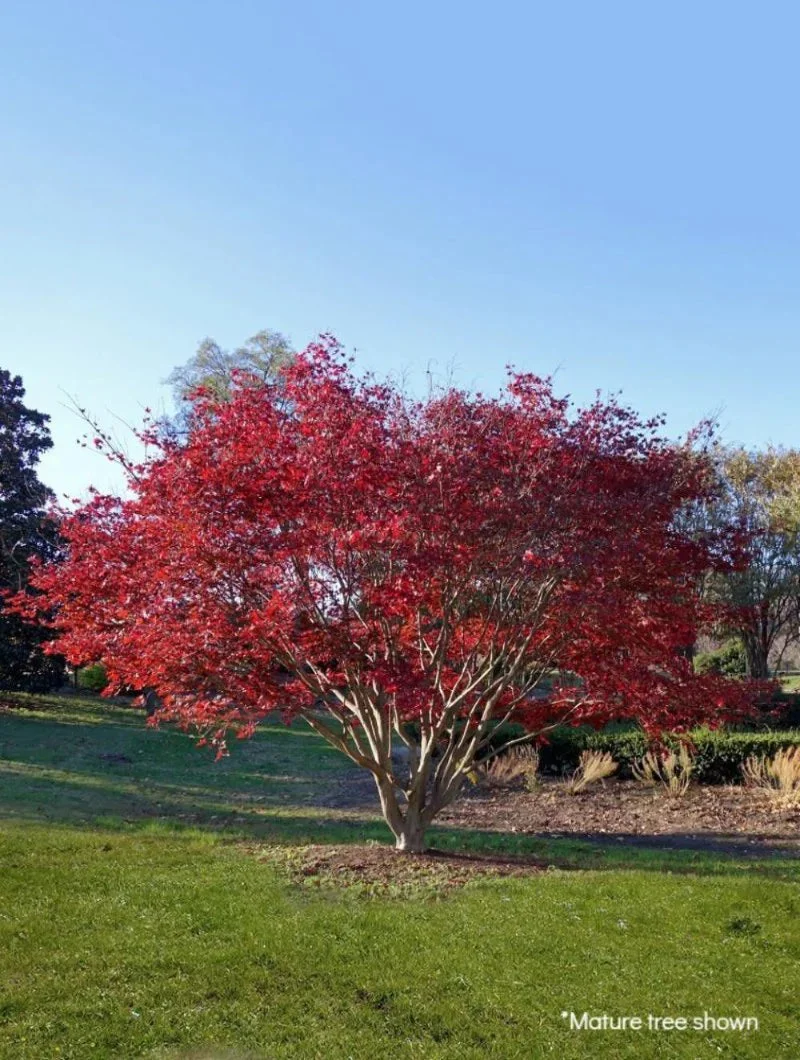
Do not rush it. Wait until the leaves have colored and dropped on their own. A tree moved while still in leaf has not finished hardening off, and fall color may be cut short. Fall color on red-leaf forms is commonly vivid red, orange, or crimson, and it varies by cultivar and season.
2. Check the drainage and clear the saucer
Remove any saucer or tray. Water that collects underneath freezes into a block that locks the pot to the ground and holds the root ball wet. Root rot in poorly drained soil is a documented problem for this tree, and winter wetness makes it worse. Set the pot on pot feet or bricks.
3. Water well once, then stop fertilizing
Give the root ball a thorough soaking before the ground freezes. Moist soil holds heat better than dry soil, and dormant roots still lose water. You will have fertilized lightly in early spring if at all; do not feed in fall.
4. Move or insulate based on your zone
Zones 7-8: Slide the pot against a north wall, ideally in a corner out of wind. Cluster it with other pots if you can.
Zone 6: Use the north wall, then wrap the pot (not the tree) in bubble wrap or blankets, secured with twine. Mound shredded bark or leaves around the base. If you have garden space, sink the whole pot into the ground, rim level with the soil. That is pot-in-pot, and it gives you ground-level root temperatures.
Zone 5 and colder: Carry the pot into an unheated garage or shed after leaf drop. The tree is dormant, so darkness is fine.
5. Water lightly and rarely
Outdoors, nature handles most of the watering. In a garage, check the soil about once a month and give a light drink if the top few inches are dry. The goal is damp, never wet. Overwatering a dormant tree in a dark garage is how people trade cold damage for rot.
6. Hold off on pruning
Resist the urge to tidy the tree while it sits in storage. Structural and corrective cuts belong in late fall to midwinter dormancy, removing only dead, crossing, or crowded branches. Our guide on when to prune a Japanese red maple covers the timing.
7. Release it gradually in spring
Wait until the risk of hard freezes has passed in your area (your local extension office can tell you the typical timing). Then move the tree outdoors in stages: a sheltered spot first, then its summer position. A tree pulled from a dark garage straight into open sun and wind is a candidate for leaf scorch. Unwrap insulation once the cold snaps are behind you.
Protect the Roots, Not the Top
Here is where well-meaning gardeners go wrong. They wrap the canopy in burlap and leave the pot bare. It feels responsible, but the canopy is the hardy part of the tree. Bare branches handle cold that would kill the roots in a thin-walled pot. Wrapping the top does little for the roots, and a wet burlap sleeve can trap moisture against the bark.
If you have limited insulation, put all of it around the pot and the root zone.
Mistakes That Lose Potted Maples
- Bringing it inside the house. A heated room breaks dormancy, and the tree leafs out into a winter it cannot survive. Unheated and dark beats warm and bright.
- Leaving a wet saucer under the pot. It freezes solid and holds the root ball in standing water.
- Trusting the zone on the tag. Subtract about two zones for any pot.
- Letting the root ball dry out in the garage. Monthly, light watering is the fix.
- Assuming a garage keeps everything safe. Deer are moderately resistant, not deer-proof, so a tree left on a patio can still get browsed. See whether Japanese red maples are deer resistant.
Who Should Not Do This
A full-size standard maple in a very large pot is heavy, and moving it to a garage is not realistic. Standard upright forms reach 15-25 ft in the ground, so they outgrow containers over time. Dwarf and cutleaf cultivars, which often stay 6-10 ft, are the better fit for long-term pots. If you cannot protect the roots or move the pot, plant in the ground in early spring or fall instead. If you are shopping for a tree for a container, nursery-grown Japanese red maple comes in 3-gallon, 5-gallon, and 7-gallon sizes at our shop.
What to Expect
With roots protected, a dormant tree may break bud on schedule in early to mid spring and push out normal red-purple foliage. Leaf color and growth rate vary by cultivar and by whether the plant is grafted or seed-grown. Plan on slow growth of about 6-12 inches a year. A tree that has been through a cold winter may leaf out late or show some twig dieback, which may be a sign the roots took a hit. Wait until late spring before cutting anything off, because buds can lag behind a warm-up. If most branches stay bare past that point, ask your local extension office or a certified arborist to look at it.
Quick Reference
| Task | Zones 7-8 | Zone 6 | Zone 5 and colder |
|---|---|---|---|
| Location | Sheltered north wall | North wall, insulated pot or pot-in-pot | Unheated garage or shed |
| When to move | After leaf drop | After leaf drop | After leaf drop |
| Saucer | Remove | Remove | Remove |
| Watering | Soak once before freeze | Soak once before freeze | Soak, then lightly monthly |
| Wrap canopy | No | No | No |
| Bring indoors | Never | Never | Never |
| Spring release | After hard-freeze risk, gradually | After hard-freeze risk, gradually | After hard-freeze risk, gradually |
Japanese Red Maple
Nursery-grown Japanese Red Maple in sizes from 3 Gallon 2-3 ft, shipped to your door.
From $118.33
Shop Now →