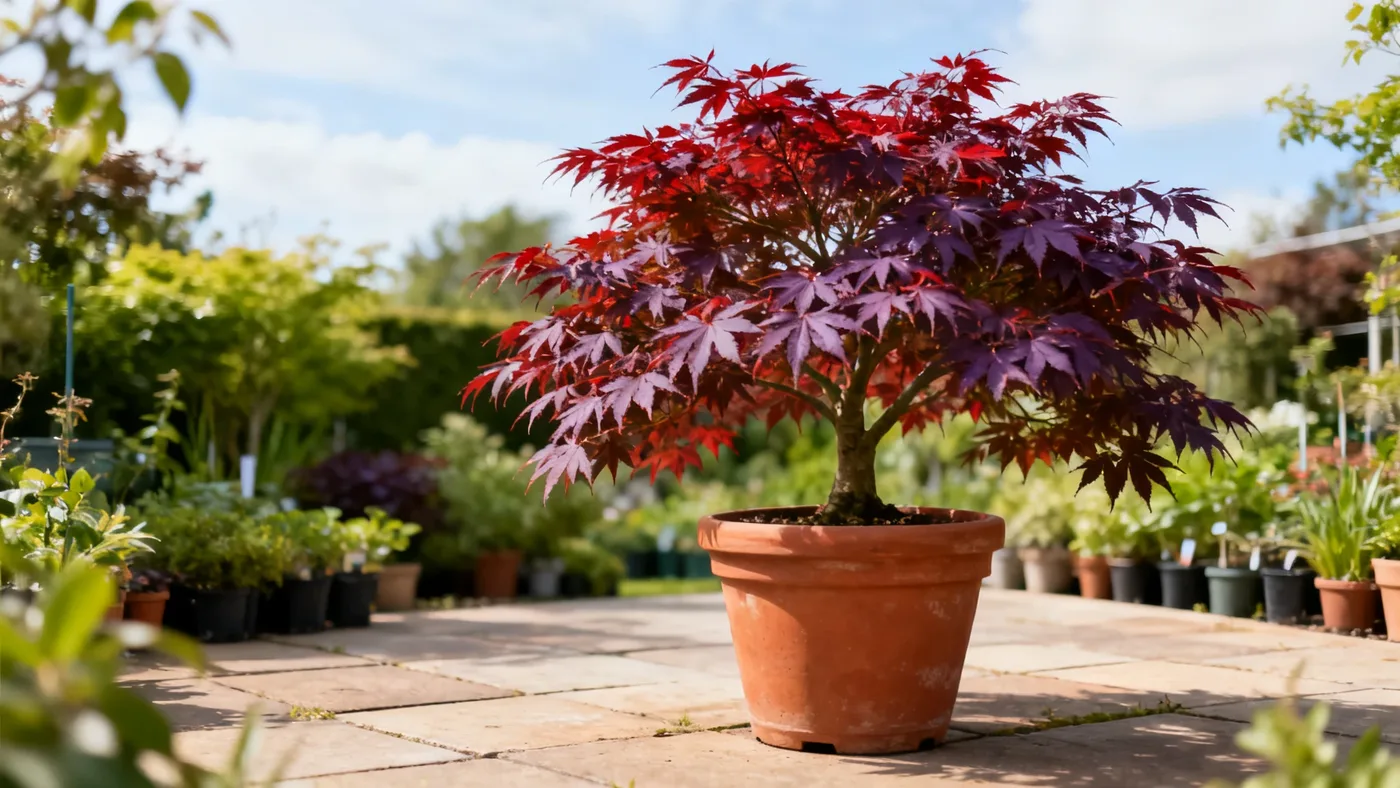
Growing Japanese Red Maple in Pots and Containers
A Japanese Red Maple in a pot brings the graceful structure and crimson foliage of this landscape classic to your patio, entryway, or deck without demanding a large ground space. Container cultivation works especially well for dwarf and weeping cultivars, which stay compact and showcase fine branching architecture in a confined setting. If you live in Zones 5–8, or even Zone 9 with afternoon shade, you can succeed with container Japanese Red Maple care by following a few key principles about drainage, soil, and water consistency.
This guide walks you through every step, from selecting your pot to overwintering your tree, so you can grow a healthy specimen that may mature into a striking focal point on your outdoor living space.
What You Will Need
- A nursery-grown Japanese Red Maple in a quart or #1 container (smaller trees adapt faster to pots)
- A pot or container with drainage holes, 15–20 gallons minimum for most dwarf forms
- Rich, well-drained potting soil or loam high in organic matter
- Perlite or coarse sand to amend soil if necessary for drainage
- A balanced, low-nitrogen fertilizer (one suitable for trees or shrubs)
- Mulch, such as shredded bark, for moisture retention
- Watering can or hose with gentle spray setting
- Optional: burlap, frost cloth, or insulating wrap for winter protection in colder zones
Choosing the Right Pot and Size
Japanese Red Maple is not generally a deep-rooted plant, but it does need room for gradual expansion. For a dwarf or weeping cultivar that may stay 6–10 feet tall and 8–12 feet wide over its life, start with a pot that is at least 15–20 gallons. A container roughly 18 inches in diameter and 16–18 inches deep works well for most young or compact selections. Larger specimens or standard upright forms may eventually outgrow a single pot and would be better kept in the ground.
Choose pots with generous drainage holes on the bottom. Terracotta, plastic, ceramic with drainage ports, or wooden containers all work. Dark colors absorb more heat, which can stress roots in full sun; light colors or fabric pots help moderate soil temperature. Avoid glazed ceramic without drainage, which traps moisture and promotes root rot.
Preparing Your Soil Mix
Japanese Red Maple demands rich, well-drained loam high in organic matter, with a soil pH around 5.5–6.5, slightly on the acidic side. Standard potting soil alone may compact over time. Instead, blend a mix of:
- 50% high-quality potting soil or compost
- 30% perlite or coarse sand for drainage and aeration
- 20% aged bark or additional compost for organic matter and structure
This blend stays loose, drains well, and resists waterlogging while retaining enough moisture in the upper layers where feeder roots concentrate. If your potting soil is already very rich or amended, reduce the added compost to 10–15% and increase perlite slightly.
Pre-wet your soil mix before planting. Dry peat or coco-based soils can repel water initially, making it hard to establish consistent moisture later.
Planting Steps
Step 1: Timing. Plant in early spring or fall, avoiding peak summer heat. Spring planting (as soon as the ground thaws) gives the tree the most time to establish roots before winter.
Step 2: Prepare the pot. Fill the bottom third of the container with your prepared soil mix. Gently remove the tree from its nursery pot. Loosen the root ball by hand, especially if roots are circling tightly. This encourages outward growth into the new soil rather than continued circling.
Step 3: Position the tree. Set the tree in the pot so the top of its root ball sits just below the rim of the container. The trunk should sit upright; step back and check from multiple angles. Avoid planting too deep, which can promote rot at the base.
Step 4: Backfill. Fill around the sides with your soil mix, pressing gently to eliminate air pockets. Do not compact heavily. Water as you backfill to settle the soil and remove trapped air.
Step 5: Water and mulch. After planting, water thoroughly until water drains from the bottom. Apply 2–3 inches of mulch around the base, keeping it 2 inches away from the trunk to prevent moisture accumulation and rot. The mulch holds moisture and moderates soil temperature.
Watering Your Container Tree
Consistent, even moisture is crucial, especially in the first 2–3 years after planting. Container soil dries faster than ground soil, so check moisture regularly.
Water deeply when the top inch of soil feels dry to the touch. In active growing season (spring and early summer), this may mean watering every 2–3 days in warm, dry weather, or every 4–5 days if rain is frequent. Slow down watering in late summer and fall as growth naturally declines. In dormancy, water sparingly, just enough to keep soil from completely drying out.
Do not let the pot sit in standing water or become waterlogged. Root rot is one of the most common problems in container-grown Japanese Maple. Ensure drainage holes are clear and never allow the pot to rest in a saucer filled with water.
In hot-summer regions (Zones 8–9), afternoon shade helps preserve foliage color and reduces water loss through leaves. You may need to water more frequently in full sun.
Fertilizing and Seasonal Feeding
Light feeding in early spring with a balanced, low-nitrogen fertilizer is usually sufficient. Heavy fertilizing causes leggy, weak growth and can fade the vibrant red foliage color that makes this tree ornamental. Follow the product label for dilution and application rate.
If the tree shows pale or yellowed leaves mid-season, a dilute feeding in late spring or early summer may help. Avoid fertilizing in late summer and fall, which can stimulate tender new growth that frost will damage.
Each spring, top-dress the soil with 1 inch of aged compost or bark to refresh organic matter without disturbing the root system.
Managing Sun, Shade, and Heat
Japanese Red Maple accepts full sun to part shade. In cooler climates (Zones 5–6), full sun deepens fall color. In hot-summer regions (Zones 8–9), afternoon shade of 3–4 hours preserves the deep red leaf color and prevents scorch. Watch for leaf edges turning brown or papery, which signals too much direct sun or drought stress combined with heat.
Place the pot where it receives morning sun and afternoon dappled light if you live where summers are hot. In milder climates, a sunny spot with wind protection is ideal.
Minimal Pruning and Maintenance
Japanese Red Maple needs minimal pruning. In late fall through midwinter dormancy, you may remove dead, crossing, or crowded branches. Avoid heavy pruning during the growing season, which causes excessive sap bleed and weakens the tree. A light hand is the rule: prune only to maintain an open framework or correct clear defects.
Check the base of the trunk and under the mulch for pests such as scale insects or aphids. These are rarely severe on container specimens but may appear in clusters. Rinse affected branches with water or apply horticultural oil if infestations persist.
Winter Protection for Containers
Container-grown trees are exposed on all sides to cold air and wind, so roots are at greater risk of freezing than trees planted in the ground, even in the same zone. Container-grown specimens need root protection in freezing winters.
In Zones 5–7, move the pot to a sheltered location (such as against a south-facing wall or under an eave) before the first hard freeze. Wrap the pot with burlap or frost cloth to insulate the soil. In Zone 8 and warmer, this is usually unnecessary unless you are pushing hardiness.
Do not store the tree in an unheated garage or shed for extended periods. The tree needs dormancy chill, not complete darkness. Instead, keep the pot outdoors but protected from harsh wind and direct winter sun (which can cause trunk sunscald on young trees).
Water lightly through dormancy. The soil dries more slowly in cold weather, but do not let it become completely dry for weeks at a time.
Common Mistakes to Avoid
Overwatering. The most frequent error in container growing is keeping soil too wet. Soggy roots rot quickly. Let the top inch dry between waterings.
Poor drainage. Using a pot without adequate drainage holes or setting it in a tray of water is a recipe for failure. Drainage is non-negotiable.
Wrong soil mix. Dense, clay-heavy potting soil or straight garden soil compacts in containers. Use a well-draining, aerated blend.
Overfertilizing. More fertilizer does not make a better tree. Excess nitrogen causes weak, soft growth and fades leaf color.
Full sun in hot climates without shade. If you live in Zone 8 or warmer with intense afternoon sun, afternoon shade helps maintain color and reduces drought stress.
Skipping winter protection. In Zones 5–7, neglecting to protect the pot from harsh cold can kill roots and leave the tree damaged or dead come spring.
What to Expect
A healthy container-grown Japanese Red Maple may grow roughly 6–12 inches per year, slower in containers than in ideal ground conditions. This measured pace suits most gardeners, as the tree stays manageable and develops a dense, graceful form.
Foliage color intensity depends on the cultivar, light exposure, and growing conditions. Most red selections deepen through spring and summer, reaching peak crimson in fall. If your tree's summer foliage leans greenish or pale, check that it is not in too much shade and that watering is consistent.
Over 10–15 years, you may see the tree outgrow its pot and require either a larger container or transition to the ground. Many gardeners enjoy this gradual maturation and are happy to move the tree when the time comes.
For more detailed guidance on year-round care, pruning, and troubleshooting, see our Japanese Red Maple care guide, which covers the full spectrum of needs for both container and landscape specimens.
Container Growing Quick Reference
| Factor | Recommendation |
|---|---|
| Zones | 5–8; Zone 9 with afternoon shade |
| Pot size | 15–20 gallons (18" diameter, 16–18" deep) |
| Soil mix | 50% potting soil, 30% perlite, 20% compost or bark |
| Soil pH | 5.5–6.5 (slightly acidic) |
| Drainage | Essential; holes on bottom, no standing water |
| Watering | Consistent, even moisture; water when top 1" is dry |
| Fertilizer | Balanced, low-nitrogen; light feeding in early spring only |
| Mulch | 2–3 inches; keep 2" clear of trunk |
| Light | Full sun to part shade; afternoon shade in Zones 8–9 |
| Growth rate | 6–12 inches per year (slow to moderate) |
| Winter | Insulate pot in Zones 5–7; sheltered placement recommended |
| Pruning | Minimal; remove dead/crossing branches in late fall to midwinter only |