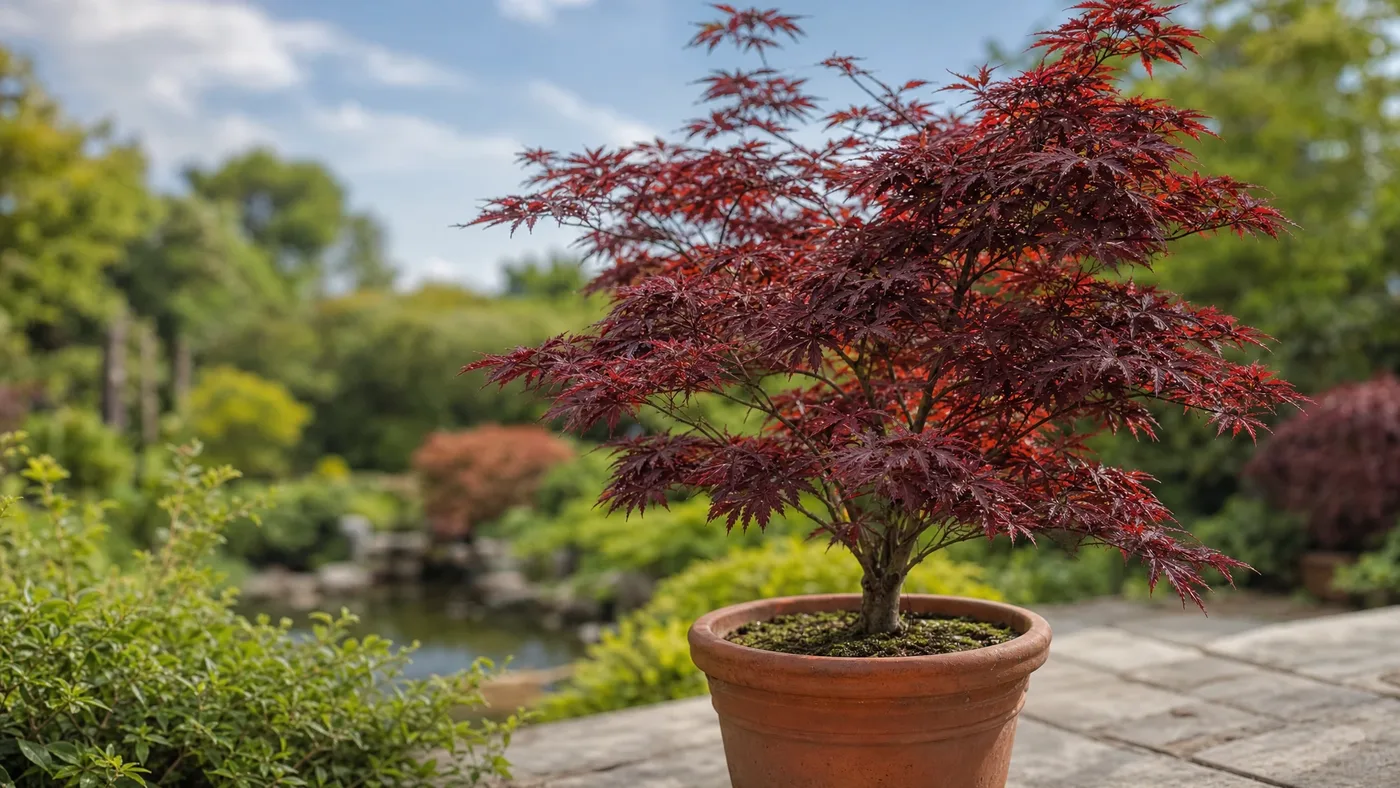
Repotting a Japanese Red Maple: Root Pruning and Mix
Cutting roots off a healthy tree feels wrong. It is also the kindest thing a container maple gets. Repotting a Japanese maple every two to three years, with a real trim of the root ball, keeps the tree drinking properly. Skipping that step is a bigger threat than winter, in our reading of the problem. It is the usual reason potted maples fade by year five.
This guide covers the signs that a repot is due, the right moment, how to do root pruning on a Japanese maple without hurting it, and what Japanese maple potting mix should and should not contain. For the wider picture of pot sizes, siting and winter protection, start with our guide to growing Japanese red maple in pots and containers.
Why Root Prune Instead of Upsizing the Pot
The common advice is to move up a pot size every time the tree looks crowded. Do that for a few years and you end up with a tree in a tub it cannot move, and a pile of soil it cannot drink from.
Here is the mechanism. The fine feeder roots do the drinking, and they grow mostly at the tips of roots. In a pot, roots reach the wall and circle. The tips get older and thicker, and the white feeder roots become sparse. A big mass of old circling root with few active tips takes up water poorly. A larger pot does not fix that. It just gives the tree more wet soil to sit in.
Bonsai growers worked this out long ago: cut back the outer roots and the tree answers with a flush of new fine roots in fresh mix. The same logic works at patio scale. Root pruning renews the working part of the root system, and it lets you keep a tree in the same pot for years.
Signs Your Maple Is Due
The usual cycle is every 2 to 3 years. Do not wait for a calendar if the tree is telling you something sooner.
- Water runs straight through. You pour, and it comes out the bottom in seconds. The pot is mostly root, with little mix left to hold moisture.
- Roots at the drainage holes. Roots poking out, or a plugged hole, means the root ball has filled the pot.
- Midsummer wilting despite watering. Wet soil on top, limp leaves anyway. Check the roots before you assume a disease.
Growth is slow to moderate, roughly 6 to 12 inches a year, so a tree can look unchanged above ground while the roots are badly cramped below.
Materials You Need
- A pot with generous drainage holes (the same pot, or one size up)
- Fresh, quality container mix (see the mix section below)
- A sharp pruning saw or a root saw, plus clean, sharp bypass pruners
- A root hook, chopstick or old fork for teasing roots apart
- A tarp to work on
- A watering can with a rose head
- Shade cloth or a shaded spot for the recovery period
- Rubbing alcohol or a similar cleaner for the tools
The Right Moment: Early Spring, Buds Swelling
Repot in early spring, when the buds are swelling but before the leaves open. The tree is coming out of dormancy and ready to grow new roots, and it has no full canopy of leaves demanding water yet. Repotting in peak summer heat is the worst version of this job.
Do not combine repotting with heavy canopy work. Branch pruning belongs in late fall to midwinter dormancy, which avoids heavy sap bleed. Our guide on when to prune a Japanese red maple covers that timing.
Step-by-Step: Repotting and Root Pruning
- Water the day before. A moist root ball slides out in one piece. A dry one crumbles and tears fine roots.
- Slide the root ball out. Lay the pot on its side on the tarp and ease the tree out by the root ball, never by the trunk. If it sticks, run a knife around the inside wall.
- Inspect. Look for roots circling the outside, a thick mat at the bottom, and any that are black, mushy or smell sour. Those are signs of root rot from poor drainage, so cut them back to firm tissue.
- Cut the outer roots. Saw or tease off the outer 1 to 2 inches of circling roots all the way around. Use the saw for thick, matted sections and the pruners for individual roots. Straight cuts, not ragged tears.
- Take off the bottom. Remove roughly 20 to 25 percent of the root ball from the bottom. This opens space for fresh mix under the tree. Do not remove more than that in one session.
- Loosen what remains. Use the root hook to comb out any remaining circling roots so they point outward, not around.
- Add mix to the pot. Put a layer of fresh mix in the bottom, sized so the tree will sit at the same depth as before. The root flare, where the trunk widens, should end up at or just above the mix surface.
- Set the tree and fill. Center the tree and work mix into the gaps with a chopstick so no air pockets remain. Press lightly. Do not stomp.
- Water thoroughly. Water slowly until it runs freely from the drainage holes. Do this twice to settle the mix.
- Shade for two weeks. Keep the pot out of direct sun and wind while the roots recover. After that, return it to its normal spot.
Japanese Maple Potting Mix: What Works and What Fails
Use a fresh, quality container mix. Never use garden soil in a pot. In the ground, soil drains into the layers below. In a pot, water stops at the bottom and sits there. Heavy garden soil holds even more of it, and roots sitting in that wet zone are the setup for root rot, which the facts for this tree list as a known problem in poorly drained soil.
What you want is a mix that holds moisture yet drains freely. Look for a bagged container mix with bark fines or similar coarse organic material, and add a gritty, inert component such as perlite or pumice if the bag feels dense and peaty. The tree prefers rich, well-drained loam high in organic matter and a slightly acidic pH of roughly 5.5 to 6.5. Most container mixes land in or near that range, but a pH test strip removes the guesswork.
Skip the layer of gravel or broken pots at the bottom. It does not improve drainage. It just raises the wet zone closer to the roots.
Common Mistakes
| Mistake | What happens | Fix |
|---|---|---|
| Upsizing a lot every time | Wet, unused soil; weak feeder roots | Same pot or one size up, plus root pruning |
| Using garden soil | Compacts, drains slowly, invites root rot | Quality container mix |
| Burying the trunk deeper | Bark stays wet and can rot at the base | Set at the same depth as before |
| Repotting in summer heat | Leaf scorch, wilting, stress | Early spring, before leaf-out |
| Cutting more than a quarter off the bottom | Too little root to feed the canopy | Stay near 20 to 25 percent |
| Leaving the tree in full sun right after | Leaves lose water faster than roots recover | Shade for two weeks |
Who Should Not Do This
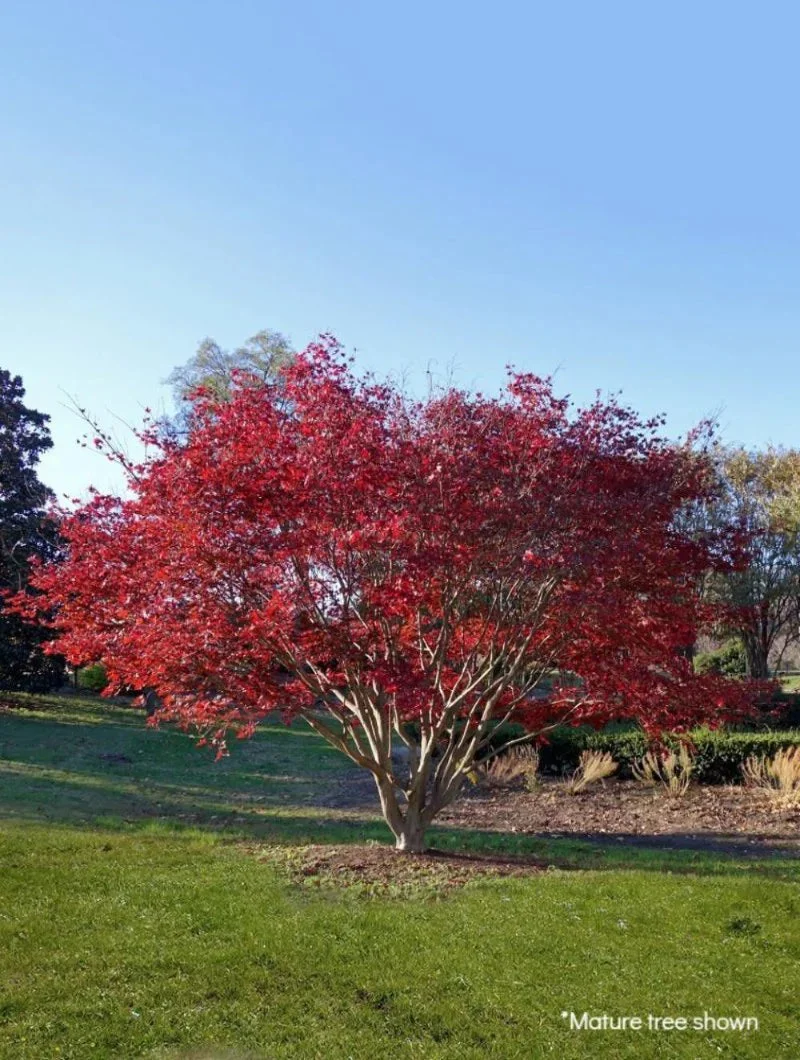
Be honest about size. A standard upright red form can reach 15 to 25 ft in the ground, and it will not stay content in a pot indefinitely, even with root pruning. If the tree has outgrown what you can lift and handle, a smaller or dwarf selection suits a container better, and some weeping forms stay compact. Our comparison of weeping red Japanese maples is a good place to start. If you are starting fresh, our nursery-grown trees at /shop/ come in 3-gallon, 5-gallon and 7-gallon sizes.
Also hold off if the tree is already in poor health. A maple with scale, borers or verticillium wilt is not a candidate for a big root trim. Treat the underlying problem first, and when using any pesticide, always read and follow the pesticide label; the label is the law. Try IPM steps first.
What to Expect Afterward
A tree that has been root pruned may look quiet for the first few weeks while it rebuilds. Over the following season, a repotted maple will often put on fresh feeder roots and hold moisture better, and many trees leaf out with steadier color. Results depend on the cultivar, the mix and your watering, so treat these as likely outcomes rather than promises.
Keep the mix evenly moist, not soggy. In zones 5 to 8, container roots are more exposed to freezing than roots in the ground, so protect the pot in freezing winters. Ask your local cooperative extension office what winter protection suits your area.
Quick Reference
| Item | Guide |
|---|---|
| How often | Every 2 to 3 years, or sooner if signs appear |
| When | Early spring, buds swelling, before leaf-out |
| Signs it is due | Water runs straight through; roots at drainage holes; midsummer wilting despite watering |
| Outer roots | Remove the outer 1 to 2 inches of circling roots |
| Bottom | Remove roughly 20 to 25 percent |
| Pot | Same pot or one size up, with drainage holes |
| Mix | Fresh quality container mix, never garden soil; pH roughly 5.5 to 6.5 |
| Depth | Same as before |
| Aftercare | Water thoroughly, shade for two weeks |
Japanese Red Maple
Nursery-grown Japanese Red Maple in sizes from 3 Gallon 2-3 ft, shipped to your door.
From $118.33
Shop Now →