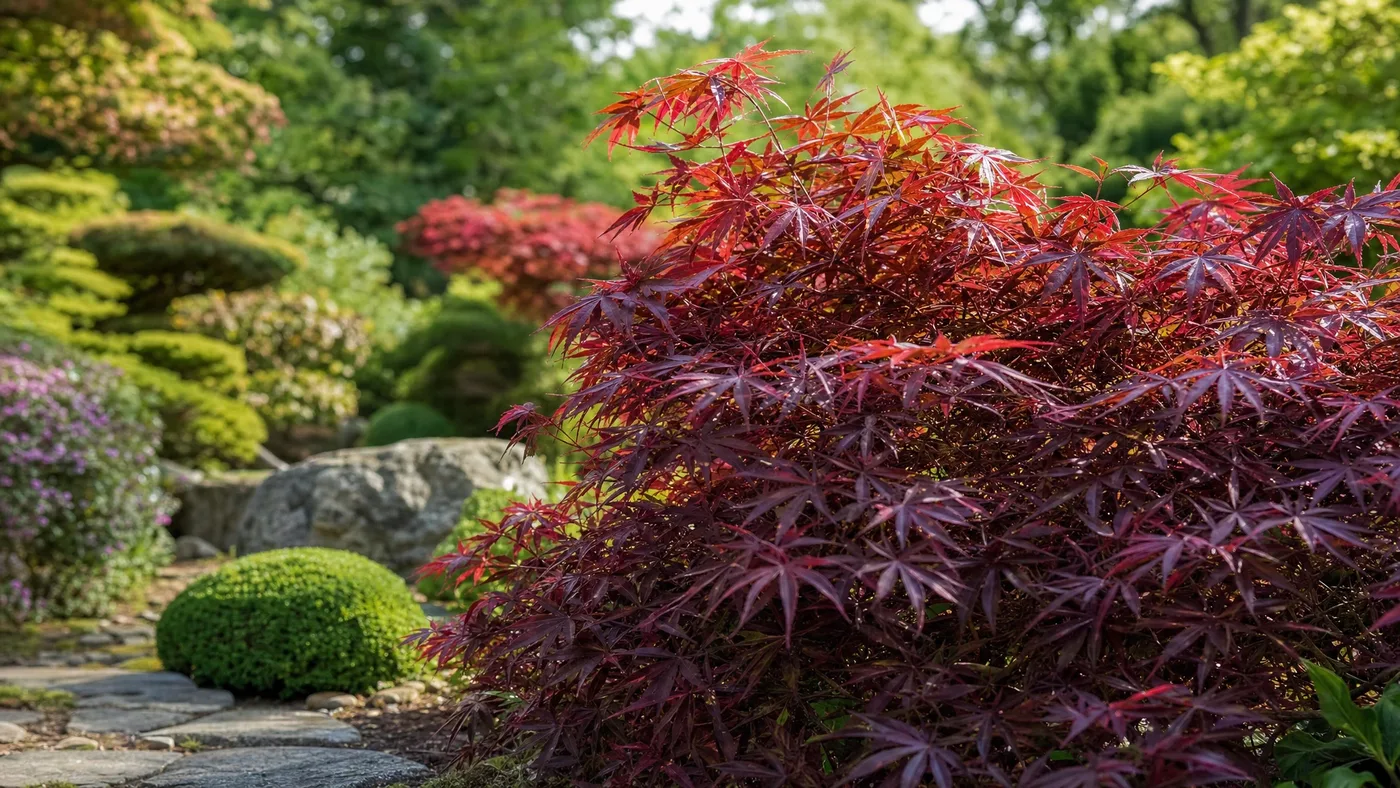
Japanese Red Maple Bonsai Basics
Japanese maple bonsai is one of the most popular ways to grow Acer palmatum, and it is easier to start than the tradition suggests. It also fails in predictable ways. We are a nursery, not a bonsai studio, so this guide covers the horticulture a beginner needs and leaves the artistry to people who practice it daily. If your tree will live in a regular pot rather than a shaped bonsai tray, start with our guide to growing a Japanese red maple in pots and containers, then come back here for the finer points.
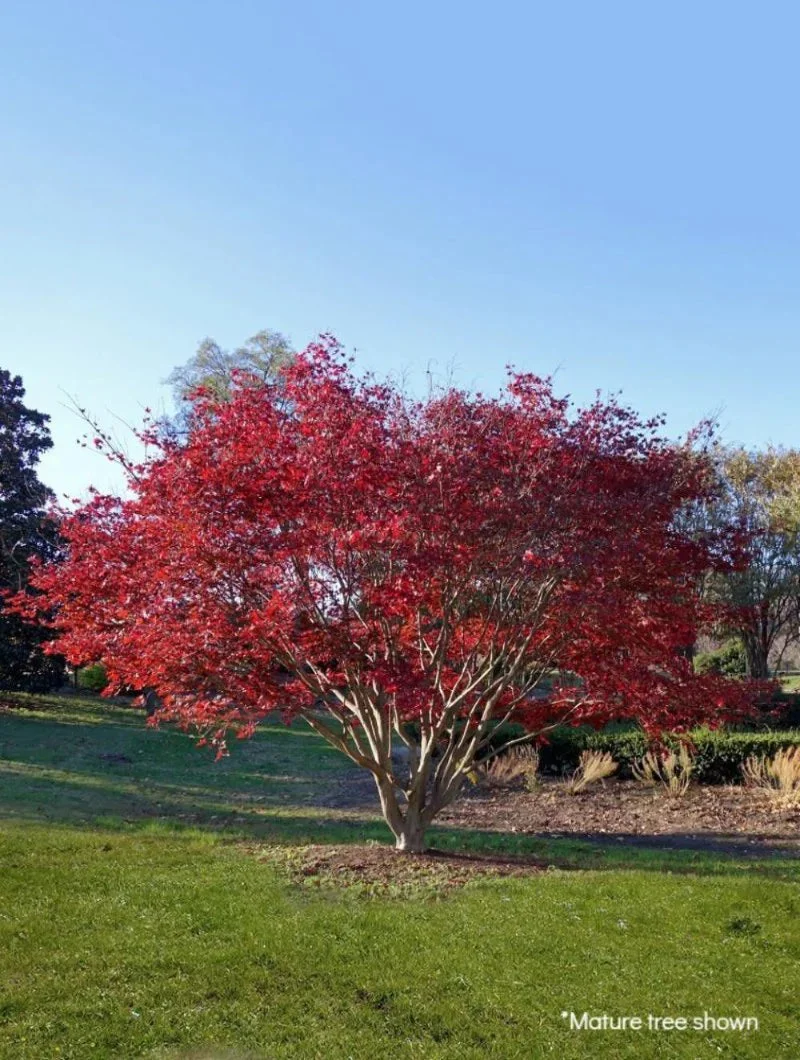
One rule comes before everything else. A red Japanese maple bonsai is an outdoor tree. It needs winter dormancy. Skip that and nothing else in this article will save it.
Why Acer palmatum Works as a Bonsai
Three traits explain the species' reputation, and all three are documented horticulture, not folklore.
- Small, deeply lobed leaves. The palmate leaves usually have 5 to 7 lobes. Repeated leaf reduction and a restricted root run make them smaller still.
- Fine branching. Pinch and prune a young shoot and it tends to split into more twigs. That fine, repeated branching is called ramification, and it is what makes a bonsai look like an old tree in miniature.
- A real seasonal show. Red or reddish-purple foliage in the growing season, vivid red, orange or crimson in fall, then a bare branch silhouette in winter.
The growth rate helps as well. Acer palmatum grows slowly to moderately, roughly 6 to 12 inches a year in the ground. That pace gives a beginner time to correct mistakes.
Who Should Skip This
Bonsai is the wrong fit if you can't water once or twice a day in summer. It is also wrong if you want a houseplant, or if you live where winters stay above freezing and the tree can't get a proper cold rest. Our figures put the species at USDA zones 5 to 8, and some cultivars tolerate zone 9 with afternoon shade. Heat tolerance can shift by a full zone depending on the genetic line, so ask your local cooperative extension office if you are near a zone edge.
The Outdoor Rule: No Windowsill Maples
A common piece of advice is that a small maple in a small pot can live on a bright windowsill. It can't. Acer palmatum is a temperate deciduous tree. It sets buds in fall and needs a stretch of cold dormancy to push healthy growth the next spring. Indoors, warm and dry air keeps the tree from resting properly. It leafs out weakly or not at all, and a tree kept inside through winter is often dead by spring. Keep it outside year-round. Our separate post on the indoor myth covers why in more detail.
Outdoors in freezing climates, the thin walls and tiny soil volume of a bonsai pot give roots almost no insulation. Container-grown maples need root protection in freezing winters. In practice that means sheltering the pot against a north-facing wall, grouping pots together, or burying the pot in mulch or a spare bed. Keep the tree dormant, but keep the roots from freezing solid.
Materials You Need
- A young Japanese red maple (see the starter-stock note below).
- A shallow bonsai pot with large drainage holes, plus mesh to cover them.
- Well-drained, gritty bonsai soil. Maples like slightly acidic conditions, roughly pH 5.5 to 6.5, and they will not tolerate standing water or root rot.
- Anodized or soft aluminum bonsai wire in a few thicknesses.
- Concave cutters, sharp scissors, and a root rake or chopstick.
- A balanced, low-nitrogen fertilizer for light feeding.
Starter Stock: Start with an Ordinary Young Tree
Ordinary young nursery trees are standard pre-bonsai material. You don't need anything labeled as bonsai stock, and we don't claim our trees are. A nursery-grown Japanese red maple gives you a trunk and roots to work with, and it shortens the wait for trunk thickness.
Be honest with yourself about one point. Unnamed red stock is often seed-grown, which means color and habit can vary. Named cultivars are grafted and come true to type. The grafted-versus-seedling question matters more for bonsai than for a yard tree, because you will be staring at one leaf color from three feet away. Seedling red can shift greener in summer heat or deep shade, and the final shade is hard to predict.
Step-by-Step: Your First Year
- Choose the site. Pick a spot with morning sun and afternoon shade. In hot-summer climates, afternoon shade preserves color and prevents scorch. A shallow tray heats up quickly in full afternoon sun.
- Pot it carefully. Plant in early spring or fall, not peak summer heat. Cover the drainage holes with mesh, add a layer of gritty soil, set the tree slightly off-center, and fill around the roots. Do not bury the trunk flare.
- Water on a schedule you check. Shallow trays dry in hours in summer, so expect daily watering in the warm months. Push a finger into the soil. If the top half inch is dry, water until it runs from the holes. Never let the root ball dry out completely, and don't let the pot sit in water. Maples tolerate neither drought extremes nor wet feet.
- Feed lightly. Use a balanced, low-nitrogen fertilizer in early spring. Overfeeding causes leggy growth and weaker color, which is the opposite of what bonsai needs.
- Prune in dormancy. Make structural cuts in late fall to midwinter, when sap bleed is minimal. Remove only dead, crossing or crowded branches. Our guide on when to prune a Japanese red maple covers the timing in detail.
- Wire young shoots. Wiring bends new branches into place. Do it while shoots are flexible, wrap loosely at roughly 45 degrees, and check often. Maple bark is thin and marks easily, so remove wire before it bites in.
- Reduce leaves. Leaf reduction means pinching or trimming new growth to encourage smaller leaves and finer twigs. Only do it on a healthy, established tree. A stressed tree needs its leaves.
- Repot and root-prune. As roots fill the pot, trim some of the outer root mass and return the tree to fresh soil. This is the same mechanic covered in our repotting guide. Cut modestly, work quickly, and keep roots from drying out.
Common Mistakes
| Mistake | What happens | Fix |
|---|---|---|
| Keeping it indoors over winter | No dormancy, weak or failed spring leaf-out | Keep outside, protect the roots from hard freezes |
| Full afternoon sun in a shallow tray | Leaf scorch and fading color | Afternoon shade, wind shelter |
| Missing summer waterings | Crispy leaf edges, dieback | Daily checks, deeper watering |
| Heavy fertilizer | Leggy growth, weaker color | Light early-spring feeding only |
| Wire left on too long | Scarred bark | Check often, remove early |
| Pruning in active growth | Heavy sap bleed | Prune in late fall to midwinter |
Pests and diseases follow the same list as for garden maples: aphids, scale, borers, Japanese beetles, verticillium wilt and anthracnose. Start with IPM steps such as inspecting leaves and rinsing aphids off. If you reach for a pesticide, always read and follow the pesticide label; the label is the law.
What to Expect
Bonsai is slow work. A modest, attractive tree may take several seasons of consistent care, and results depend on your starting stock, climate and attention. Fine ramification generally builds over multiple years of pinching and pruning. Fall color is likely to look good in most seasons but varies by cultivar and weather. With good siting and care, Acer palmatum can live 80 to 100 years or more, and bonsai growers sometimes keep a tree that long, so patience pays.
For technique depth, such as styling, advanced root work and exhibition, go further than we can. Join a local bonsai society, attend a workshop, and read established bonsai references. Local growers know what works in your climate. Your cooperative extension office can add regional guidance on dormancy and winter protection.
Quick Reference
| Item | Guideline |
|---|---|
| Location | Outdoors year-round, never a windowsill |
| Hardiness | USDA zones 5 to 8, some cultivars zone 9 with afternoon shade |
| Sun | Morning sun, afternoon shade in hot climates |
| Watering | Check daily in summer; keep evenly moist, never soggy |
| Soil | Gritty, well-drained, pH about 5.5 to 6.5 |
| Fertilizer | Balanced, low-nitrogen, light, early spring |
| Planting season | Early spring or fall |
| Pruning | Late fall to midwinter dormancy |
| Winter | Dormancy required; protect roots from hard freezes |
| Color note | Seed-grown red stock varies; grafted cultivars stay true |
Japanese Red Maple
Nursery-grown Japanese Red Maple in sizes from 3 Gallon 2-3 ft, shipped to your door.
From $118.33
Shop Now →