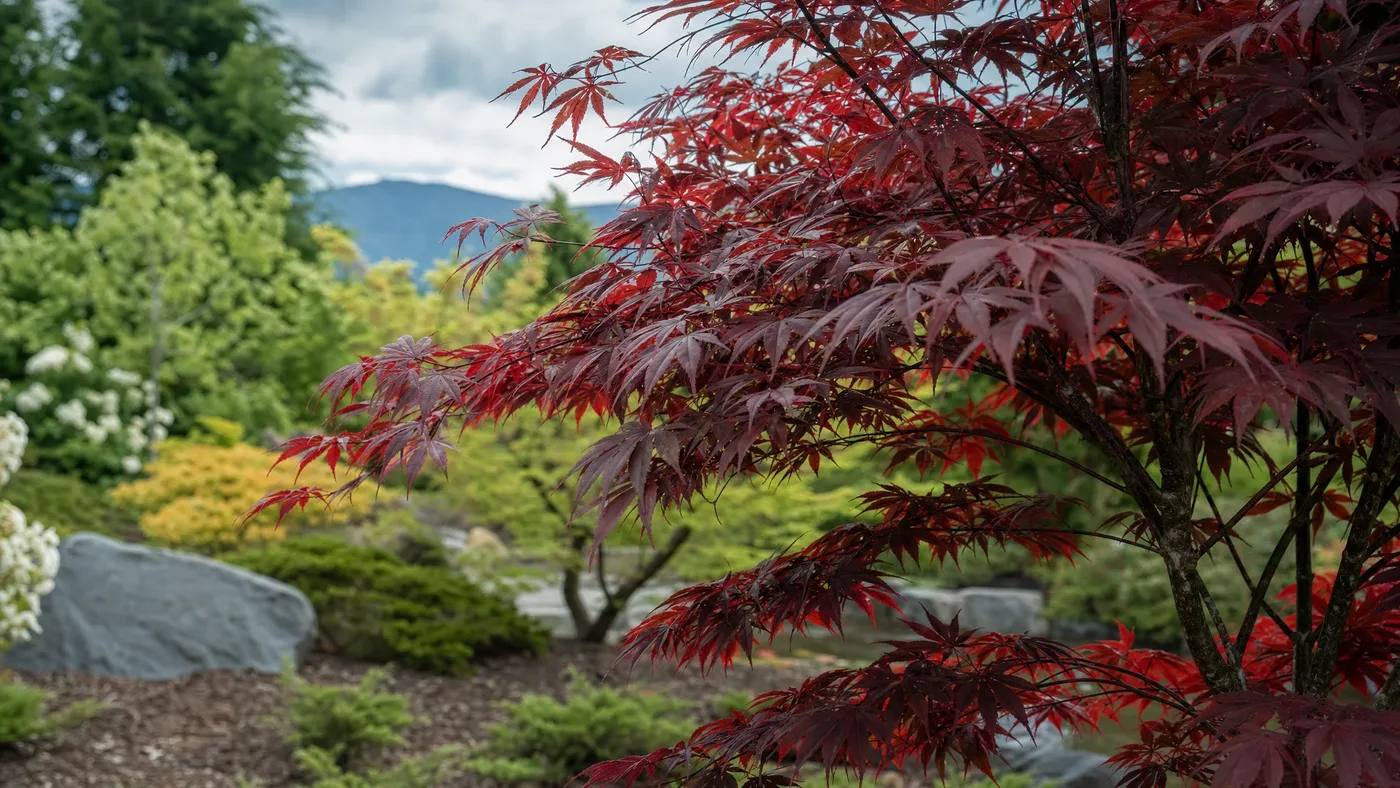
Japanese Red Maple Summer Heat Care
Japanese maple heat stress looks alarming. Leaf edges crisp, the red turns bronze, and the whole canopy droops by 3 p.m. Most owners respond with daily sprinklings, a bag of fertilizer, or a pair of pruners. All three make it worse.
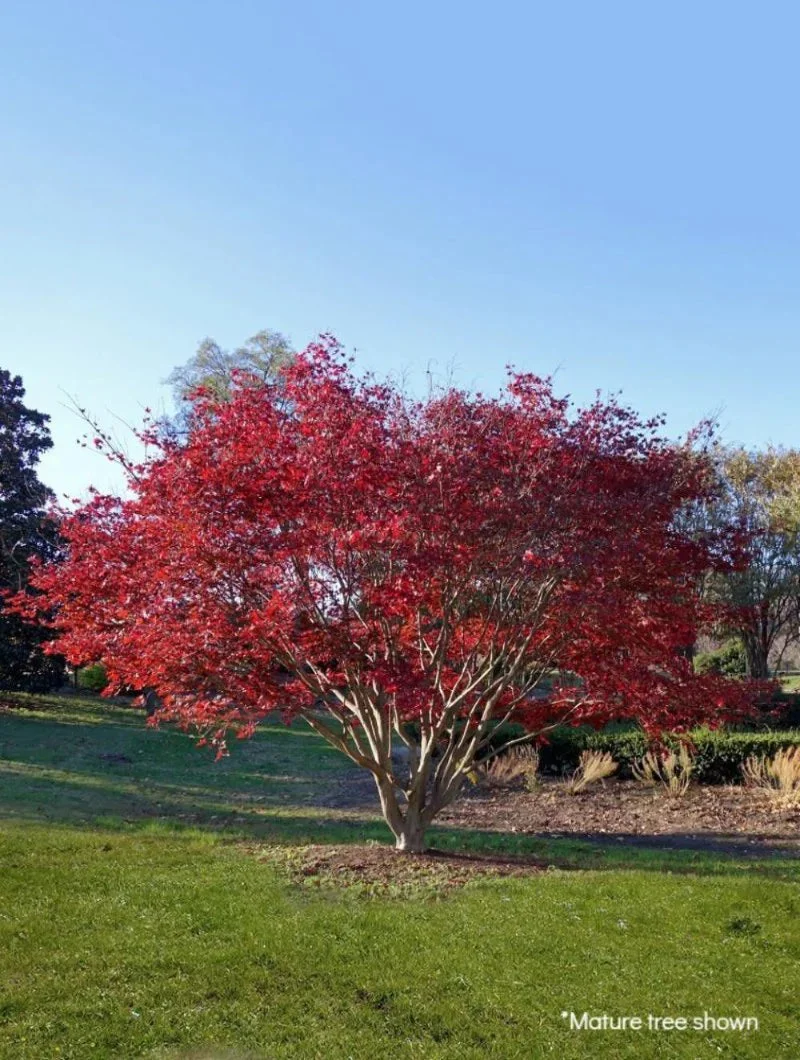
This is the heat-wave playbook in the order a worried owner needs it: what to do before the forecast turns hot, what to do during it, and what to leave alone. It supports our full Japanese red maple care guide, which covers the year-round basics.
Our position: the fix is rarely a product
A maple that cooks every July is almost never short of a spray, a tonic, or a special fertilizer. The cause is one of four things: not enough shade, not enough mulch, water applied shallow instead of deep, or a site that is simply too hot for this species. Fix those in that order. If the site fails all four, the honest answer is a tougher tree, not a better product.
Materials you need
- Shredded bark, wood chips, or leaf mold for a 2-3 in mulch layer
- A hose with a soaker or a slow-trickle attachment (or a 5-gallon bucket with a small hole drilled in the base)
- 30-40% shade cloth plus stakes, a frame, or clips
- Plant dollies or bricks to lift pots off hot surfaces (container trees)
- A trowel or soil probe to check moisture below the surface
Step by step: the heat-wave playbook
1. Water deeply before the forecast heat arrives
When the forecast shows a hot stretch coming, soak the root zone 1-2 days ahead. A slow, long soak sends water down where roots can use it. Daily sips during the heat wet only the top inch, which dries out within hours and trains roots to stay shallow.
Japanese red maple wants consistent, even moisture, especially in the first 2-3 years, and it handles neither standing water nor drought extremes. Push a trowel into the soil near the drip line. If it is damp and cool below the surface, wait. If it is dry, soak again. Our complete watering guide covers schedules for newly planted and established trees.
2. Lay 2-3 in of mulch
Spread mulch 2-3 in deep across the root zone, out to the drip line if you can. Keep it a few inches back from the trunk so bark stays dry. Mulch slows evaporation and keeps roots cooler. Thin mulch does little, and a thick volcano against the trunk invites rot.
3. Add afternoon shade for young or potted trees
Hang 30-40% shade cloth on the south and west side so the tree gets relief from mid-afternoon sun. That density is plenty. Heavier cloth cuts too much light and can push foliage toward green. Young trees in full sun are also prone to trunk sunscald, so shading the trunk helps as well. The sun-versus-shade trade-off is covered in our sun requirements guide.
4. Move pots off cooking pavement
A container sitting on a driveway or deck bakes the roots from below and the sides. Lift pots onto bricks or a dolly so air can move underneath, and shift them to a spot with afternoon shade. Group pots together so they shade each other's containers. Dark plastic in direct sun is the worst case.
5. Do not fertilize a stressed tree
Feeding pushes soft new growth the roots cannot support in the heat. Overfeeding also causes leggy growth and weaker color. A light, balanced, low-nitrogen feeding in early spring is usually sufficient for the year.
6. Do not prune a stressed tree
Cutting removes leaves the tree is using to cope, and it exposes bark to more sun. Leave scorched leaves where they are. Structural or corrective pruning belongs in late fall to midwinter dormancy, which also avoids heavy sap bleed.
7. Accept some July bronzing
Red leaves that bronze or crisp at the edges in peak heat are usually a survival response, not a dead tree. Check a twig: if it bends and shows green under the bark, the tree is alive. Wait until fall before judging the damage. Our care guide helps you tell scorch from other causes, and the leaves of a stressed red form can shift greener in summer heat depending on the cultivar.
Texas and the South: reflected heat is the hidden killer
For Japanese maple care in Texas heat, air temperature is only part of the problem. A tree planted 3 ft from a south or west wall, a driveway, or a pool deck gets hit twice: once by the sun and again by heat radiating off the hard surface. Leaves on that side scorch first, and the damage reads as sunburn on one side of the canopy.
Southern cooperative extension services generally advise siting Japanese maples where they get morning sun and afternoon shade, on the east side of a building or under high tree canopy, and away from reflective surfaces. Check with your local extension office for the best siting and any local pest alerts, since conditions differ between regions of Texas and across the South.
Zone numbers also matter. Japanese red maple is rated for USDA zones 5-8, and some cultivars tolerate zone 9 with afternoon shade. The exact limit can shift by a full zone depending on the genetic line, so an unnamed seedling-grown tree is less predictable than a named, grafted cultivar.
Who should not plant one in a hot spot
If your only open spot is full afternoon sun against a west wall, or you cannot water deeply during summer, a standard Japanese red maple is the wrong fit. Do not try to rescue it with products. Choose a shadier site, use a container you can move, or pick a tougher tree. Our guide to sun-tolerant red Japanese maples for hot climates compares honest options. If a maple suits your site, nursery-grown trees are available in the shop.
Common mistakes
| Mistake | Why it backfires | Do this instead |
|---|---|---|
| Daily light watering during heat | Wets only the surface, encourages shallow roots | Deep soak before the heat, then check soil |
| Fertilizing a wilting tree | Forces soft growth that scorches | Wait until the next early spring |
| Pruning scorched leaves | Removes working foliage, exposes bark | Leave them, prune in dormancy |
| Mulch against the trunk | Holds moisture on bark, risks rot | Keep mulch a few inches back |
| Heavy shade cloth | Cuts light, may shift color toward green | Use 30-40% cloth |
| Pot on hot pavement | Roots overheat from below | Lift onto bricks, move to shade |
What to expect
With deep watering, mulch, and afternoon shade in place, many trees may show less crisping and recover more quickly after a heat wave. Some bronzing at leaf edges can still happen in a hot year. A tree that is alive should leaf out normally the next spring, though recovery varies by cultivar and site. Standing water and soggy soil can bring root rot, so do not overcorrect by watering too often.
Quick reference
| When | Action |
|---|---|
| 1-2 days before forecast heat | Deep, slow soak of the root zone |
| Before summer | Mulch 2-3 in deep, kept back from trunk |
| Young or potted trees | 30-40% shade cloth on the south and west side |
| Container trees | Lift off pavement, move to afternoon shade |
| During heat stress | No fertilizer, no pruning |
| July bronzing | Check twig for green, wait until fall to judge |
| Early spring | Light, balanced, low-nitrogen feeding |
| Late fall to midwinter | Prune dead, crossing, or crowded branches only |
Japanese Red Maple
Nursery-grown Japanese Red Maple in sizes from 3 Gallon 2-3 ft, shipped to your door.
From $118.33
Shop Now →