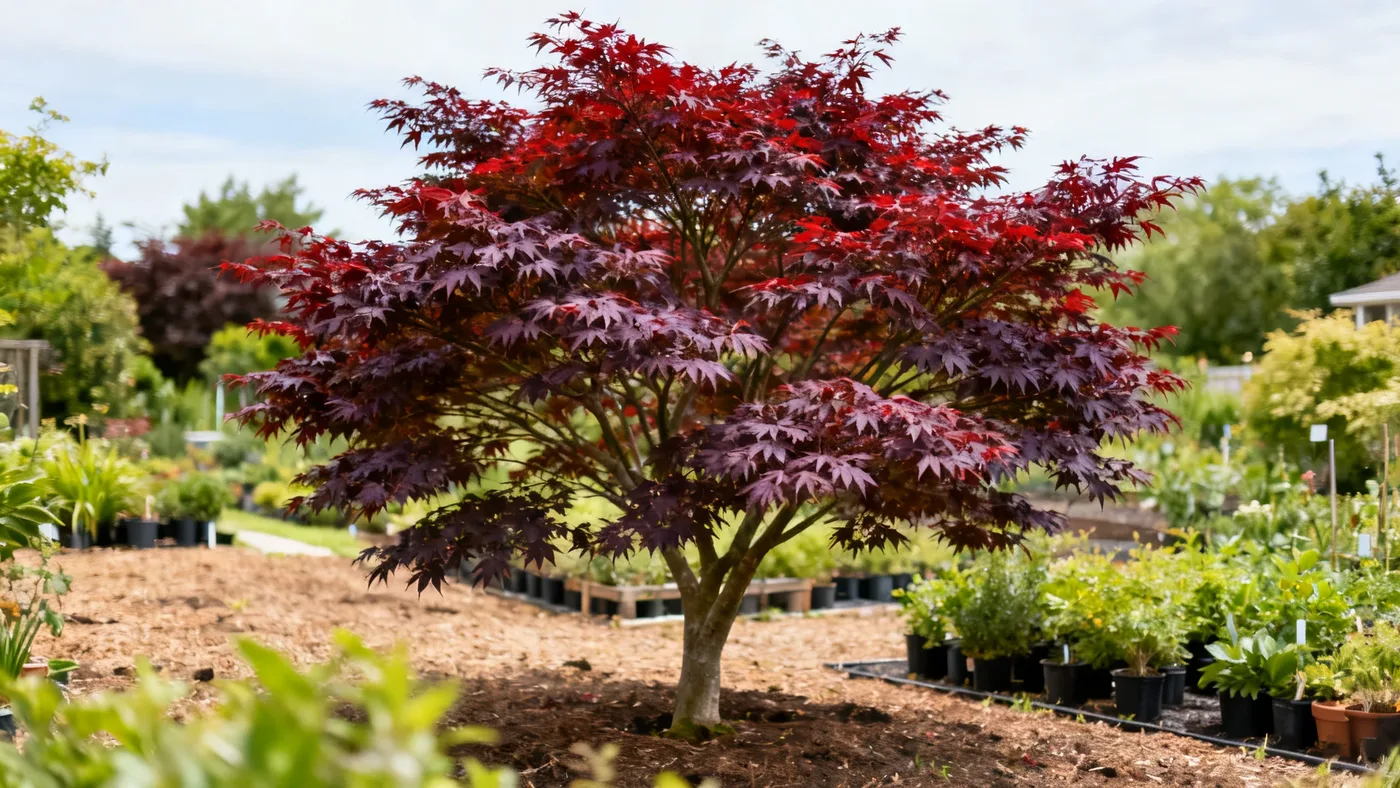
Japanese Red Maple Sun Requirements: Full Sun or Shade?
Japanese Red Maple thrives in a range of light conditions, but the right sun exposure makes the difference between a thriving specimen and one struggling with scorched foliage or fading color. The answer depends on your climate, and getting this right during the first two years sets up success for the next 80 to 100 years of your tree's life.
What Sun Does Japanese Red Maple Actually Need?
Japanese Red Maple grows in full sun to part shade, meaning anywhere from 6 hours of direct sun to dappled morning light with afternoon protection. The catch: this tree's tolerance for full sun varies dramatically by location.
In zones 5 through 7, where summers stay moderate, your red maple can handle full sun without injury. Zones 8 and 9, especially in the South or Southwest, require a different strategy. Here, afternoon shade is not a luxury; it preserves leaf color and prevents scorch.
The foliage on these trees shifts under different light. In adequate sun, you get rich red or reddish-purple leaves. Deep shade or intense summer heat can push the color toward green, depending on your specific tree's genetics. This is normal variation, not a sign of trouble.
Step 1: Identify Your Climate Zone and Summer Heat Pattern
Before planting, know your hardiness zone and typical summer high temperatures. Japanese Red Maple survives in USDA zones 5 through 8, with some cultivars tolerating zone 9 under afternoon shade.
- Zones 5 to 7: Full sun is generally safe. The tree can handle 4 to 6 or more hours of direct morning and midday sun without damage.
- Zone 8 and hotter zones: Afternoon shade becomes critical. Plan for dappled light or filtered shade between 2 and 6 PM, especially during July and August.
If your area regularly tops 90 degrees in summer, or if you sit on the edge of zone 8 or 9, treat afternoon shade as mandatory, not optional.
Step 2: Scout Your Planting Site Over One Full Day
Walk around your intended planting spot at 9 AM, noon, 3 PM, and 5 PM on a sunny day. Note where shade from buildings, mature trees, or fences falls. Mark the sunny patches and shaded patches on a simple sketch.
Pay special attention to afternoon sun exposure. A spot that gets morning sun but sits in shade by 3 PM is often ideal for zones 8 and warmer. A site with full, all-day sun works for cooler regions as long as the tree receives consistent moisture.
Young trees, especially those in their first 2 to 3 years, benefit from slightly more shade than mature specimens. If you cannot provide afternoon shade in a hot climate, consider waiting to plant, or choose a location with natural afternoon shelter.
Step 3: Choose a Planting Location Based on Sun Pattern
Select your exact spot with this decision tree in mind:
- Zone 5 to 7, moderate summers: Plant in full sun (6+ hours direct light). The tree will develop stronger structure and maintain intense red color.
- Zone 8, hot summers (90+ degrees common): Plant where morning sun reaches the tree but a large tree, building, or fence casts shade over the canopy after 2 PM.
- Zone 9 or extremely hot zone 8: Place under the dappled shade of a mature deciduous tree, or on the north side of a structure that blocks afternoon heat.
- Any zone, under shade trees: Ensure the canopy is open enough that the maple gets at least 2 to 3 hours of direct sun daily. Too little light reduces growth and may shift foliage toward green.
Spacing matters too. Keep the tree 10 to 15 feet from other mature trees or structures if you are providing full sun, so canopies do not compete. In partial shade setups, slightly closer spacing is acceptable.
Step 4: Protect Young Trees from Trunk Sunscald
Even in full-sun zones, young Japanese Red Maple trunks can suffer sunscald: bark damage on the south or west side of the trunk caused by winter freeze-thaw cycles and intense winter sun.
For the first two years after planting in full sun, consider one of these protective measures:
- Wrap the trunk loosely with tree wrap or burlap from November through March in zones 5 to 7.
- Plant a small shrub or position a shade cloth to filter afternoon winter sun on the south side of the trunk.
- Mulch out to the drip line (roughly the edge of the canopy) with 2 to 3 inches of wood chips, keeping the material 3 to 4 inches away from the trunk base to prevent rot.
Protecting the trunk is less critical in partial shade settings but still wise in zones 5 and 6, where winter temperature swings are sharp.
Step 5: Monitor Foliage for Scorch and Adjust Water
Leaf scorch appears as brown or tan edges on leaves, often in July or August during dry spells. It results from heat, wind, and drought stress working together, not from sun alone.
If you notice scorch on your tree:
- Check soil moisture. Stick your finger 3 to 4 inches into the soil near the root zone. Soil should feel like a wrung-out sponge: moist but not waterlogged.
- Water deeply if dry. Provide 1 to 1.5 inches of water per week, either from rain or irrigation, for the first 2 to 3 years.
- Consider adding afternoon shade for the following year if scorch is severe. Even in zones 7, a hot summer may warrant temporary afternoon protection.
- Improve mulch. A 2 to 3-inch layer of organic mulch reduces soil temperature and retains moisture, reducing scorch risk.
Established trees (past 3 years) are less vulnerable to scorch but still benefit from consistent moisture during heat and drought.
Step 6: Observe Leaf Color and Adjust Light if Needed
Red-leaf Japanese Maples in true red-leaf forms should display red or reddish-purple foliage throughout the growing season, though this can shift greener in deep shade or during intense summer heat, depending on cultivar. This is normal; the color returns when stress eases.
If your tree's leaves remain distinctly green all summer and you are in a full-sun zone, the tree may be getting too little light or too much shade from nearby structures. Thin back competing vegetation if safe, or consider your cultivar may be a genetic variant that naturally tends toward green in warm weather.
If you planted in full sun but the tree shows consistent scorch every summer, add afternoon shade. Prune lower branches or plant a small understory shrub to provide dappled protection without removing all direct light.
Step 7: Adjust As the Tree Matures
At planting, young Japanese Red Maples are tender; in zones 8+, give them afternoon shade during years 1 to 3. As the root system deepens and the tree thickens, it becomes more resilient. By year 5 to 7, a mature specimen in zones 8 can tolerate full sun better, especially if you have established deep watering routines.
Conversely, if you planted a young tree in full sun and it has grown leggy or pale, gradually add afternoon shade. Sudden moves (shade to full sun, or vice versa) can stress the tree; transition changes over one growing season.
Common Mistakes and How to Avoid Them
Mistake 1: Assuming afternoon shade means zero sun. Dappled shade is not the same as full shade. The tree still needs some direct light. If your chosen shade spot gets only 1 to 2 hours of sun, the tree may grow slowly and lean toward available light.
Mistake 2: Planting in full sun, then ignoring drought stress. Sun exposure and water go hand in hand. Full-sun trees in zones 5 to 7 still need consistent moisture, especially in the first 3 years. Skipping watering during dry weeks almost guarantees scorch and stress.
Mistake 3: Choosing deep shade to prevent all scorch. Too much shade (under a dense evergreen, or on the north side of a building with no direct light) slows growth, reduces the vibrant red color, and invites weak, spindly structure. Partial shade is better than full shade.
Mistake 4: Not protecting young trunk in zones 5 and 6. Even full-sun trees benefit from sunscald protection for the first two winters. Wrapping takes 15 minutes and prevents years of bark damage.
Expected Results and Timeline
A Japanese Red Maple planted in the right light for your zone should show:
- Year 1: Steady growth (roughly 6 to 12 inches), red foliage color maintained, no visible scorch if watered consistently.
- Year 2 to 3: Deeper branching, stronger structure, maintained red color, improved drought tolerance as roots establish.
- Year 5+: A well-formed specimen with a graceful branching silhouette, full canopy, and intense fall color, often shifting from summer red to orange or crimson in autumn.
If scorch appears despite adequate watering and appropriate shade for your zone, your cultivar may be more heat-sensitive than typical. Adjust by increasing afternoon shade slightly or improving mulch coverage.
Quick Reference: Sun and Light Checklist
| Climate Zone | Summer Heat | Ideal Light | Key Action |
|---|---|---|---|
| Zones 5-7 | Moderate (under 85 F avg.) | Full sun (6+ hours) | Water consistently; wrap trunk in first 2 winters. |
| Zone 8 (moderate) | Warm (85-90 F) | Morning sun + afternoon shade (2-3 PM onwards) | Mulch deeply; provide 1-1.5 in. water weekly first 3 years. |
| Zone 8+ (hot) / Zone 9 | Hot (90+ F) | Dappled shade or filtered afternoon light | Plant under large tree or on north-facing site; avoid all-day direct sun July-August. |
| Any zone, understory | Variable | Partial shade (2-3 hours direct sun) | Ensure canopy above is open; thin competing branches if tree is dark green and slow-growing. |
Before planting, review the full guide to how to plant a Japanese Red Maple tree the right way, and consult our comprehensive care guide for sun, water, soil, and pruning to round out your setup. Getting light right at planting time prevents years of corrective work.