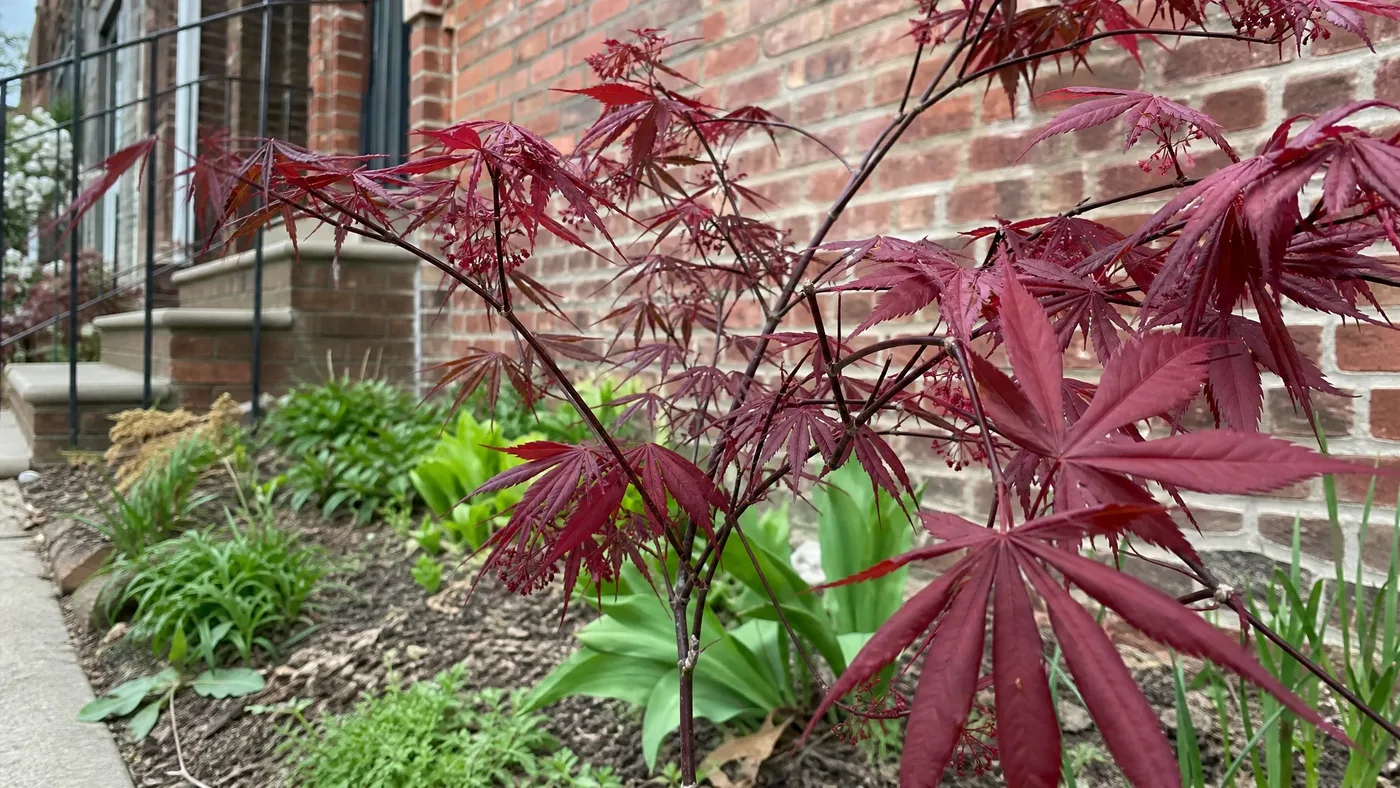
Red Japanese Maple in Shade: How Much Color You Keep
One of the calls we get most often starts the same way: "My red maple turned green. Did I kill it?" You didn't. The tree is fine, and the light is the whole story. A red-leaved Japanese maple holds its red only when enough direct sun reaches the leaves, while a green-leaved maple planted in the same spot would never have given you this worry.
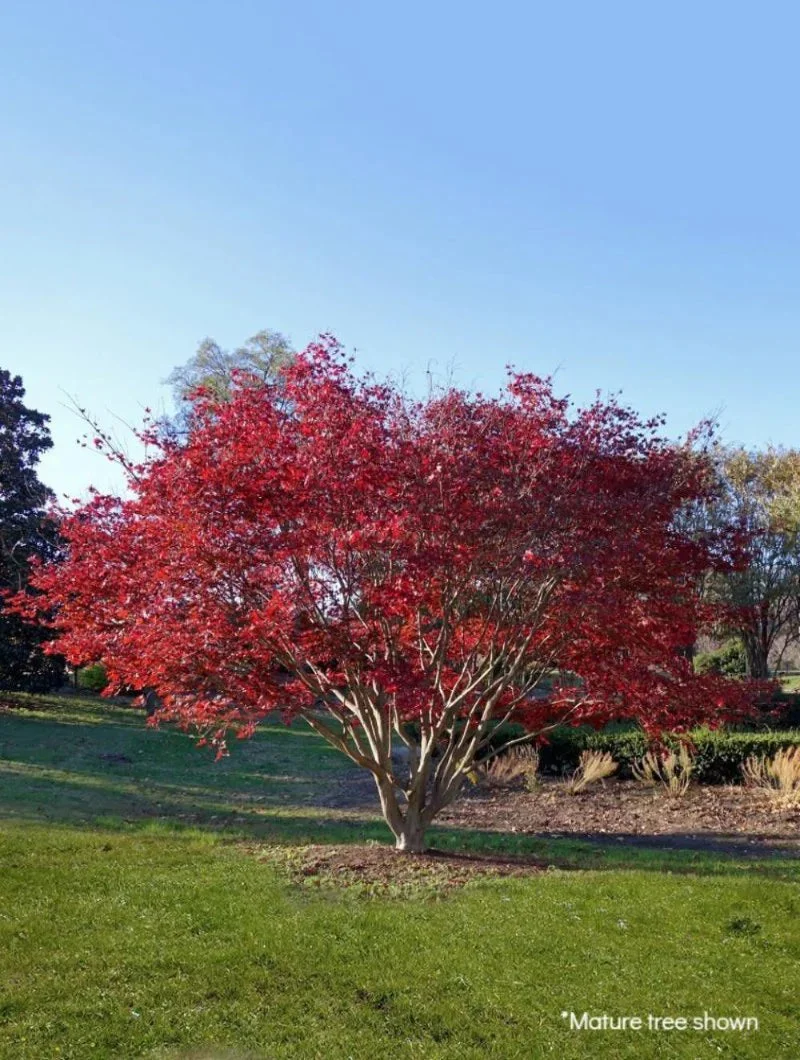
This guide covers everything you need to know about keeping a Japanese Red Maple colorful in less than full sun, from a side bed with a few hours of east light to deep shade under a neighbor's oak, a hot deck pot and a wall that bounces light back. Each yard is worked through on its own terms.
Shade is the most common reason a site disappoints with a red maple, and the result is predictable once you know what to look for.
Japanese Red Maple in a Narrow Side Bed
A narrow bed along the side of the house, with a few hours of east light and shade for the rest of the day, is the friendliest case in this guide. The red-leaf form suits partial shade, defined as direct sunlight for only 2–6 hours a day. A bed like this sits inside that range, so you are planting within what the tree is known to handle.
What Color You Keep
The leaves open red to purple in spring, and that part is rarely in doubt. The change comes in early summer, when the foliage color fades to light green. Some softening happens on any site, and shade adds to it. In an east-facing bed, expect the outer leaves that face the morning sun to hold a deep red or bronze while the inner and lower leaves go green. That two-tone look is normal.
The red-leaf name is also used for many red-leaved seedlings, so two trees side by side can differ by August. Judge your own tree across a full summer before you decide anything about the spot.
Growth and Fall Show
The species grows slowly to moderately, and with only a few hours of direct light you should expect the slower end of that: shorter shoots, a more open habit, and a tree that fills out over years rather than seasons. That suits a narrow bed. Just remember the red-leaf form is described as a 25-foot-tall tree, and the species can reach 10–25 feet wide, so leave real room.
Fall color is listed as golden, orange or red. In part shade we would plan on the gold and orange end rather than a deep scarlet, and our fall color guide shows what a typical year looks like. It is still a tree worth the bed.
A Windy Corner Lot With Dappled Afternoon Shade
A corner lot where a fence, a garage or a neighbor's tree throws shade after lunch is a different case from the side bed, and a better one than most people expect. The tree gets its direct light in the morning, when the sun is gentle, and is shaded through the hottest hours. The red-leaf form in warmer areas benefits from afternoon shade, and that is the reason this site works.
Late Shade Is Not Morning Shade
Two sites can have the same number of shaded hours and behave very differently. A tree shaded until noon loses the light it needs to hold red and then takes full-strength heat. A tree shaded after noon keeps the light and loses the heat. If you can choose, pick the afternoon-shade spot every time. Our sun requirements guide goes deeper on west walls and hot afternoons.
Your zone changes how much shade you need. Leaves often scorch in zones 7b and 8 unless the tree is mostly shaded or irrigated, while zones 5 and 6 tolerate more direct sun. In the cooler zones this corner could be sunnier and still be fine. In 7b and 8, the afternoon shade is doing real work.
Taking the Wind Out of the Corner
Wind is the catch. Scorch occurs when high temperatures are accompanied by wind, so a corner that is shaded but breezy can still brown the leaf edges. The species asks for dappled shade and protection from drying winds as a pair. Shade alone does only half the job.
A solid fence, a hedge or a few tall shrubs on the windward side will break the gusts. Place them upwind, not tight against the trunk. Keep the soil evenly moist with mulch and a deep soak in dry weeks, since drought tolerance is only moderate. Then watch the leaf edges in July and August. Crisp brown margins point to wind or dry soil, not to the light.
Deep Shade Under a Neighbor's Oak
This is the case where we have to be kind and plain at once. A red Japanese maple under a big oak, with almost no direct sun reaching it, can live there, but it will not look red. The leaves open reddish in spring and turn green early. Green-leaved maples shrug off the same spot, which is why you may have seen a lovely maple in a shady yard and assumed yours would match.
What You Will See
The signs arrive in a predictable order, and none of them mean you did something wrong. Knowing the order lets you judge the tree honestly instead of waiting another year for a change the light will not allow.
- Spring leaves open red or purple, then turn green or dull bronze by early summer, earlier than they would in sun.
- Growth is sparse, with thin shoots, fewer leaves and wide gaps between branches as the tree reaches toward the light.
- Fall color is weak and brief, without the gold, orange or red the sources describe for a tree in better light.
- The whole crown leans toward the open side of the canopy.
Your Realistic Options
We often see customers feed a greening tree harder, hoping to bring the red back. Fertilizer cannot stand in for light. A better first move is to raise the canopy. If the oak's lower limbs can be removed by an arborist, with the owner's agreement, morning sun may slip underneath. A high, open canopy that throws moving, dappled light is a far better home than a low, dense one.
The second option is to move the maple to the edge of the canopy, where it gets a few hours of direct morning sun. The third is to accept a green-to-bronze tree and enjoy its form. A north wall is the same story: plenty of sky, no direct sun, a healthy tree and a green one. If red is the goal and the site cannot change, see our comparison of small red-leaf trees for something that suits the shade better.
A Hot Deck Pot for Japanese Red Maple
A pot on a hot deck is the one case where you can run the experiment yourself, because you can move the tree. That is a real advantage and also a trap. Deck boards and railings hold heat, a pot's soil warms faster than ground soil, and every step toward more light is a step toward more scorch. The species may suffer leaf scorch with excess sun, wind or drought, and a deck can supply all three.
Trading Light Against Scorch
The table runs from the brightest position to the dimmest. Treat it as a direction of travel rather than exact settings, since your deck, zone and wind will shift each row.
| Pot position | Leaf color | Scorch risk |
|---|---|---|
| Sun most of the day | Reddest at first, still fades to green or bronze in heat | Highest, especially with wind |
| Morning sun, shade by early afternoon | Best balance of red and bronze | Low to moderate |
| Bright shade, no direct sun | Mostly green or bronze by early summer | Low |
| Deep shade corner | Green, sparse growth | Lowest, but the tree weakens |
The second row is where we would aim. It is also the position most decks can manage with a small move.
Moving the Pot Through the Year
Give the tree its sunniest spot in spring and fall, then slide it out of the worst afternoon sun in July and August. A pot on a wheeled stand makes this easy. Pots dry fast on a hot deck, so check the soil often, and see our guide to growing Japanese red maple in pots for mixes and watering.
The weeping 'Dissectum Atropurpureum' stays about 5–8 feet tall and wide, and suits full sun or partial shade. That is far smaller than the 15–25 feet of the species, so a laceleaf form is the more comfortable fit for a deck, while an upright red tree will eventually outgrow its container.
A Courtyard Wall Behind Your Japanese Red Maple
One of the most common questions we get about courtyards is whether a light-colored wall counts as sun. It counts for something, but not for everything. A pale wall bounces diffuse light back onto the tree, which is gentler than direct sun and well short of it. Think of it as lifting a dim spot to a bright one, not lifting a bright spot to a sunny one.
What Reflected Light Does Well
Reflected light reaches the underside and inner leaves that would otherwise sit in gloom, so the canopy tends to fill in better and the summer green is livelier than in a dark corner. Courtyards also usually shelter plants from wind, which matters because the species is advised to be protected from drying winds. For a tree already getting some direct morning sun, a pale wall is a quiet bonus.
What It Cannot Make Up For
It cannot replace several hours of direct morning light, and that is the part that holds red. If no direct sun reaches the tree in the morning, expect green or bronze summer leaves even against a white wall. Painting the wall lighter will brighten the spot, but it will not bring back the color.
A light wall facing south or west also throws back heat. Since scorch comes with high temperatures, a reflective wall on the hot side can hurt more than help, particularly in zones 7b and 8. Leave air space between the branches and the wall, and favor a wall that faces north or east, where the reflected light comes without much reflected heat.
Your Yard, Your Hours of Morning Sun
The rule that runs through every case is the same. A red Japanese maple keeps its color in proportion to the direct light it gets, and morning light is the kind it handles best. The red-leaf form is listed for partial shade of 2–6 hours of direct sun, and if color is the goal we would aim for the upper half of that range. Below it, expect a healthy tree that is green or bronze for most of the summer.
To match your yard, find the nearest case: a side bed with east light, a breezy corner with late shade, dense shade under a big tree, a pot you can move, or a bright courtyard. If your tree has already gone green, our guide to red Japanese maples turning green helps separate shade from other causes. Now count your hours of direct morning sun on a clear day, then write to us with the number and we'll help you pick.
Japanese Red Maple
Nursery-grown Japanese Red Maple in sizes from 3 Gallon 2-3 ft, shipped to your door.
From $118.33
Shop Now →Color on a red Japanese maple comes down to light, so that is what we get right on our farms: soil that drains well and stays evenly moist, plus enough direct sun for the leaves to turn deep red. We only ship plants we would plant ourselves, and every tree is top quality. When you have counted your morning sun hours, look through the Japanese Red Maples we have ready and find the one that suits your spot.