Japanese Red Maple Fall Color: What to Expect Each Year
If you've planted a Japanese Red Maple, you're likely waiting for the payoff: that stunning display of crimson, orange, or deep burgundy foliage that makes the tree a focal point in any landscape. Fall is when a Japanese maple earns its name. But the color you see depends on where you live, how you care for the tree, and sometimes just the luck of the season. This guide walks you through what to realistically expect, why your tree might disappoint, and how to maximize color year after year.
Why You're Asking About Fall Color Right Now
Late September and October are when gardeners start noticing whether their investment paid off. The first cool nights trigger anthocyanin production (the pigment that creates red and purple tones), and trees that spent a quiet summer suddenly announce themselves. If your tree is still green, or if last year's show was underwhelming, the timing makes sense. Fall color is the one predictable moment each year when a Japanese Red Maple either delivers or confuses you.
The good news: understanding what drives color variation lets you plan better care now and next season, before the leaves drop.
What Japanese Red Maple Fall Color Actually Looks Like
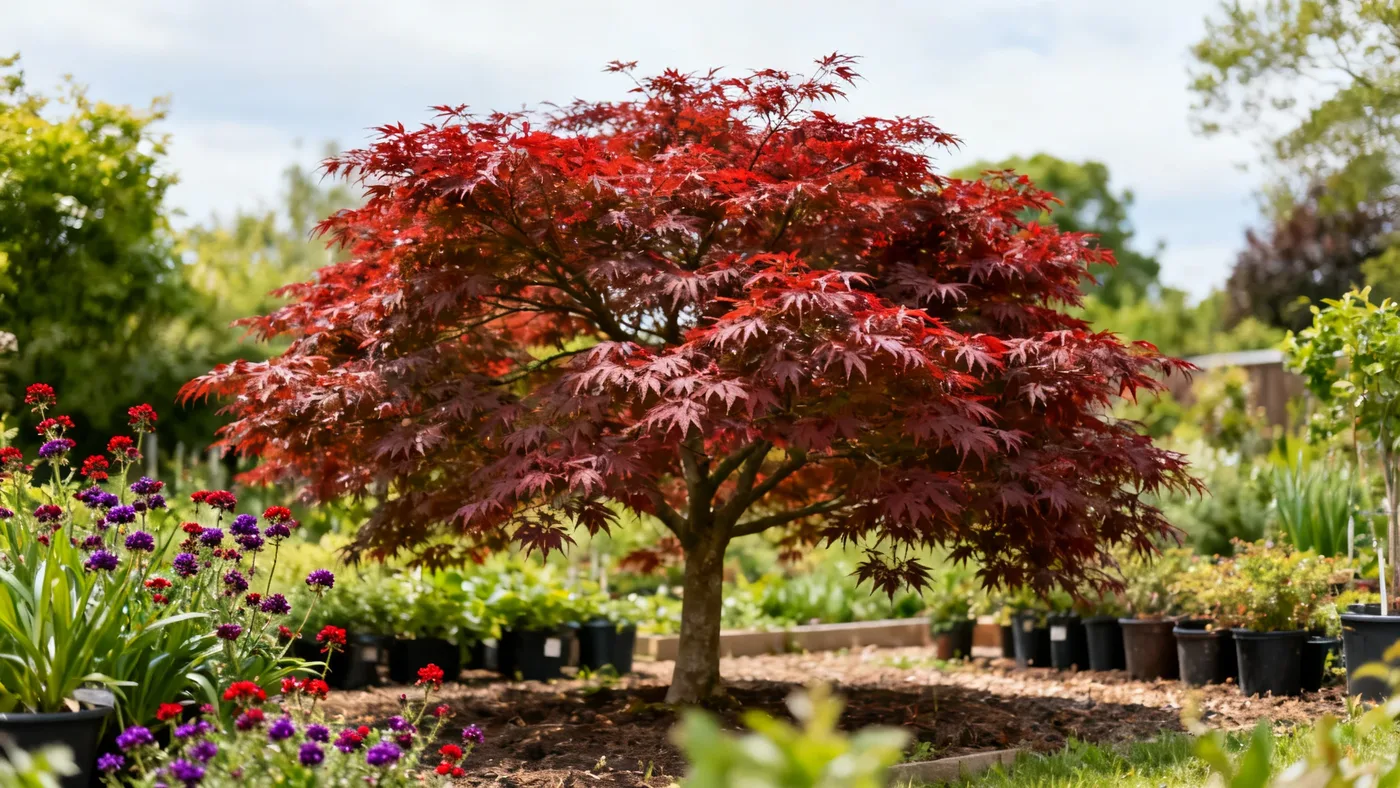
True red-leaved Japanese Maples (the seedling-grown forms often sold at quart size in nurseries) produce vivid red, orange, or crimson foliage in fall, though exact intensity varies by cultivar and season. If you're growing a named cultivar like 'Bloodgood' or 'Emperor I', the catalog promised a color range, but the actual display depends on where those trees grow.
In zones 5 to 7, most trees turn a rich, deep red or burgundy by mid-October. The color shift typically lasts 3 to 4 weeks from the first hints of change to full senescence. In zone 8 and warmer areas (especially with hot summers), the same tree might shift orange-red or hold a lighter hue, sometimes shifting greener in deep shade or intense summer heat depending on the cultivar.
This isn't a flaw. It's the tree responding to your climate. A single cultivar grown side by side in New England and Georgia will deliver noticeably different colors, and both are correct.
Why Your Japanese Maple Isn't Turning Red (or Is Fading Early)
This is the question that brings gardeners online: "My tree is still mostly green in October" or "It turned red last year but not this year." Several factors control whether you get the show you expected.
Deep Shade Drains Intensity
Japanese Red Maples grow in full sun to part shade, but color intensity fades in deep shade. If your tree sits beneath larger trees or on the north side of a building for most of the day, the foliage will shift red, but the hue will be muted, sometimes more burgundy-brown or russet than true crimson. This is particularly true for red-leaved forms in deep shade or summer heat. If you're considering moving a tree or pruning surrounding vegetation to open up light, fall color is one of the best arguments for doing it.
Heat Stress and Leaf Scorch
In hot-summer climates, intense sun and heat can scorch foliage and reduce color vibrancy. Afternoon shade preserves leaf color and prevents scorch. If your tree sits in full, unobstructed western or southwestern exposure, especially in zones 8 or warmer, consider whether afternoon shade would help. This isn't just about color; it's also about leaf health. A scorched leaf won't produce rich anthocyanins.
Erratic Summer Watering
Drought stress in August and early September can shut down color development. Japanese Red Maples need consistent, even moisture, especially the first 2 to 3 years after planting. A tree that was dry for weeks leading into fall will produce less vibrant color, and may drop leaves early. If your region had a dry summer, that's why the display might have been muted.
Year-to-Year Variation
Even with perfect care, fall color intensity fluctuates. A mild summer followed by a sharp cold snap often produces more intense reds. A hot, dry summer followed by warm fall nights can shift the palette toward orange or delay the color shift entirely. This is normal and seasonal. You're not doing anything wrong if this year looks different from last year.
How to Lock in the Best Fall Color
You can't control the weather, but you can create conditions that maximize what the season delivers.
Plant in the Right Light
Full sun produces the most vibrant red. If your site offers a choice, plant on the south or east side of a building, or in a location that receives morning sun and afternoon filtering. In zones 8 and warmer, afternoon shade is worth the trade-off in color intensity; protecting the tree from scorch matters more than maximizing the hue.
Water Consistently Through August
This is the critical window. As days shorten and nights cool, the tree begins redirecting energy into anthocyanin production. Dry soil at this moment hampers the process. If your area typically has less rain in August or early September, water twice weekly if the top inch of soil is dry. Consistent, even moisture is the baseline need; don't let the tree dry out just because it's not actively growing.
Start with the Right Foundation
A healthy tree on well-drained soil rich in organic matter is more resilient to stress and better equipped to produce color. If you haven't already, read through the basics in the Japanese Red Maple care guide to confirm your soil pH is in the slightly acidic range (5.5 to 6.5) and that drainage isn't pooling after rain.
Prune in Winter, Not Fall
Pruning in late fall or winter removes dead, crossing, or crowded branches without triggering vigorous new growth that would delay color. Avoid pruning in summer or early fall, which can prompt a growth flush and pull energy away from color development. For detailed timing and technique, see the pruning guide.
When to Expect the Color Shift
Japanese Red Maple fall color timing varies by zone and year, but you can plan around typical windows.
In zones 5 to 6, expect the first visible color change in late September, with peak color by mid to late October. In zone 7, peak color usually arrives in late October or early November. In zone 8, if you get noticeable color at all, it may not appear until November, and it may be less intense. Warm fall weather delays the shift; a sharp cold snap can accelerate it.
The color window typically spans 3 to 4 weeks from first hints of change to heavy leaf drop. Mark the dates on your calendar this year so you have a baseline for your specific site.
Cultivar Variation and What Seedling-Grown Stock Delivers
Named cultivars like 'Bloodgood', 'Emperor I', and 'Fireglow' have specific fall color ranges. Seedling-grown red selections, often sold as generic "Japanese Red Maple" in quart containers, show variable mature color and habit because they're grown from seed, not grafting.
This means your unnamed quart-size plant might produce deep burgundy, bright red, or orange-red in fall. That variability isn't a problem; it just means you won't know the exact hue until the tree matures. If consistent color is critical to your design, named cultivars grafted to ensure true-to-type growth are worth the extra cost.
Either way, the fall display will likely be good. Japanese Red Maple fall foliage, across all red-leaved forms, is reliably striking once the tree is established (typically within a few years of planting).
Quick Reference: Fall Color Checklist
| Factor | Action for Best Color | Timeline |
|---|---|---|
| Light exposure | Full sun to part shade; afternoon shade in zones 8+ | Year-round; review each spring |
| Summer watering | Consistent, even moisture through August and early September | June through early October |
| Soil prep | Confirm slightly acidic (5.5-6.5), well-drained, rich in organic matter | Spring planting or yearly amendment check |
| Pruning | Winter dormancy only (late fall to mid-winter); remove dead/crossing branches | November to February |
| Expect peak color | Zones 5-6: mid-October; Zone 7: late October to early November; Zone 8: November | Mark dates each year for your site |
| Color duration | Plan for 3 to 4 weeks from first visible change to significant leaf drop | Track from your first observation each year |