Is Japanese Red Maple Evergreen? Leaf Drop Through the Year
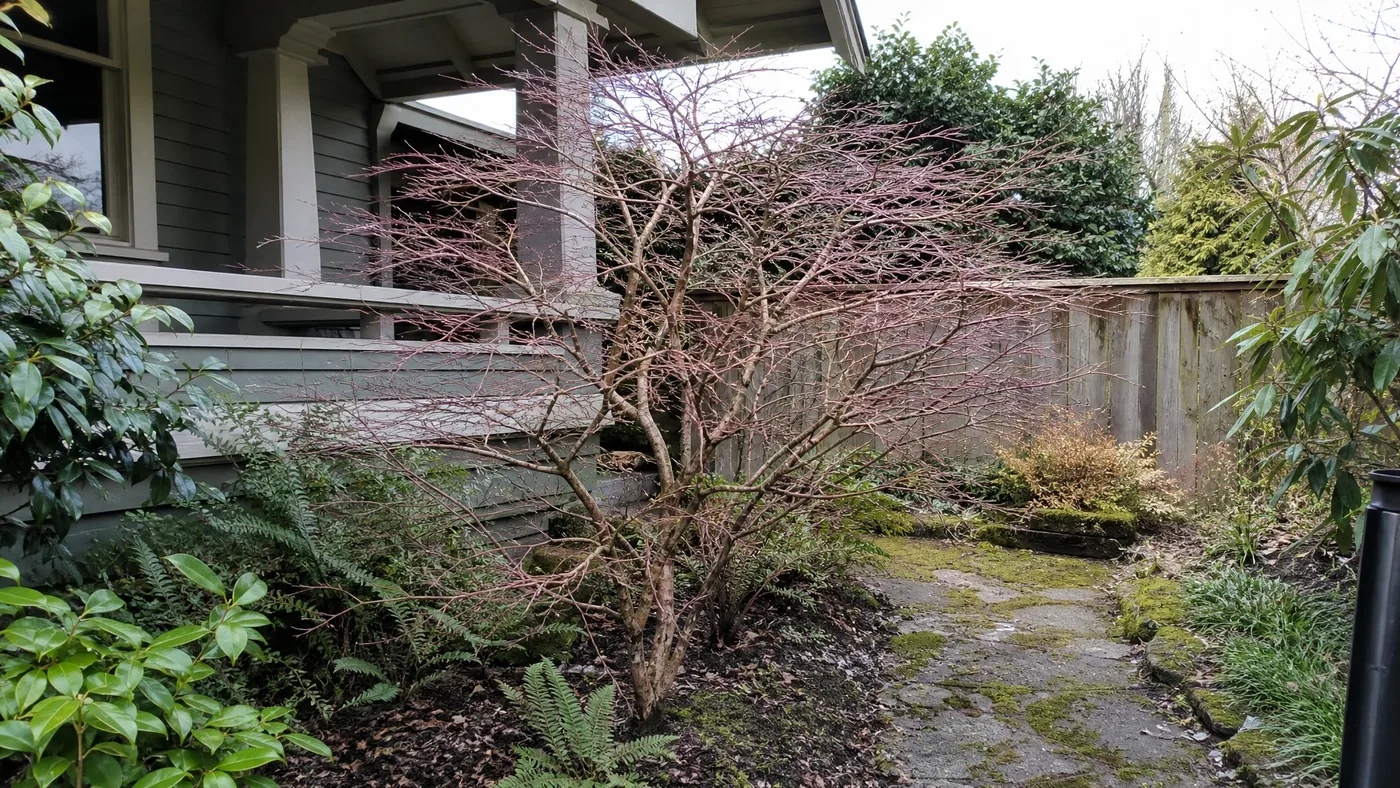
It is a January morning, and you are looking out at your Japanese red maple. Every leaf is gone. What remains is a lattice of fine red-brown twigs against a pale sky, and for a moment you can't say whether you are looking at a dead tree or a resting one.
It is resting. Japanese red maple is deciduous, so it sheds all of its leaves each year and grows a fresh set in spring. Mistaking that rest for loss sends people out with pruners or a shovel, while ignoring a real summer drop can cost a branch.
This article talks about the deciduous habit of Japanese red maple and answers the questions customers ask us most. Read on to learn how the tree looks month by month, how to tell sleeping wood from dead wood, why a few leaves sometimes hang on, and which leaf drop is normal and which is a warning.
Why Japanese Red Maple Is Not Evergreen
Japanese red maple is deciduous, and nothing about its red color changes that. The species is a small deciduous tree to 25 feet, with deciduous leaf persistence. The red-leaf forms sold under the Atropurpureum name are seedling-grown or selected from the same species, so they keep the same habit.
Every leaf on the tree is a thin, simple, opposite leaf with five to nine lobes, usually 2 to 5 inches across. None of them is built to last through a northern winter. Each fall the tree seals off the leaf stalks, lets the leaves go, and carries its buds through the cold on bare wood. That holds across the whole 5a to 8b range the extension sources list.
What "Evergreen" Searches Usually Mean
When people type "evergreen" next to a red maple, they are often picturing a different plant. Some red-tinted shrubs keep their foliage all winter, and some conifers turn bronze in the cold. A Japanese red maple will never hold green or red leaves from one year to the next.
Warmer climates change the timing and the color, not the habit. If you garden near the warm edge of the range, your tree may color late and drop late. It will still go bare, and your local extension office can tell you what normal looks like in your area.
Late Winter Buds on Bare Japanese Red Maple Wood
From January through March a Japanese red maple is at its most architectural. The twigs are slender, green to red, and often carry a glaucous bloom, a faint silvery-gray dusting you can rub off with a thumb. On a red-leaf tree the wood usually reads as a warm red-brown, and the branching shows every line of the tree's shape.
The buds sit in opposite pairs along the twigs, matching the opposite leaves they will become. Through late winter they stay tight and small, then begin to plump as days lengthen. Plump, slightly colored buds are the best sign you can get in this season.
Telling Sleeping From Dead
One of the most common questions we get is whether a bare tree is alive. A gentle scratch test settles it without harming the tree. Do it on a twig tip you would not miss, not on the main trunk.
- Pick a small twig near the end of a branch and scrape a thumbnail-length strip of the outer skin away.
- Look at the layer underneath. Green and moist means the wood is alive.
- Brown, dry and brittle means that twig is dead. Test a few spots, because one dead tip does not mean a dead tree.
- Check the whole branch too. Buds that are firm and attached are a good sign, and shriveled ones that rub off are not.
Wait until the tree has had a real chance to leaf out before you cut anything. Our winter care guide covers cold protection. If you buy from us in the dormant months, a Japanese red maple that arrives bare is not a problem, because that is simply how the plant looks while it sleeps.
Spring Red Unfolding on a Japanese Red Maple
Bud break is the moment this tree earns its name. In April and May the buds split and the leaves unfold small, crinkled and soft, and in red-leaf forms they are usually red to purple. The leaves typically turn red/purple in spring. Early on they hang like little folded hands, then open and flatten over a couple of weeks.
Look closely at the same time and you may find the flowers. They are small and red to purple, held in little clusters, and easy to miss under the new leaves. They are not a showy feature, but they do tell you the tree is awake.
Watching the Weather Once Leaves Open
New leaves are the tenderest tissue the tree makes all year. Frost damage, especially from late frosts, is among the problems that can occur. A single cold night after bud break can blacken the tips of the new growth, and the tree will usually push out a second flush of leaves, though it is a setback.
If a frost is forecast after the leaves have opened, drape a sheet or frost cloth over the canopy in the evening and take it off the next morning. For a potted tree, simply move it against a wall or into an unheated garage overnight. Dried-out leaf tips in May do not mean the tree is failing, so give it time.
Summer Bronze and the Midsummer Drop Warning
Red leaves do not stay bright red all summer on many trees. The leaves typically turn red/purple in spring but may fade to a green/bronze in summer heat. That bronzing is a color change inside leaves that are staying put. It is normal and it is not leaf loss.
Dropping leaves in June, July or August is different. A healthy tree holds its foliage until fall. Leaves often scorch in hot summer weather in zones 7b and 8 unless the tree has some shade or irrigation, and leaf scorch can come from excess sun, wind or drought. In our rows, crisp brown edges on the sunniest side are nearly always the first sign, a few days before leaves begin to fall.
The table below sets the two situations side by side.
| What you see | Usually means |
|---|---|
| Leaves fade from red to bronze or greenish but stay soft and attached | Normal summer color change in heat |
| Brown, crisp edges on sun-facing leaves | Leaf scorch from sun, wind or dry soil |
| Whole leaves dropping green or brown in midsummer | Stress, so check water, roots and site right away |
| One branch bare while the rest is leafy | A problem on that branch, not seasonal rest |
If you see scorch, read our guide to brown, crispy leaf edges and check the soil moisture a few inches down before you water. A deep soak, a layer of mulch and afternoon shade help far more than fertilizer does.
September, When the Edges Begin to Turn
September is quiet and subtle. The first change usually shows at the edges of the leaves or on the outer ring of the canopy, where the sun hits hardest. A bronze leaf starts warming toward orange, or a green one blushes. The color works inward over days, not overnight.
The range is wide. Leaf color goes from green in summer to yellow, bronze, purple and red in fall, and it varies with the cultivar. Fall color, from bright yellow through orange and red, is often striking even on trees grown in total shade. So a red-leaf tree in a shady corner will still color.
Normal timing is gradual. A few leaves turning on a few branches in early fall is just the season arriving. Whole-tree browning with curled, dry leaves while the weather is still hot is not seasonal, and it points back to the scorch and stress signs above. Exact dates depend on your climate and your summer, so use last year's calendar as a guide for your own tree.
October and November Fire, Then the Fall
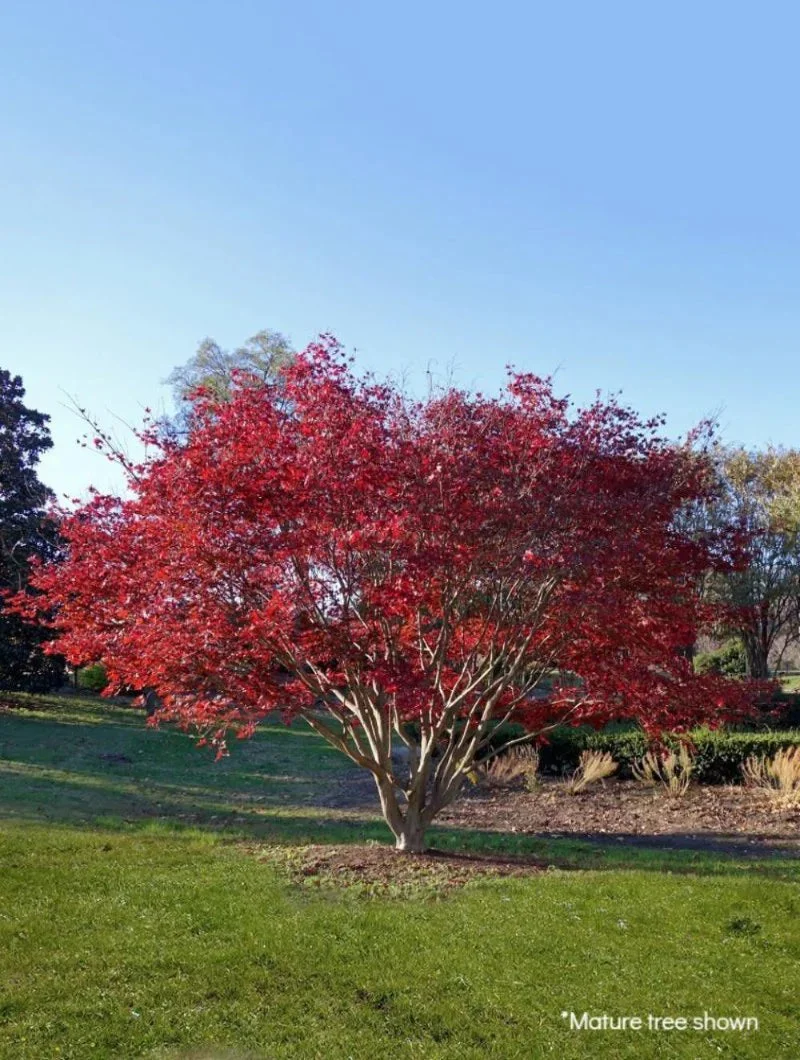
This is the stretch most people plant a Japanese red maple for. Leaves go to red, orange, crimson and sometimes a deep wine color, often with several shades on the same tree at once. A low autumn sun behind them lights the canopy. Our fall color guide goes into what to expect from year to year.
Then the leaves come down. Leaf fall usually runs over a few weeks, with the oldest leaves letting go first, and a hard freeze or a windy day can bring a lot down at once. By the time the tree is bare, you are back to the twigs from your January morning.
Raking and Mulching the Leaves
These leaves are small and light, but in a wet autumn they mat into a slick layer that holds moisture against the trunk and the lawn. Rake or blow them off turf, and clear any leaves that show spots or other signs of disease (the tree is susceptible to anthracnose and leaf scorch) so they do not carry problems over.
A thin layer of leaves left under the canopy is fine as a natural mulch, especially if you chop it with a mower first. Pull it back from the trunk base so the bark stays dry. For depth and placement, see our guide to mulching a Japanese red maple.
Why a Few Leaves Cling Through Winter
You may notice a few brown, dried leaves hanging on through winter and wonder whether the tree has failed to drop them. Some deciduous trees hold part of their dead foliage into the cold months, a habit called marcescence. It shows up on Japanese red maple from time to time, typically a handful of leaves on a branch or two, and it is not a sign of trouble.
The usual explanation is that the leaf stalk did not finish sealing off before the weather turned, which can happen after an early freeze or a stressful season. Those leaves are dead and cannot recover. They normally let go on their own when the buds swell and push them off in spring, so you can leave them alone.
What matters is the pattern. A few leaves scattered on an otherwise healthy tree are harmless. An entire branch holding dry brown leaves, with twigs that scratch brown, is dieback and not marcescence. If you see that, our guide on diagnosing a dying Japanese red maple will help you sort it out.
A Japanese Red Maple's Year in Leaves
Winter gives you bare red-brown wood and tight paired buds. Spring brings a soft red unfolding, with small flowers hiding beneath it. Summer shifts the red toward bronze, and any real drop in these months is stress that you should look into. September brings the first warm edges, October and November bring the fire, and then the leaves fall, with a few stragglers holding on until the buds push them off.
Japanese red maple is deciduous, and that is the point of the tree. The first bare-branch morning means rest, not loss.
Japanese Red Maple
Nursery-grown Japanese Red Maple in sizes from 3 Gallon 2-3 ft, shipped to your door.
From $118.33
Shop Now →Evenly moist, well-drained soil and a little shade from the hottest afternoon sun are what we give every Japanese Red Maple on our farms, and we have watched each one drop its leaves in autumn and bud out again in spring. The growers who raise these trees also pack them, so each is top quality when it reaches you. Now that you know what a bare winter branch means, choose a Japanese Red Maple to enjoy in your own garden through every season.