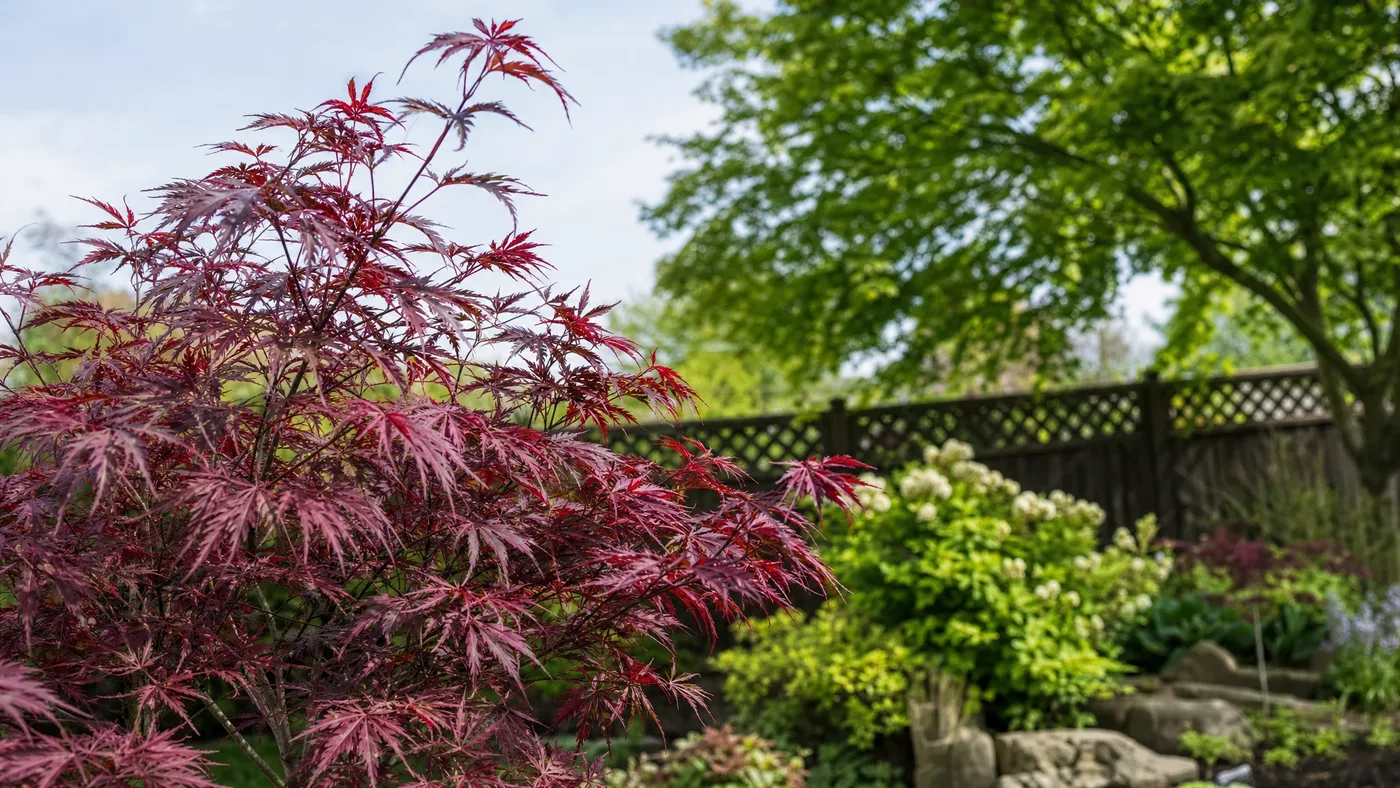
Sun-Tolerant Red Japanese Maples for Hot Climates
The most sun-tolerant red Japanese maples are Bloodgood, Emperor I, Fireglow, and the laceleaf Tamukeyama. None of them loves all-day sun in zones 8 and 9. "Sun tolerant" means a tree scorches later, not never. Give any of them afternoon shade in zone 8b and warmer, and water deeply through heat waves.
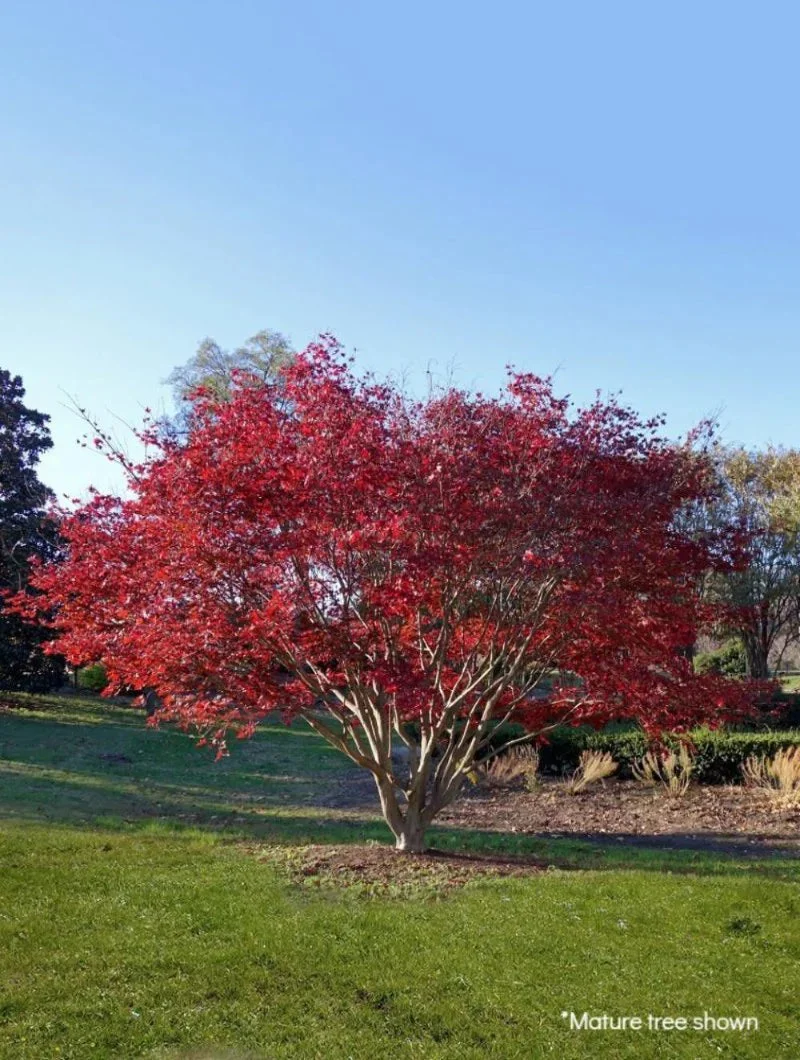
That is the honest mechanism behind every pick below. Red leaves absorb more heat than green ones, so a red tree in a hot, bright spot loses water faster than the leaf edge can replace it. The edge browns and the color turns muddy green. Cultivar choice shifts where that line falls, and our full comparison of Japanese red maple varieties covers the wider field. This post covers the ones worth shortlisting if you garden somewhere hot.
The Short List at a Glance
| Pick | Form | Why it handles heat | Siting caveat |
|---|---|---|---|
| Bloodgood | Upright | Thicker leaves, long track record in heat | Afternoon shade in zone 8b+ |
| Emperor I | Upright | Thicker leaves, proven in heat | Afternoon shade in zone 8b+ |
| Fireglow | Upright, smaller | Often described as taking sun well for its size | Water through heat waves |
| Tamukeyama | Dissectum (laceleaf) | The heat-tolerant laceleaf | Shelter from wind and reflected heat |
| Unnamed seedling-grown red | Variable | Species-level toughness only | Treat as part-shade until proven |
Five Red Japanese Maples That Handle Heat Best
1. Bloodgood
Bloodgood is the default answer when someone asks for a sun tolerant japanese maple, and the reason is leaf structure. Its leaves are thicker than many red selections, and thicker tissue loses water more slowly. MBG profiles list it among the reliable red uprights, and it is widely planted across the South.
It is still a Japanese maple. In zone 8b and warmer, morning sun with afternoon shade is the pattern Southern extension guidance keeps repeating. Full sun in cooler zones is fine. Full sun in a Texas July is a gamble.
Practical takeaway: Pick Bloodgood if you want a proven upright and can offer shade after about 2 pm. Plan on deep watering during heat waves, not a light daily sprinkle.
2. Emperor I
Emperor I is the other upright with a heat reputation. Like Bloodgood, it is commonly listed as having thicker leaves, which is the mechanism that matters. It is also often described as holding its red color later into the season than some competitors, which helps in climates where summer drags on.
The trade-off is the same one every red maple carries. Heat tolerance buys you margin, not immunity. Hot wind, dry soil, and a reflective wall can still crisp the leaf edges.
Practical takeaway: Choose Emperor I when you want a heat-proven upright and a color that lasts. Site it where it gets shade from a roofline or taller tree by mid-afternoon.
3. Fireglow
Fireglow is often described as taking sun well for its size. That wording matters. It is a smaller tree than the standard uprights, so it is a better fit for a courtyard or entry bed where a 15-25 ft specimen would crowd the house.
"Takes sun well" is a description, not a guarantee, and we would not stretch it to a bare, south-facing exposure. Expect it to reward the same care as the others: mulch, even moisture, and shade when the thermometer climbs.
Practical takeaway: Fireglow suits tighter spaces where you still want a red tree in a bright spot. Confirm mature size with the tag or your local extension office, since cultivar sizes vary.
4. Tamukeyama (Dissectum)
Laceleaf maples have a bad name in hot climates, and mostly deserve it. Fine, finely cut foliage dries out quickly. Tamukeyama is the exception people reach for: the heat-tolerant laceleaf, with a deep red leaf and a weeping mound habit. It gives you the cascading look of a dissectum without the same level of summer stress.
Dissectums are still the most exposed to scorch among the picks here. Wind strips moisture from the fine leaves, and a mounded form sitting on hot pavement bakes from below. Dwarf and cutleaf types often stay 6-10 ft, so they also fit patios and containers.
Practical takeaway: Tamukeyama works if it is sheltered from wind and from reflected heat. In a container, move it out of afternoon sun when heat waves hit.
5. Unnamed Seedling-Grown Red Maple
Not every red Japanese maple carries a cultivar name. Plants sold as a generic Japanese Red Maple are typically seed-grown red forms (the Atropurpureum Group), and seed-grown plants can vary in mature leaf color and habit. That variability cuts both ways on heat. Some seedlings are tough. Some fade or scorch sooner than a named, grafted cultivar.
Named cultivars like Bloodgood are grafted, which is how they stay true to type. A seedling is a more affordable and more variable choice, and we would be honest about that: you do not know exactly what you are getting in a hot site. Treat it as a part-shade tree.
Practical takeaway: A seedling-grown red is a fine choice for a shaded or morning-sun spot. If you want to compare sizes and see what is available, our nursery-grown Japanese Red Maples ship in 3-gallon, 5-gallon, and 7-gallon sizes.
The Position Most Buying Guides Skip: A Tough Cultivar Cannot Fix a Bad Site
Buying a sun-tolerant cultivar does not fix a reflected-heat site. A south-facing wall, a pool deck, a driveway edge, or a bed of gravel mulch can push leaf temperatures well past what air temperature alone suggests. The tree is being hit from above and from the side. No cultivar was bred for that.
If your only open spot looks like that, fix the site or pick another species. Fixing the site means shade cloth in the first summers, organic mulch instead of stone, or moving the planting 10-15 ft off the wall. Spacing of 10-15 ft from structures is the usual range for standard forms. If you cannot do any of that, a crape myrtle or another heat-adapted tree will do better than a maple fighting its location.
Who Should Skip a Red Japanese Maple in Hot Climates
- Full-sun, no-shade lots: if nothing will ever shade the tree after midday, choose another species.
- Salt exposure: salt tolerance is poor, so coastal spray and salted pavement are bad matches.
- Low-water landscapes: drought tolerance is low to moderate even once established.
- Heavy clay or standing water: root rot follows poorly drained soil.
Japanese Maple for Texas: What to Ask Before You Buy
Texas stretches across several climates, so a japanese maple for texas depends on where in the state you live. Species hardiness runs zones 5-8, with some cultivars tolerating 9 with afternoon shade, and heat tolerance can shift by a full zone depending on the genetic line. Check your hardiness zone first, then call your county cooperative extension office and ask which maples perform locally.
For siting decisions, the sun requirements guide explains how to read your light through the day. It also covers the leaf scorch patterns to watch for in July and August. Northern buyers should also read about winter protection if a container tree has to survive a freeze.
Japanese Maple Full Sun: Reading the Warning Signs
| What you see | Likely cause | Fix |
|---|---|---|
| Crisp brown leaf edges | Leaf scorch from sun, wind, or drought stress | Deep watering, afternoon shade, wind break |
| Red fading to greenish bronze | Intense heat or too much shade | Adjust light; some cultivars shift naturally |
| Bark splitting on a young trunk | Sunscald in full sun | Shade the trunk during the first years |
| Wilting with wet soil | Root rot in poor drainage | Improve drainage; stop overwatering |
Quick Reference
- Zones: 5-8, some cultivars tolerate 9 with afternoon shade.
- Light in zone 8b and warmer: morning sun, afternoon shade.
- Water: consistent and even, especially the first 2-3 years.
- Soil: rich, well-drained, slightly acidic (about 5.5-6.5).
- Spacing: 10-15 ft from structures for standard forms.
- Planting time: early spring or fall, not peak summer.
- Skip reflected-heat sites: south walls, pool decks, gravel mulch.
Japanese Red Maple
Nursery-grown Japanese Red Maple in sizes from 3 Gallon 2-3 ft, shipped to your door.
From $118.33
Shop Now →