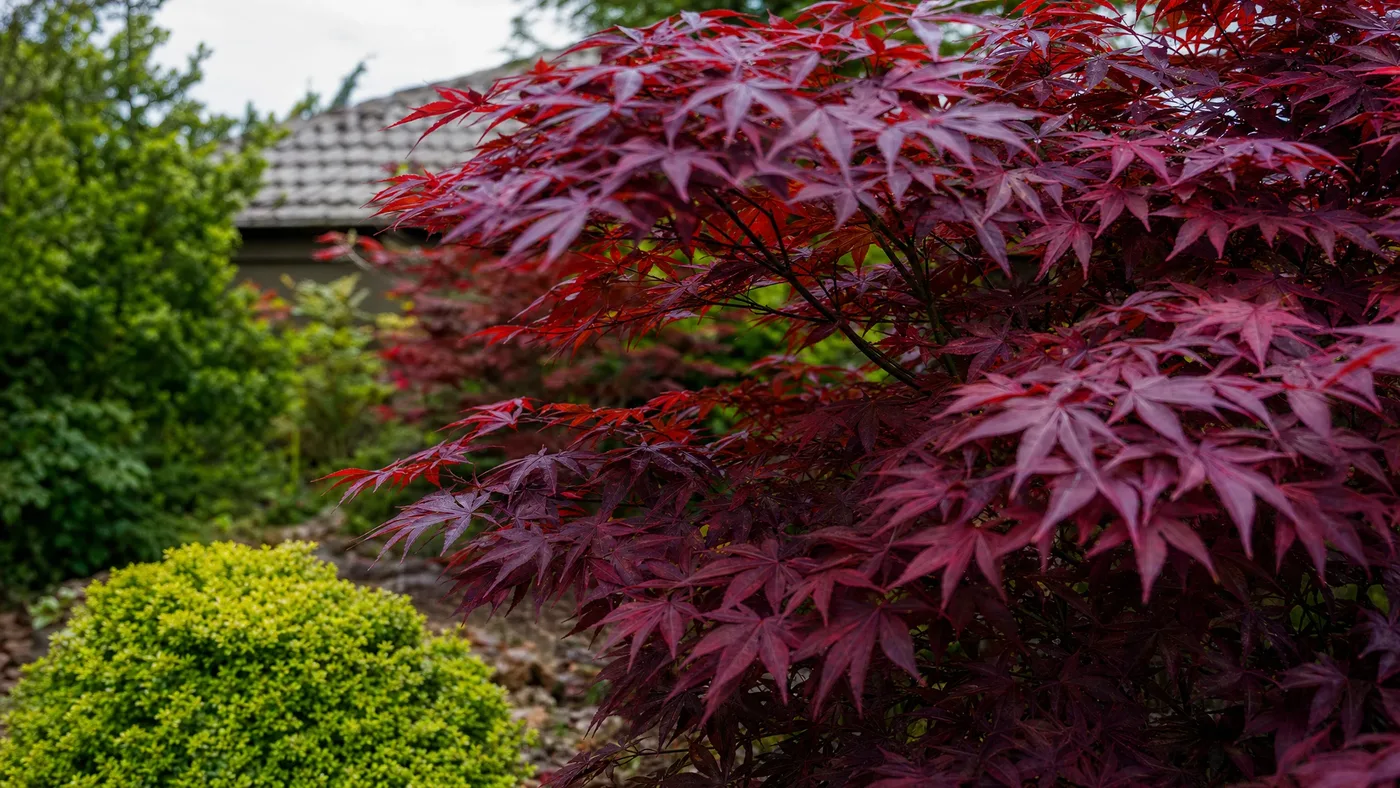
Japanese Red Maple Not Leafing Out in Spring
Probably not dead, just late. Japanese maples leaf out later than most trees, and a cold spring pushes the date back further. Check the buds for plumpness, then scratch a pencil-thick twig: green and moist means alive. In most of zones 5-8, wait until Memorial Day before calling it.
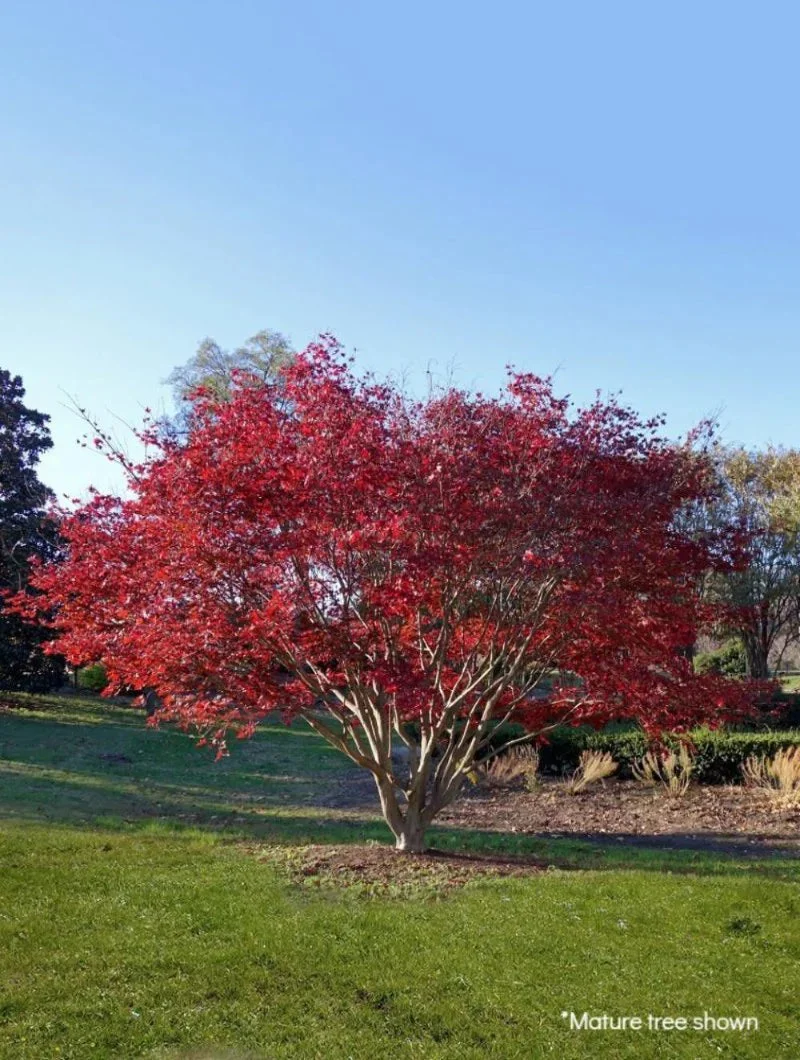
If your Japanese maple has no leaves in spring and you are staring at bare branches while the neighbor's trees are green, this guide walks you through the same triage a nursery grower would use. If the tree turns out to be truly gone, our guide to why a Japanese red maple dies helps you find the cause before you replant.
Start With the Calendar, Not Your Worry
Here is the position we will defend: give the tree a date, not a feeling. In most of zones 5-8, do not declare a Japanese red maple dead before Memorial Day. More live trees get dug out in April than die all year. A bare tree in April is normal. A bare tree in late May, with dead twigs and no green under the bark, is a real problem.
Two things stretch the timeline. First, Japanese maples are late risers by nature, and cultivars differ by weeks. 'Emperor I' is commonly described as leafing out later than 'Bloodgood' by design, which is covered in our Emperor I vs Bloodgood comparison. Second, a cold spring delays every tree on the street. If you bought an unnamed seedling-grown red selection, the timing can vary from one plant to the next because seed-grown stock is not genetically uniform.
Symptom-to-Cause Table
| What you see | Likely meaning | What to do |
|---|---|---|
| Plump, closed buds, green under scratched bark | Alive, just late | Wait and keep soil evenly moist |
| Leaves emerged, then blackened or shriveled after a freeze | Frost damage to the first flush | Wait until June for a second flush |
| Shriveled or black buds on some branches only | Partial dieback | Scratch test to map live wood |
| Tan, dry wood on twigs, green lower down | Twig-tip dieback | Prune dead wood back to live tissue later |
| Brown under bark at the trunk, peeling bark, no green anywhere | Dead above that point | Find the cause, then replant |
What You Need
- A thumbnail or a clean, sharp knife
- Clean pruning snips (wipe the blades with rubbing alcohol)
- A notebook or phone to record dates and photos
- A trowel for checking soil moisture 4 to 6 inches down
- A hose or watering can
Step-by-Step: Is My Japanese Maple Dead?
1. Look at the buds first
Walk up to the branches and look closely. Plump, slightly swollen buds, often reddish, mean the tree is preparing to break dormancy. Shriveled, dry, or black buds point to frost or winter injury. Gently squeeze one. A live bud feels firm. A dead one crumbles or feels hollow.
2. Run the scratch test
The scratch test is the most reliable check for a tree that is not leafing out. Pick a pencil-thick twig near the tip of a branch. Use your thumbnail or a knife to nick a sliver of bark about half an inch long. Look at the exposed layer just under the surface.
- Green and moist: that twig is alive.
- Tan or brown and dry: that twig is dead.
One twig tells you very little. The point of a scratch test on a tree is to build a map, which is what the next step does.
3. Map the tree down the branch
Repeat the scratch progressively down each branch: tip, middle, base, then a main limb, then the trunk near the soil line. Scratch only a tiny patch each time, since every nick is a wound. Note where the green stops. If you find green at the branch base but brown at the tips, you have dieback, not a dead tree. If the trunk is green and moist near the ground, the tree is alive and can regrow from there.
4. Check the soil and roots
Dig a small hole with a trowel 4 to 6 inches deep, a few inches out from the trunk. Soggy, sour-smelling soil points to root rot, which MBG and extension guidance both tie to poorly drained ground. Bone-dry soil means the tree needs water now. Japanese maples want consistent, even moisture, especially in the first 2-3 years, and they do not tolerate standing water or drought extremes.
5. Water correctly while you wait
If the soil is dry, water deeply and let it drain. Do not flood a tree that is already stressed. Skip fertilizer for now. Feeding a tree you are unsure about adds salt and pushes growth the roots may not be able to support. Our Japanese red maple care guide covers the watering rhythm in detail.
6. Record and recheck every 7 to 10 days
Take a dated photo of the same branch each week. Buds that swell, soften, and show color are your best sign. Tree recovery is slow and easy to miss day to day, so photos keep you honest.
7. Hold off on pruning until the picture is clear
Do not cut anything out yet. Dead twigs can stay on for a few weeks without harm. Once leaves have emerged on the live wood in late spring or June, you can see exactly what is dead and remove only that. The usual rule for structural pruning still applies: do heavier work in late fall to midwinter dormancy, removing only dead, crossing, or crowded branches.
If a Late Freeze Hit After Budbreak
A freeze after the leaves have opened can blacken the first flush overnight. It looks catastrophic, but the tree usually pushes a second set of leaves from reserves. Wait until June before any verdict. Second-flush leaves may be smaller or a bit off in color, and the tree should settle back toward normal the following year. For protecting trees through the cold season, see our winter care and cold protection tips.
Common Mistakes
- Digging it out in April. Late-leafing is normal for this species.
- Scratching too many places. Each nick is a wound, so keep them small and few.
- Judging by one twig. Tip dieback is common. Check the trunk before deciding.
- Fertilizing a stressed tree. It is not a rescue tool.
- Overwatering. Root rot in poorly drained soil is a real cause of failure to leaf out.
- Pruning too early. You cannot glue a branch back on.
Who Should Not Wait
Waiting is the right call for most trees, but not all. If the trunk scratch is brown and dry, bark is peeling in sheets, and nothing has moved by late May, the tree is dead above that point. Roots in waterlogged soil are another case: a rotted root system does not recover by waiting. Also keep in mind that container trees are more exposed in freezing winters, since their roots lack the insulation of ground soil. Container stock can fail to leaf out even when the same variety in the ground is fine.
When the Tree Really Is Dead
If you find no green anywhere, the bark is peeling, and the trunk scratch is brown, the tree is gone. Before you plant anything in that spot, figure out why. Read our diagnostic on why a Japanese red maple dies. Common culprits in the facts we work from include verticillium wilt, borers, root rot in poorly drained soil, and trunk sunscald on young trees. Fix drainage or siting problems first, or the next tree will meet the same fate. When you are ready, a nursery-grown replacement is available in our shop. If you suspect verticillium wilt, your local cooperative extension office can advise on testing and on what to plant in that spot.
Expected Results
If the scratch test shows green and the buds are plump, the tree may leaf out within a few weeks of warmer weather, though timing differs by cultivar and season. After a late freeze, a second flush may appear by June. Trees with partial dieback often recover, though the canopy may look thinner for a season. None of this is guaranteed, and results depend on the tree, the site, and the weather.
Quick Reference
| Check | Alive | Dead |
|---|---|---|
| Buds | Plump, firm | Shriveled, black, hollow |
| Twig scratch (pencil-thick) | Green, moist | Tan or brown, dry |
| Trunk scratch near soil | Green, moist | Brown, dry |
| Soil 4-6 in down | Evenly moist | Soggy and sour, or bone dry |
| Date to decide | After Memorial Day (zones 5-8) | After Memorial Day (zones 5-8) |
Japanese Red Maple
Nursery-grown Japanese Red Maple in sizes from 3 Gallon 2-3 ft, shipped to your door.
From $118.33
Shop Now →