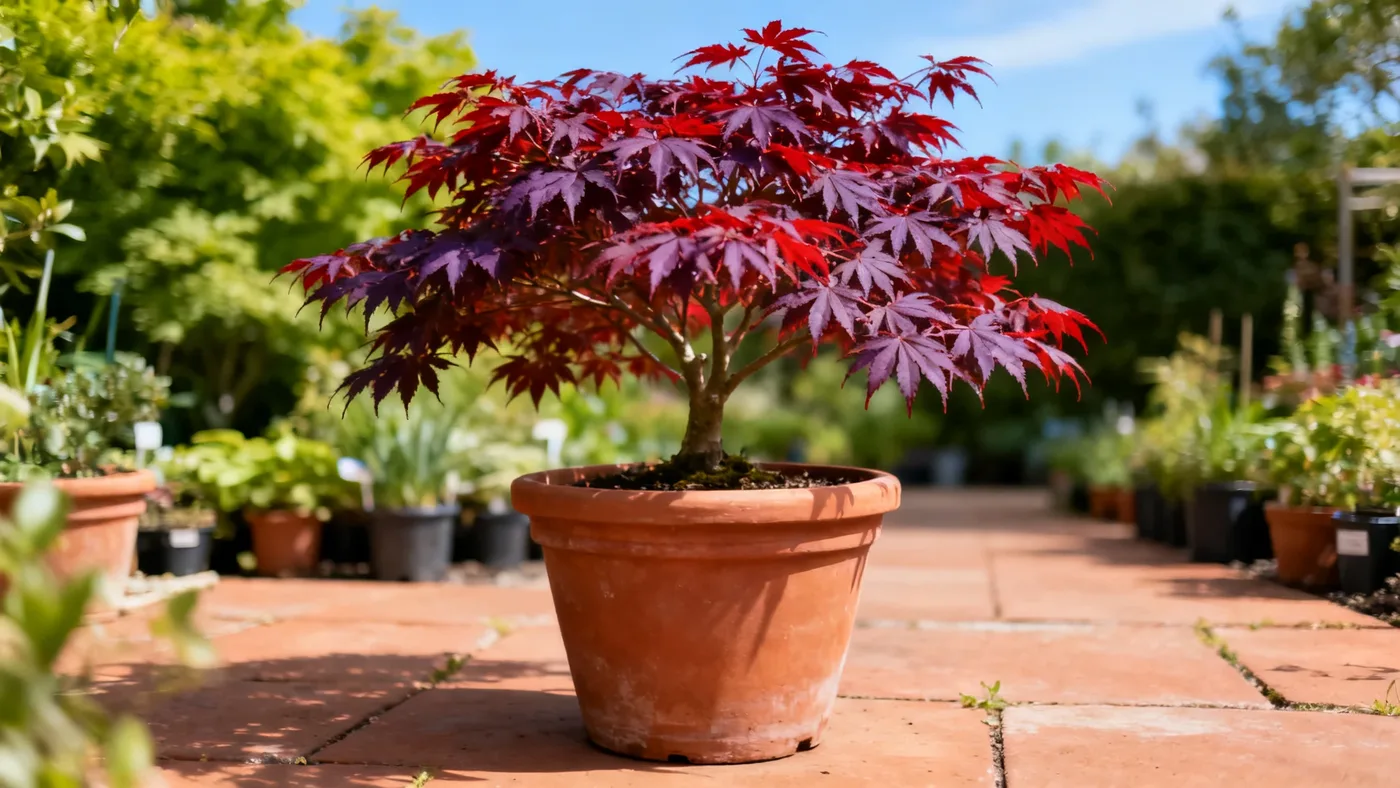
Japanese Red Maple Buying Guide: Container Sizes and Tips
A healthy Japanese Red Maple is an investment in your landscape. Whether you're shopping for a quart-size starter plant or a larger specimen, knowing what to evaluate at the nursery makes all the difference between a tree that thrives and one that struggles for years. This guide walks you through the practical steps to select the right plant at the right size for your goals and budget.
Understanding Container Sizes for Japanese Red Maple
Nurseries typically sell Japanese Red Maple in three standard sizes. Each serves different timelines and budgets.
Quart Containers
Quart-size plants are young trees usually 12 to 18 inches tall, grown in a one-quart container. Most generic "Japanese Red Maple" stock sold at this size is seedling-grown, meaning the exact mature color and height may vary from plant to plant. Quart-size trees are affordable and allow you to establish the cultivar you prefer, though you'll wait longer for landscape impact. They suit gardeners who are patient and want to shape the tree's early growth themselves.
#1 Container (One-Gallon)
A #1 container holds about one gallon and typically contains a tree standing 18 to 30 inches tall with a more developed root system than a quart. This size offers better survival rates than smaller stock and provides a visible specimen much sooner. Many named cultivars like 'Bloodgood' or 'Emperor I' are sold at this size with guaranteed color and habit.
#3 Container (Three-Gallon)
These larger containers hold three gallons and usually contain plants 2 to 3 feet tall with a well-established canopy. A #3 specimen delivers immediate landscape presence, establishes faster once planted, and reduces the risk of transplant stress. If you're buying a Japanese Red Maple to fill a focal spot in your garden right now, a #3 is the most practical choice.
What to Look For: Quality Indicators
Once you know your target size, use these standards to evaluate plant quality. A healthy Japanese Red Maple should show vigor in every detail.
Leaf Color and Condition
True red-leaf forms display deep red or reddish-purple foliage during the growing season. Examine the newest growth at branch tips; it should be vibrant and fully expanded, not stunted or browning at the edges. Older leaves on the same plant may look slightly less intense, which is normal. Avoid plants with pale green leaves (a sign the plant is struggling or not a true red-leaf selection) or extensive brown tips (water stress or root problems).
Branching Structure
Look for a tree with multiple strong branches radiating from the trunk. A branched specimen establishes faster and needs less pruning than a thin, whip-like single stem. The branches should feel flexible, not brittle. Bend a small twig gently; it should bend without snapping.
Root System Assessment
Gently lift the container and look at the drainage holes. A few white roots showing through is healthy; thick, circling roots wrapping the pot indicate the tree is becoming rootbound. If you can do so respectfully, ask the nursery to slip the plant from its pot so you can inspect the roots directly. The root ball should be moist but not waterlogged, and roots should be white to light tan, never black or mushy.
Trunk Condition
The trunk should be proportional to the canopy (not spindly), free of cracks, and unblemished by wounds or loose bark. Run your hand lightly up the trunk; there should be no soft spots or oozing sap.
Container Size and Mature Height: What to Expect
The size you buy affects not just the immediate appearance but also the cultivar's behavior. Standard upright red forms mature to 15 to 25 feet tall and 12 to 20 feet wide, taking roughly 10 to 15 years to reach significant landscape size. Dwarf and cutleaf cultivars (including the weeping form 'Crimson Queen') stay smaller, typically 6 to 10 feet tall and 8 to 12 feet wide. Growth rate averages 6 to 12 inches per year once established, so a quart-size tree will take several years to fill its intended space.
If you're buying a Japanese Red Maple for a small courtyard or container planting, choose a dwarf or weeping selection. If your goal is a full-sized specimen tree for a larger landscape, a #3 container gets you there faster than starting with a quart.
Popular Cultivars and What They Offer
If you're shopping for a named cultivar (rather than generic seedling-grown "Japanese Red Maple"), here are reliable choices at most nurseries.
Bloodgood
The workhorse red maple. Bloodgood holds deep red color even in summer heat and delivers rich crimson fall color. Upright form, 15 to 20 feet mature height. Widely available at #1 and #3 sizes. A solid choice if you want predictable color year-round.
Fireglow
Similar to Bloodgood in habit and size, Fireglow is marketed for extra heat tolerance and vivid red foliage. Performs well in USDA zones 5 to 8 and can tolerate zone 9 with afternoon shade. More premium price than Bloodgood, but the added sun tolerance justifies it in hot-summer climates.
Emperor I
Compact, upright form, typically 12 to 18 feet at maturity. Deep red summer color. Good for smaller lots or when you want a red maple without committing to 20+ feet of width.
Crimson Queen (Dissectum Form)
A weeping form with finely cut foliage. Mature size roughly 8 to 12 feet tall and wide. Exceptional ornamental value for patios and as a specimen focal point. Premium pricing because of specialty status, but the intricate branching structure is unmatched. Best suited to partial shade in hot climates to prevent leaf scorch.
Atropurpureum Group
Most generic quart-size "Japanese Red Maple" plants belong to this seedling-grown group. Foliage is red or reddish-purple, and mature height usually falls in the 15 to 25-foot range, though individual trees vary. Use this category when you want affordability and don't mind unpredictability in exact cultivar traits.
Where to Buy Japanese Red Maple for Sale
You'll find Japanese Red Maple at several retail channels, each with trade-offs.
Local Nurseries and Garden Centers
Your best source for hands-on inspection. You can see the plant before you commit, feel the root ball, and get advice tailored to your climate. Staff at independent nurseries typically understand regional suitability and can steer you toward cultivars proven in your zone. Prices are often higher than mail order, but you avoid shipping damage risk.
Online Nurseries
Mail-order growers offer broader selection and often competitive pricing. Reputable online vendors ship bare-root or balled-and-burlapped trees during dormancy (fall and early spring), or containerized specimens year-round. Request photos before shipment if possible. Check return policies carefully in case the tree arrives damaged.
Big-Box Retailers
Home improvement chains and large box stores stock Japanese Red Maple seasonally, usually spring. Selection is limited (often just one or two cultivars), and quality can vary depending on how the plants are cared for on the sales floor. Inspect thoroughly, and be prepared to negotiate if you find a plant with minor damage.
Price Ranges and Value at Different Sizes
Japanese Red Maple pricing varies by region, cultivar, and nursery type. Here's a realistic breakdown.
- Quart-size seedling-grown plants (Atropurpureum Group): $15 to $35 per tree. Best value if you're patient and don't mind cultivar variability.
- #1 container named cultivars: $35 to $75 per tree. Standard retail pricing for established selections like Bloodgood or Emperor I.
- #3 container specimens: $75 to $200+ per tree. Larger trees and premium cultivars (like Fireglow or weeping forms) command top prices. Cost is offset by faster establishment and immediate landscape impact.
The cheapest option is not always the best value. A struggling quart-size tree bought on clearance may require extra care and years to recover. A healthy #1 from a reputable nursery is often the sweet spot for home gardeners: reasonable cost, proven genetics, and solid establishment odds.
Red Flags to Avoid
Before you hand over your money, step back if you spot any of these problems.
Rootbound or Circling Roots
A severely rootbound tree may never fully recover its vigor. Roots that spiral tightly around the pot interior will continue to circle even after planting, strangling the tree over time. This is especially risky in smaller containers.
Leaf Discoloration or Spots
Yellowing, browning, or spotting foliage can signal disease, pests, or prolonged water stress. While some recovery is possible with good care after planting, a diseased plant is a liability. Pass and choose a healthy specimen.
Soft or Oozing Trunk
A mushy trunk or visible sap oozing from the bark indicates canker disease or root rot. These trees are not viable; skip them entirely.
Skeletal or Sparse Branching
A tree with only two or three main branches will spend years trying to fill out. Look for plants with multiple strong laterals branching low on the trunk.
Extended Drying Between Waters
Japanese Red Maple does not tolerate drought or neglect while in containers. If you see crispy, curled foliage or bone-dry soil, the tree's establishment potential is compromised.
Unknown Cultivar Without Color Match
Never buy an unnamed "red maple" at full price. If the nursery cannot confirm it's Acer palmatum (Japanese Red Maple) and not Acer rubrum (the native red maple), walk away. The two are easy to confuse, and the native species is a much larger shade tree unsuitable for most home landscapes.
Preparing to Plant Your New Japanese Red Maple
Once you've selected your tree, you'll want to plant it correctly. Japanese Red Maple thrives in rich, well-drained loam high in organic matter, at a soil pH between 5.5 and 6.5. Before you bring it home, check your soil type and pH (contact your local extension service if unsure). If your soil is heavy clay or significantly alkaline, plan a planting strategy that incorporates organic amendments. Learn more in our detailed guides: how to plant a Japanese Red Maple tree the right way and Japanese Red Maple care guide for sun, water, soil, and pruning.
Quick Reference Buying Checklist
| Aspect | What to Check | What to Avoid |
|---|---|---|
| Container Size | Choose quart for budget/patience, #1 for balance, #3 for instant impact | Severely rootbound or pot-bound plants |
| Leaf Color | Deep red or reddish-purple, vibrant new growth | Pale green, extensive brown tips, yellowing |
| Branching | Multiple strong branches radiating from trunk | Single thin whip, skeletal form, weak laterals |
| Root System | Moist, white to tan roots, few circling | Black, mushy, or heavily circling roots |
| Trunk | Solid, unblemished, proportional to canopy | Soft spots, cracks, oozing sap, wounds |
| Cultivar | Named selection (Bloodgood, Fireglow, Emperor I) or confirmed red-leaf Acer palmatum | Unknown or unconfirmed species, generic seedlings at premium prices |
| Soil Moisture | Evenly moist, holds shape when squeezed | Bone dry or soggy |
| Price | Quart $15-35, #1 $35-75, #3 $75-200+ | Heavily discounted plants with obvious defects |