Japanese Red Maple Pros and Cons: Is It Worth Planting?
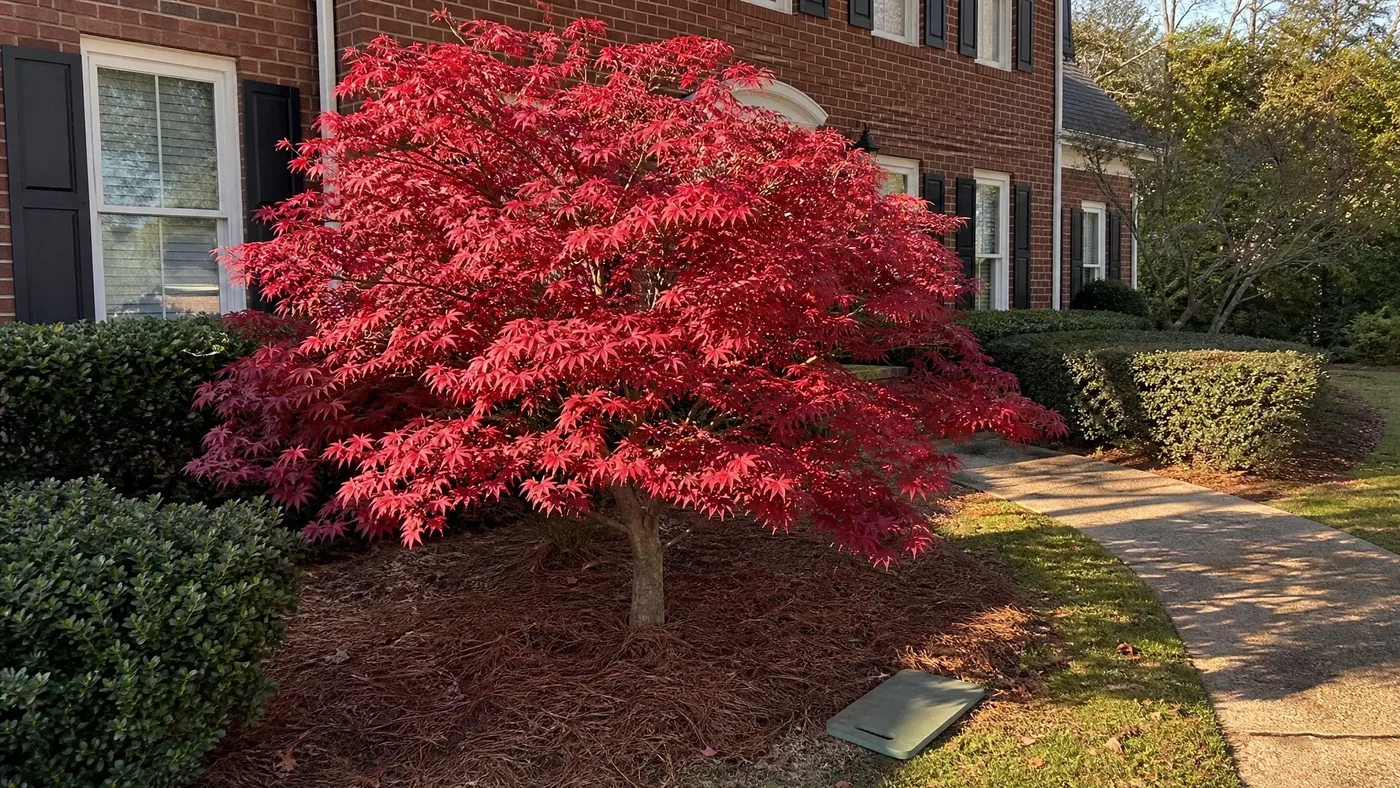
Picture the view from your kitchen window in the tenth fall after planting: a small, layered tree holding red leaves over fresh mulch, and a running total that includes the plant, the water, the shade you arranged and maybe one replacement. That picture is why buyers ask for pros and cons before choosing a Japanese Red Maple.
A tree in the right spot repays patience with color in every season, while the same tree in the wrong spot costs years and money before it fails. Read on for our verdict on color, mature size and roots, growth speed, scorch and late frost, Verticillium and soil, and what grafted stock does to a five-year budget, then a final call on who should plant.
Four Seasons of Color From One Japanese Red Maple
Our verdict on color is a clear yes, with one condition attached to summer. In spring the new leaves open red to purple, and the small red to purple flowers open at the same time. You will see the flowers best from a window or a bench, not from the street, because they are small beside the foliage.
Color That Holds and Color That Slips
The condition is that red can slip. The leaves typically turn red/purple in spring but may fade to a green/bronze in summer heat. In a cool, shaded site you keep deep color longer, and in a hot, bright one you may be looking at bronze by August. That is not a failing tree, but do not buy one expecting a fixed shade from May to October.
This is especially true of an unnamed red seedling. The red-leaf name is used for many red-leaved seedlings, so two trees from the same batch can differ in how well they hold color. A named, grafted selection is more predictable, and predictability is most of what you pay extra for.
The Late Show and the Bare Frame
Late-season leaf color is the least predictable part of the year. It shifts with the individual tree and the weather, and we would not promise you a particular shade. Treat it as a bonus, and let our fall color guide set your expectations.
Winter is where the form earns its place. Once the leaves drop, a small tree with layered branching stands against snow, a fence or a brick wall, and it looks deliberate without a single leaf. The reliable color comes in spring, the summer color depends on your heat, and the fall color is a gift if it arrives.
Small Scale and Roots That Behave
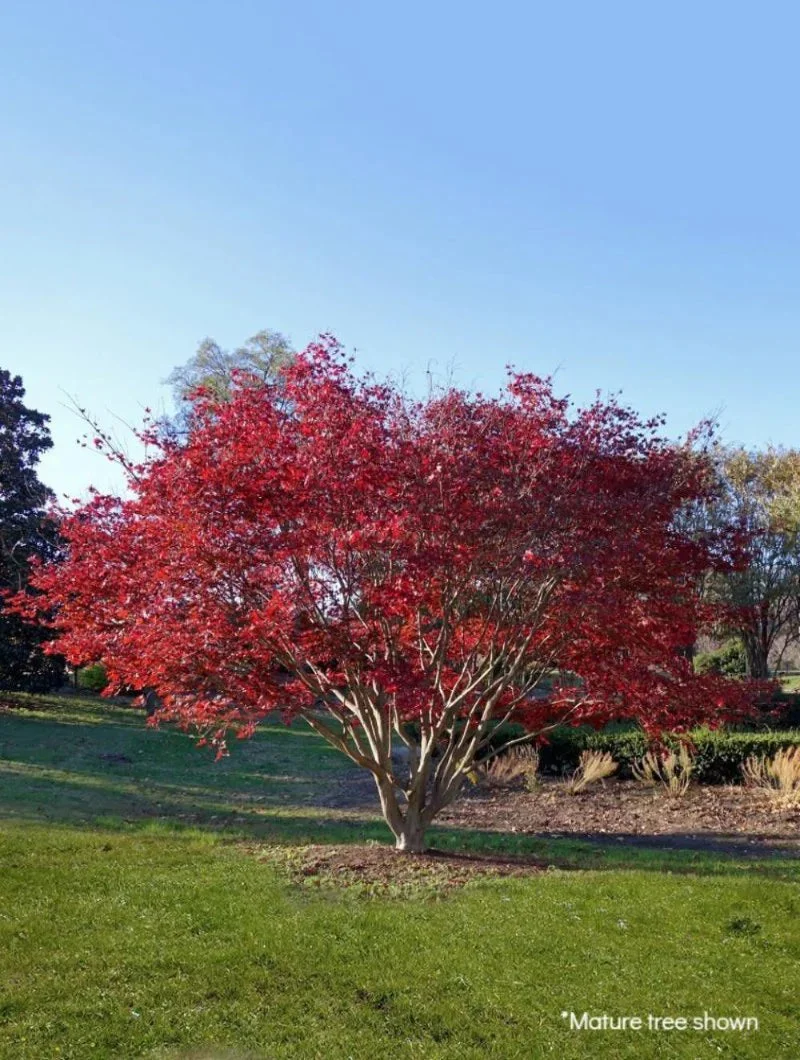
This is a clear pro, though the size range is wider than most buyers expect. The species grows 15 to 25 feet tall and 10 to 25 feet wide, and it is also put at 15 to 25 feet for both height and spread. The red-leaf form stays a small tree of about 25 feet.
Slow growth means you will take many years to reach the top of that range. It also keeps the tree far smaller than a shade tree in the same yard, which is why it fits where an oak or a red maple never could.
Roots Near Paths, Patios and Foundations
Roots are not a problem for the cutleaf form of Japanese maple. That is the best published figure we can cite for the group, and it matches what we would expect from a small, slow tree. You can plant at a sensible distance from a patio or walk without expecting heaved pavers. Keep it back from the house for the sake of branch spread and air movement, not for the roots.
When 25 Feet Is Too Much
If that mature size is too big, look at the weeping cutleaf 'Dissectum Atropurpureum'. It grows about 5 to 8 feet tall and wide. It is a different tree from an upright red seedling, so settle the form before you shop.
The Self-Seeding Drawback
One honest drawback is seed. The species self-seeds easily and can become weedy, and the Mid-Atlantic Pest Council lists it as invasive in Virginia and DC. In most yards that means pulling a few seedlings each spring. If you live in those areas, check with your local extension service first.
Slow Growth and What the Years Cost
Slow growth is the largest cost in this guide, and most of it is time.
Growth is slow to moderate, and the red-leaf form stays quite small in zone 5. A quart-size plant has the presence of a small perennial for its first seasons, not of a tree.
One of the most common questions we get is when the tree will look like the photo on the tag. Plan in stages: roots and survival first, branching in the middle years, and a canopy that shades anything only later. We will not give a year count, because climate, soil and care move it.
Where the Money Goes
The spending is thin and easy to overlook. You pay for the plant, mulch, and water through dry spells, since young leaves are not drought tolerant. You may also pay for a windbreak or shade cloth if your site lacks shelter. Our guide to what a Japanese Red Maple costs covers purchase prices by size.
Upkeep itself is light. Aphids, scale, leafrollers, leafhoppers and maple worms are occasional pests, and the tree is mildly deer resistant. The real expense is waiting. If you need shade or a screen within a few seasons, this tree will cost you patience you may not have.
Scorch and Late Frost in a Japanese Red Maple
This is a manageable con, and it is the one that most often decides how the first few years go. Leaf scorch has three causes: excess sun, wind and drought. Scorch also occurs during high temperatures accompanied by wind, so a hot, open, windy corner is the worst place you can pick.
We often see the first brown, crisp leaf edges in July on trees planted against a south or west wall. Afternoon shade and a windbreak address the cause, while extra water alone often does not. Our leaf scorch guide shows how to read the damage.
Late Frost on New Growth
Young leaves are the weak point. Young leaves of the species are sensitive to frost, and frost damage is a risk, especially from late frosts. Hardiness is a separate matter: the tree suits zones 5B through 8B, and winter cold threatens a tree inside that range less than one cold night after the buds open.
A mild spell in early spring followed by a hard freeze is the classic setup. The tree usually leafs out again, but a year of burned growth is a year added to a slow tree.
Three Site Checks Before You Plant
These checks cost nothing and prevent most of the damage described above.
- Choose a spot that gets direct sun for only part of the day. For the red-leaf form, 2 to 6 hours of sun counts as partial shade, and in hot summers we would lean toward the low end, with the sun in the morning.
- Put a fence, wall or evergreen hedge on the side your summer wind comes from, because the tree needs protection from drying winds.
- Avoid low pockets where cold air settles, since the first flush of young leaves is what frost damages.
Verticillium and Soil Limits to Plan Around
Verticillium is a risk you cannot buy your way out of, while soil is the one deal-breaker you can check before spending anything. The cutleaf form is susceptible to Verticillium wilt, which can kill plants. Good drainage and steady care improve the odds, but nothing removes the risk, and we would not trust a promise of immunity. Our Verticillium guide lists the signs and what to do.
Drainage Comes First
The tree wants evenly moist, well-drained soil, and that pairing is hard to deliver in heavy ground. Japanese maples grow fine on clay as long as the ground is sloped so water does not accumulate. So test your site before you buy. Dig a hole, fill it with water and watch how long it stands. If water is still sitting after hours, choose another spot or plant on a gentle slope.
Acid or Neutral pH
Sources agree on acid or neutral soil, and the red-leaf form wants acid soil, below 6.0. We found no firm numeric range beyond that, so ask your local extension service for a soil test. If it comes back alkaline, choosing a different tree is usually cheaper than amending the ground for the life of the maple.
What Grafted Stock Does to the Budget
Grafted trees cost more up front and buy predictability. The unnamed seedling-grown red is the budget route, with a trade-off. Most cultivars are grafted, while the red-leaf name covers many red-leaved seedlings. A grafted tree is a known cultivar. A seedling is a red tree whose color and vigor you learn as it grows. If you want a named red selection with known size and habit, our Bloodgood guide covers that choice.
Grafted trees add one upkeep item, which is removing any green shoots that come up from the rootstock. Seedlings have no graft union, so they skip that chore.
A Sample Five-Year Budget
The table below shows where the money lands over the first five years. We left out dollar amounts because they vary by region and seller, so fill in local quotes.
| Cost item | Grafted named tree | Seedling-grown red |
|---|---|---|
| Purchase, year 1 | Higher, for a known selection | Lower, for a quart-size plant |
| Mulch and water, years 1–2 | Same for both | Same for both |
| Shelter or shade cloth, if needed | Same for both | Same for both |
| Rootstock shoot removal, years 2–5 | A small recurring task | None |
| Color certainty by year 5 | High | You find out as it grows |
The saving on a seedling is real, but spend part of it on a good site. A cheaper tree in a scorching corner is the most expensive combination in the table.
Is a Japanese Red Maple Worth the Wait?
Set the verdicts side by side. Color, small scale and well-behaved roots are real, lasting advantages, and none of them depends on luck. The cons split into two groups: those you control by choosing the site (scorch, late frost, drainage) and those you can only accept (slow growth, Verticillium).
That split is how we would decide. If your yard can handle the first group, the second is a modest risk spread over a long life. If it cannot, you will keep paying for the tree in water, cloth, replacements and worry, and the money would go further on a faster plant. Our guide to small red-leaf alternatives compares options for those yards.
Back at the kitchen window in year ten, a sheltered tree gives you a small red canopy and a clean winter silhouette, for a total spent mostly early on. An exposed one gives you scorched edges every July and a replacement line in the budget.
Planting a Japanese Red Maple Only If These Fit
Plant a Japanese Red Maple if you have a spot with afternoon shade and shelter from wind, soil that drains and tests acid to neutral, a patio, path or foundation where gentle roots matter, and the patience for slow growth. Skip it for a windswept slope, heavy wet clay, alkaline ground, or a yard that needs shade or a screen quickly.
It all comes down to one test: if you can wait five years and give it a sheltered spot, plant it. If not, choose something faster.
Japanese Red Maple
Nursery-grown Japanese Red Maple in sizes from 3 Gallon 2-3 ft, shipped to your door.
From $118.33
Shop Now →Out on the farm, our Japanese Red Maples stand in soil that drains well but never dries out, with shade after midday and a windbreak close by, so we know what the tree asks for before we say it is worth planting. Every tree and shrub we sell is raised by our own small team of growers. If the pros here outweigh the cons for your yard, begin with one of our Japanese Red Maples.