New Japanese Red Maple Care After Delivery: The First 30 Days
Your tree came out of a dark box after a day or two in transit, and it looks tired. Leaves are limp, a few may be on the floor of the carton, and you are wondering if you just paid for a dead stick. Take a breath. Most "it arrived dying" scares are about 48 hours of transit droop, and a Japanese Red Maple (Acer palmatum, red-leaved forms) usually recovers from it. The deaths we see described most often happen later, in the planting week, when a tree sits in its nursery pot, unwatered and forgotten. This sheet is what we would pack in the box. Read it once, then follow it day by day. When you are ready to put the tree in the ground, the full planting guide covers the hole, the depth and the backfill in detail.
What You Need Before You Open the Box
Gather these first so day 0 goes fast.
- A watering can or a hose with a gentle shower setting
- A bucket or tub deep enough to stand the container in
- A spot in bright shade (a north wall, or under a taller tree or porch roof)
- Scissors or clean pruners, for cutting packing material and snipping only broken twigs
- Mulch and a spade, if you plan to plant in week 1
Day 0: Open It Right Away and Water the Root Ball
- Open the box the day it arrives. Do not leave it on the porch overnight. Unboxing a mail order tree promptly matters more than anything else on this list, because every extra dark hour adds to the stress.
- Lift the tree out by the container, not the trunk. Cut away any ties or wrap. Check that the trunk is not kinked and the container is not cracked.
- Check the soil. Push a finger into the mix. If it is dry or the pot feels light, stand the container in a bucket of water until the bubbles stop rising, then let it drain. If it is already damp, a slow, thorough watering from the top is enough.
- Stand it upright in bright shade. Not full sun. A tree that has been in the dark and then meets direct afternoon sun can scorch within hours, and a young trunk is prone to sunscald in full sun.
Do not plant it on day 0, do not fertilize it, and do not trim off the droopy leaves.
Days 1 to 3: Let It Acclimate, and Know What Is Normal
Keep the tree outdoors in bright shade and check the soil each morning. This is the stretch where japanese maple shipping shock shows up, and it looks worse than it is. Use this table to sort normal from worrying.
| What you see | Usually normal transit stress? | What to do |
|---|---|---|
| Leaves limp or drooping | Yes | Water the root ball, keep in shade, wait |
| A few leaves dropped in the box | Yes | Leave the rest alone |
| Slight pale or faded color on a few leaves | Often | Hold steady, keep out of sun |
| Flexible, green or reddish twigs; buds intact | Yes, a healthy sign | Nothing, this is what you want |
| Whole canopy dry, brittle and crisp | No | See the "when to worry" list below |
| Trunk snapped, or twigs dry and snap cleanly with no green inside | No | Photograph it and contact the seller |
Droop usually eases once roots take up water again. Leaf color on a Japanese Red Maple can also look a little different after shipping, and shifts greener or duller in deep shade, so keep it in bright shade rather than a dark corner.
Week 1: Plant It, or Pot It Up
By the end of the first week, the tree should be in its permanent home or in a larger pot. Not leaving it in the nursery can is the single biggest thing you can do for the tree, because a small container dries out fast and a stressed tree has few reserves.
If the bed is ready
Plant it following the steps in our planting guide. Timing matters too. The planting window is early spring or fall, avoiding peak summer heat, and the best time to plant a Japanese Red Maple in your area depends on your winters and summers. Choose a spot with rich, well-drained soil and some afternoon shade, and leave 10 to 15 ft from structures and other trees for a standard form. Dwarf and cutleaf types need less.
If the bed is not ready, or it is midsummer
Do not plant into heat or into heavy, wet clay just to get it over with. Instead, pot the tree up one size in a well-drained mix, keep it in bright shade, and plant when the weather turns. Container trees dry out quickly, so check the soil daily in warm spells. In freezing winters, a container-grown tree needs its roots protected.
Whichever route you take, the tree should not sit for weeks in the nursery can unwatered.
Weeks 2 to 4: Water, and Then Mostly Leave It Alone
Water deeply every few days, and adjust for rain and soil. Deep means a slow soak that reaches the whole root ball, not a daily sprinkle that wets only the top. Before each watering, push a finger into the soil near the root ball. If it is damp, wait. If it is dry below the surface, water. Standing water and root rot are the usual risks in poorly drained soil, so more is not better. Our watering guide goes deeper on schedules for the first 2 to 3 years, when consistent, even moisture matters most.
Two restraints for this month:
- No fertilizer at all this first season. Feeding a stressed tree pushes soft, leggy growth and can weaken color. Light, low-nitrogen feeding in early spring of the following year is usually plenty.
- No pruning beyond broken twigs. Leave structural pruning for dormancy, from late fall to midwinter, to avoid heavy sap bleed.
Common Mistakes in the First Month
- Parking it in full sun to "perk it up." This is how a tired tree turns into a scorched one.
- Waiting on watering because the leaves look sad. Droop is a thirst signal as often as a stress signal, so check the soil, not the leaves.
- Overwatering to compensate. Soggy soil is a fast route to root rot.
- Fertilizing as a rescue. It does not help a droopy tree and can harm one.
- Cutting off every limp leaf. The leaves are still working, and the tree needs them.
- Planting in a hot spell because the box said "live plant." A few extra days in bright shade cost nothing.
When to Worry
Transit droop fades in days. These signs do not.
- The whole canopy goes crisp and brown, edges and all, and stays that way after a few days of correct watering
- Branch tips are brittle and snap with no green or moist tissue underneath
- No new growth by about 6 weeks, if the tree arrived in its growing season (a tree delivered dormant will not leaf out until spring)
- Soil that stays soggy and smells sour, which points to drainage trouble and root rot
Before assuming the worst, rule out scorch from sun, wind or dry roots, which is environmental and not a disease. Our care guide covers the sun, water and soil basics that cause most of these symptoms. For region-specific questions, your local cooperative extension office is the right call. If a pest or disease is confirmed and you reach for a spray, try integrated pest management steps first, and always read and follow the pesticide label; the label is the law.
What to Expect
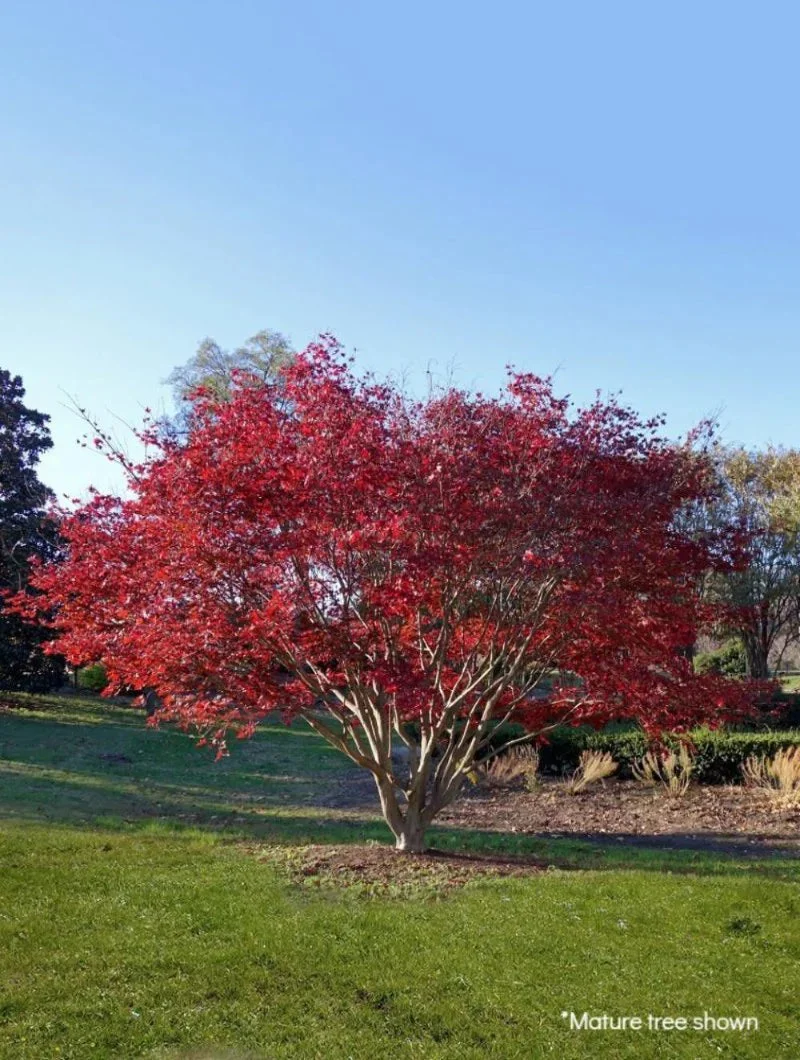
With bright shade, steady moisture and a planting date that fits your season, most healthy trees should settle in over the first month. Many leaves may stay limp for several days and then firm up, and some trees may drop a few leaves before pushing new growth. A tree this slow-growing (roughly 6 to 12 in per year) will not look dramatically different at day 30, and that is fine. It may take a full season or longer to show its normal color and vigor, and results depend on the cultivar, your climate and your site. Seedling-grown red forms can also vary in mature color and habit.
If you are still choosing a tree, we grow Japanese Red Maple in 3-gallon, 5-gallon and 7-gallon sizes, and you can see them at our shop. These steps apply to any mail-order Japanese maple.
Quick Reference: The First 30 Days
| When | Do this | Skip this |
|---|---|---|
| Day 0 | Open at once, water the root ball, stand upright in bright shade | Full sun, planting, fertilizer |
| Days 1 to 3 | Acclimate outdoors in shade, check soil daily | Pruning off droopy leaves |
| Week 1 | Plant, or pot up and wait for the right season | Leaving it in the nursery can unwatered |
| Weeks 2 to 4 | Water deeply every few days, adjusting for rain and soil | Fertilizer, pruning beyond broken twigs |
| About week 6, in season | Look for new growth, check the care guide if none | Assuming the worst before checking water and sun |
Japanese Red Maple
Nursery-grown Japanese Red Maple in sizes from 3 Gallon 2-3 ft, shipped to your door.
From $118.33
Shop Now →