Coral Bark Japanese Maple: Winter Color to Pair With Red Maple
Your red maple looks wonderful from May to October. Then the leaves drop and the bed goes quiet for months, and you want something that carries the yard through winter without giving up the red you planted it for.
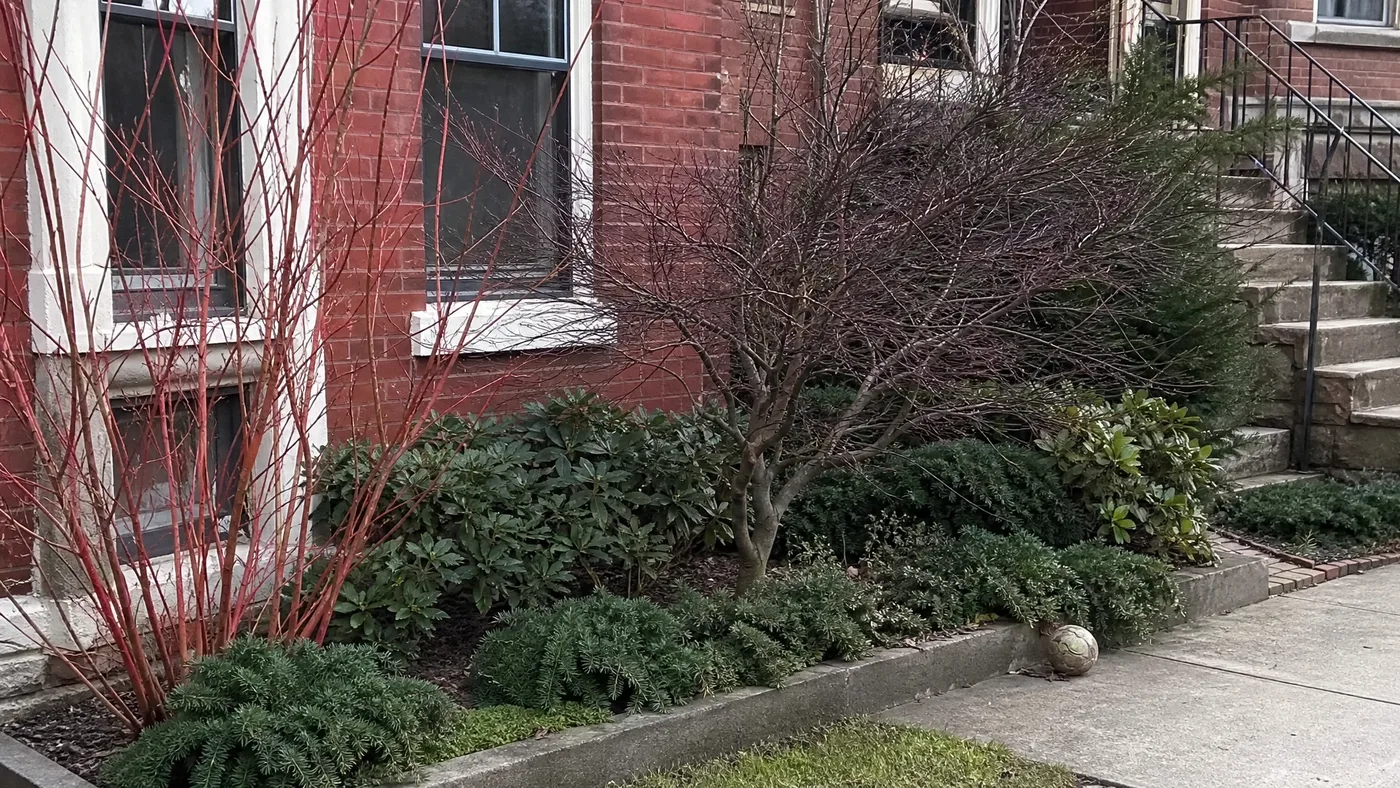
Many customers settle on Sango Kaku, the coral bark Japanese maple. A twig that looked plain green in August is glowing coral in January, and the cold is doing the work. That same cold, and the light around the tree, decide how good the show is.
Below, you'll find out all about pairing coral bark with a red-leaved maple, including how the color forms, why it fades on older wood, how the two trees contrast in summer, where to place and space them, how to prune for color, and what each tree needs in water and feeding.
How Cold Turns Young Bark Coral
Sango Kaku (Acer palmatum 'Sangokaku') is the coral bark Japanese maple, and the bark is the reason to plant it. NC State Extension describes coral red winter bark whose color intensifies in cold weather to almost salmon. Two things drive the show, cold and light.
Cold Sets the Intensity
The youngest stems build color as temperatures fall and the leaves come off. In summer the same shoots read greener and quieter. In our rows, the new growth on Sango Kaku looks unremarkable in August and starts to warm up after the first hard cold.
That matters for where you live. Sango Kaku suits zones 6a through 8b, a narrower range than the 5a through 8b that red-leaf Japanese maple tolerates. Expect a gentler winter color in zone 8 than in zone 6. In zone 5, check with your local extension service before you build a plan around this pairing.
Light Decides How Much You Get
The same source says that for the best color you should plant the tree in full sun. A Sango Kaku in deep shade can grow perfectly well and still give you pale stems. When someone tells us their coral bark is not coral, shade is the first thing we look at.
The bark is also particularly showy in fall and winter after the leaves drop. With the canopy gone, light reaches every twig, so the tree turns from a leafy shape into a bare stage for its own bark.
Why Only New Wood Carries the Color
Here is the catch with every coral bark maple. Oregon State's landscape plant database says it plainly: as branches mature, color is lost, and only the first and second year growth shows the rich coloration.
So the coral lives on the outer twigs of a tree that grows 20 to 25 feet tall and 15 to 20 feet wide. One of the most common questions we get is whether the whole trunk will turn coral. It will not. The trunk and main limbs dull with age, and what you see in January is a coral haze at the tips of the crown.
This is why growth habit matters more than any single winter. Sango Kaku grows at a slow to moderate pace, so new shoots arrive at a measured pace. A tree in good light that keeps pushing fresh shoots keeps its coral at the surface. A crowded, shaded tree pushes fewer, and its crown slowly turns gray from the inside out.
Other red-bark and coral-bark selections of Japanese maple follow the same rule, so everything in this guide carries over to them. When you shop, ask for the cultivar name, its mature size and how the bark looks on older wood. A tag that says only "coral" tells you very little.
Pairing Coral Bark With a Japanese Red Maple in Summer
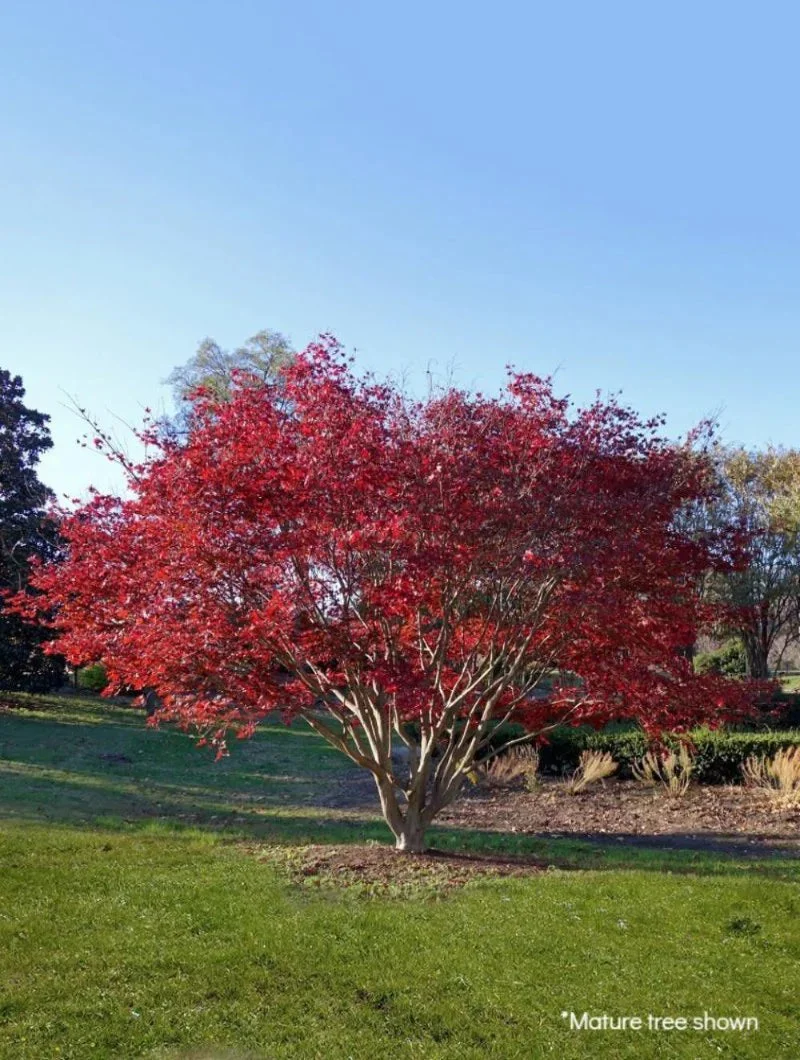
In leaf, Sango Kaku looks nothing like its winter self. The foliage keeps a light green-yellow color through spring and summer and turns bright yellow in fall. That is the opposite of a red maple, which is exactly why the two work together.
A red-leaf Japanese maple opens red to purple in spring. The leaves may fade to a green/bronze in summer heat. The contrast is strongest in spring and early summer, when light green-yellow sits beside deep red-purple. By midsummer in a hot climate the red can soften toward bronze and the gap narrows.
The same page says the name refers to the red/purple leaf color and is used for many red-leaved seedlings, so the exact shade of red varies from tree to tree. If the summer contrast matters to you, choose your red maple in leaf and judge its color against the pale foliage it will stand next to.
The handoff in fall is simple. Sango Kaku turns bright yellow, the leaves drop, and the coral stems take over while the red maple's bare branches hold the shape beside them.
Where to Place a Japanese Red Maple Beside Sango Kaku
Plan from the window outward. This is the order we give customers, because each step depends on the one before it.
- Pick the sight line. Stand at the window or door you use most from November to March and decide where the coral should land. The bark is a winter feature, so it belongs in view from indoors.
- Give Sango Kaku the open sun. Full sun gives the best bark color, so it takes the brightest spot in the planting.
- Put the red maple on its east side. Afternoon shade falls to the east of a tall tree. Red-leaf Japanese maple grows in full sun to partial shade, and afternoon relief helps against leaf scorch and summer fading.
- Space from mature width. Sango Kaku reaches 15 to 20 feet wide, and the species runs 10 to 25 feet. Setting trunks about half of each tree's mature width apart lets the canopies just meet. For Sango Kaku alone, that is 7½ to 10 feet.
- Check the backdrop. Coral reads best against something dark, such as evergreens, a fence or a shaded wall. Pale stone behind it washes the color out.
- Measure from the house. The species can reach 15 to 25 feet tall, so keep both trunks well clear of walls and eaves. Our guide on how far to plant a Japanese Red Maple from the house covers the distances.
Run through all six before you dig. Moving a trunk by a few feet on paper costs nothing, and moving a rooted tree does.
Pruning Coral Bark Without Losing Winter Color
Because the color sits on first and second year wood, pruning decides how much of it you get. The aim is to keep the tree making fresh shoots and to keep light reaching them, not to shape it into a tidy ball.
What to Cut
Work from the inside out and cut with these points in mind:
- Remove dead, broken and crossing branches first, since they add nothing to the display.
- Take out a few of the oldest, grayest limbs each time, cutting back to a younger side branch so fresh shoots can take their place.
- Thin crowded interior twigs so light and air reach the wood you want to color.
- Leave the young outer shoots alone, because they are the coral you came for.
Spreading renewal over several years keeps the crown evenly colored. One heavy cut leaves a bare, gray hole.
When to Cut
We prune in winter dormancy, when the bare stems show which wood is coral and which has dulled. Use clean tools and choose dry weather, because Oregon State lists Sango Kaku as highly susceptible to bacterial blight. For timing and technique on the red maple, see how and when to prune a Japanese Red Maple tree.
Water and Feeding for a Japanese Red Maple Partner
Good news first: the two trees want much the same soil. The species likes evenly moist, well-drained soil, and the red-leaf form does well in acid soil. That means one mulch ring routine, one drainage standard and one soil mix can serve both.
The differences come from light. The table compares the traits that change how you care for each tree.
| Trait | Sango Kaku | Japanese Red Maple |
|---|---|---|
| Hardiness zones | 6a–8b | 5a–8b |
| Mature height | 20–25 feet | About 25 feet (red-leaf form) |
| Mature width | 15–20 feet | 10–25 feet (species) |
| Sun | Full sun for best bark color | Full sun to partial shade |
| Summer leaf color | Light green-yellow | Red-purple, may fade to green/bronze |
| Trouble to watch | Bacterial blight | Leaf scorch |
In practice, the tree in full sun dries out faster than its neighbor in afternoon shade. Check each root zone by hand before you water instead of putting both on one timer. Our watering guide for Japanese Red Maple trees explains the deep, infrequent rhythm that suits both.
For feeding, we tell customers to keep it light and shared: one modest application for both trees at the same time of year. A fast flush of soft growth is not the goal here. You want steady shoots that harden before winter, and on the red maple, steady moisture does more against scorch than extra fertilizer does.
A Japanese Red Maple and Coral Bark Through the Year
Here is the whole pairing in sequence, starting from the bare coral stems that opened this guide.
Winter. The coral is at its deepest after hard cold, with the red maple's bare silhouette beside it. Our guide to the Japanese Red Maple through the seasons covers that silhouette on its own. Winter is also the time to prune and, in most zones, to plant. See the best time to plant a Japanese Red Maple for your area.
Spring. The red maple opens red to purple and carries small red to purple flowers. Sango Kaku follows in light green-yellow. This is the peak contrast. Late frost can damage young growth on both trees, so be ready to cover small specimens on a cold night.
Summer. The yellow-green and red hold side by side, although the red may drift toward bronze in heat. Keep the root zones evenly moist and watch for scorched leaf edges on the tree getting the afternoon sun.
Fall. Sango Kaku turns bright yellow, then drops its leaves. It also self-seeds easily and can become weedy, so pull seedlings from the bed before they establish.
Then the cycle returns to January, with fresh shoots carrying a new round of coral.
Your Coral Bark and Red Maple Plan, in Order
Coral bark earns its place because the cold builds color in the youngest wood, and the trees will only keep that color if you keep the wood young. Full sun, steady moisture and a few renewal cuts each winter do more for the show than any product. The red maple supplies the summer contrast and the winter frame.
In short, pick the spot, set the spacing, plant in dormancy, and judge the pairing by next January.
Japanese Red Maple
Nursery-grown Japanese Red Maple in sizes from 3 Gallon 2-3 ft, shipped to your door.
From $118.33
Shop Now →Coral bark shows its best color on young wood, and the Japanese Red Maples we raise on our farms get the same care: rich, evenly moist soil that drains well, with some shade from the hottest sun. Raising every plant we sell is what we do as a small business of growers, and each tree is top quality. If you are ready to plant the red side of your winter pairing, start with a Japanese Red Maple from our shop.