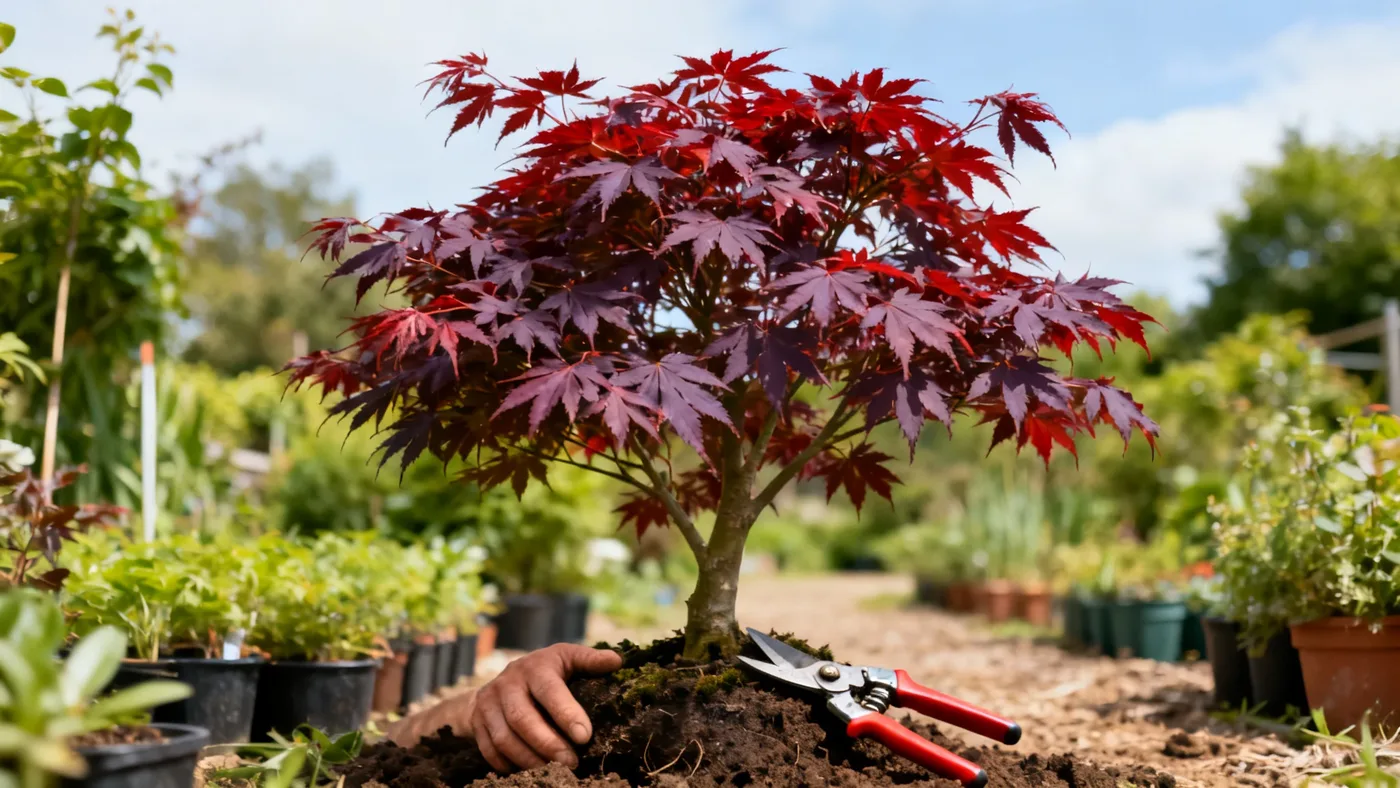
How and When to Prune a Japanese Red Maple Tree
Japanese Red Maple trees are prized for their graceful branching structure and vibrant foliage. Unlike many ornamental trees that demand aggressive annual pruning, Japanese Red Maples actually thrive on a hands-off approach. That said, knowing how and when to prune a Japanese red maple tree can help you maintain its shape, remove problem branches, and prevent the ugly scars that come from careless pruning. This guide walks you through the fundamentals of Japanese red maple pruning tips, timing, and technique so your tree stays healthy and beautiful for decades.
Why Prune Japanese Red Maple at All?
Japanese Red Maple trees grow slowly, roughly 6 to 12 inches per year, which means they naturally stay relatively compact compared to other shade trees. A standard upright red form reaches 15 to 25 feet tall and 12 to 20 feet wide at maturity; dwarf and weeping cultivars stay even smaller, often 6 to 10 feet tall and 8 to 12 feet wide. Because they grow slowly and do not naturally develop crowded or crossing branches, minimal pruning is usually needed. The main reasons to prune are to remove dead wood, correct obvious structural problems, or thin out branches that are rubbing against each other. You will also prune to remove crossing limbs that could cause wounds as they grow.
Resist the urge to "shape" or "direct" your Japanese Red Maple the way you might prune a formal hedge. These trees are most beautiful when allowed to develop their own graceful form. Over-pruning weakens the tree, exposes it to disease, and can trigger excessive sap bleeding that looks unsightly and stresses the plant.
When to Prune Japanese Maple: The Critical Timing Window
Timing is everything when you prune a Japanese maple tree. The best time to prune Japanese maple is during late fall through midwinter dormancy, when the tree has dropped its leaves and growth has stopped. This timing window spans roughly November through February in zones 5 to 8 (the primary range for Japanese Red Maples), though you should always prune before the first spring growth begins.
Why this window matters: Japanese Red Maples are notorious for heavy sap bleeding if cut during active growth. When you prune during dormancy, the tree has not yet begun moving sap and water through its vascular system, so wounds seal more cleanly and the tree loses less energy to bleeding. Pruning in late fall or midwinter also makes it easier to see the tree's overall structure without leaves in the way, so you can make smarter decisions about which branches to remove.
Never prune in spring or early summer, no matter how tempting it is to tidy up your tree before guests arrive. Spring pruning triggers vigorous sap flow and can create long-lasting scars. If you notice a dangerous dead branch in June, mark it with flagging tape and wait until fall to remove it.
Materials and Tools You Will Need
Pruning Japanese Red Maple requires only basic, clean tools. Sharp equipment makes cleaner cuts and reduces stress on the tree.
- Bypass pruning shears: For branches up to about 1/2 inch thick. Look for a pair with a sharp blade and smooth action. Bypass shears (not anvil shears) make a clean cut on one side rather than crushing the branch.
- Lopping shears: For branches up to about 1.5 inches thick. The longer handles give you more leverage and reach.
- Pruning saw: For branches thicker than 1.5 inches. A folding saw or bow saw works well. Choose one with fine teeth for clean cuts.
- Pole pruner: Optional, but helpful if your tree is tall or branches are high overhead. Reach safety is important.
- Rubbing alcohol or pruning disinfectant: Wipe down your blades before and between cuts to prevent spreading disease from branch to branch.
- Work gloves: Leather gloves protect your hands from sharp wood and any thorns or irritation.
- Safety glasses: Protect your eyes from falling twigs and wood chips.
- Pruning sealer or wound dressing (optional): Modern research suggests that sealing large pruning wounds is not always necessary, but if you prefer to seal cuts on branches thicker than 1 inch, use a water-based product.
Step-by-Step Pruning Guide: How to Trim a Japanese Maple Tree
Follow these steps during the dormant season (late fall through midwinter) to prune your Japanese Red Maple safely and effectively.
- Inspect the entire tree first. Walk around your Japanese Red Maple and visually map out problem branches before you make any cuts. Look for dead wood (branches that are bare and brittle), crossing branches (two limbs that rub or cross each other), and any branch that grows at an awkward angle or inward toward the center of the tree. Mentally mark these branches or use flagging tape.
- Remove all dead wood. Dead branches are usually easy to spot: they are gray or brown, do not bend, and may have bark missing or peeling. Start here because removing dead wood improves the tree's appearance and reduces disease risk. Cut dead branches back to the main stem or to the nearest live branch. Make your cut just outside the branch collar, which is the slight swelling where the branch meets the trunk or parent limb.
- Thin out crossing or rubbing branches. If two branches cross or rub against each other, remove the weaker or less attractively positioned of the two. This prevents wounds from forming as the branches grow. Always remove the entire branch back to its point of origin; do not leave a stub. Make your cut just outside the branch collar.
- Remove crowded interior branches. Look for branches that grow straight inward toward the center of the tree or that are so close together they shade each other out. You should be able to see a clear view through the lower canopy after pruning. Remove only the branches that are clearly crowded; do not over-thin or the tree will look sparse.
- Cut at the branch collar, not flush to the trunk. This is crucial. The branch collar is a slight ridge of bark and wood at the base of every branch where it attaches to the trunk or parent limb. Cut just outside this collar, at a slight angle, rather than flush against the trunk. Cutting at the collar allows the tree to seal the wound naturally and prevents the formation of cankers. If you cut too close to the trunk, you damage the branch collar and the wound will not close properly.
- Remove only what is necessary. Step back frequently and look at the overall shape of your tree. Japanese Red Maple trees are slow-growing, and it is easy to remove too much. If you are unsure whether to remove a branch, leave it. You can always prune more next year. Removing too much in one season stresses the tree and can trigger excessive growth the following spring.
- Clean your tools between cuts. Wipe your blades with rubbing alcohol or a disinfectant wipe between cuts, especially if you are moving from dead wood to healthy branches. This simple step prevents spreading disease.
- Do not use pruning sealer on small cuts. Contrary to old practice, modern research shows that trees heal better when wounds are left unsealed. The tree's natural compartmentalization process works more effectively without sealant. For very large wounds (branches thicker than 2 inches), you may choose to apply a thin coat of water-based wound dressing, but this is optional.
Common Pruning Mistakes to Avoid
Even experienced gardeners sometimes make pruning errors. Here are the most common mistakes that harm Japanese Red Maples, and how to avoid them.
Mistake 1: Pruning in spring or summer. This is the leading cause of heavy sap bleeding and permanent scars on Japanese Red Maples. If a branch is hazardous, wait until fall or winter to remove it. The only exception is a branch that poses an immediate safety risk (for example, one that has fallen over power lines); in that case, call a certified arborist rather than attempting to remove it yourself.
Mistake 2: Cutting flush to the trunk. Many gardeners learned to cut pruning branches flush against the trunk, but this damages the branch collar and prevents proper wound healing. Always leave the collar intact by making your cut just outside it.
Mistake 3: Over-thinning the canopy. Japanese Red Maples look best when full and naturally shaped. Removing too many branches in one season opens the interior to sunlight and can trigger sunscald on the trunk (a darkened, sunburned patch of bark). It also stresses the tree and may cause it to respond with excessive shoot growth the following year.
Mistake 4: Creating a rounded "poodle" shape. Resist the temptation to clip your Japanese Red Maple into a formal dome or ball shape. This tree's beauty lies in its graceful, naturally branching form. Excessive heading (cutting branches back to force side shoots) weakens the tree and makes it look unnatural.
Mistake 5: Using anvil-type pruning shears. Anvil shears crush branches rather than slicing through them, leaving jagged wounds that are slow to heal. Invest in bypass shears instead; they make a clean cut on one side and leave a smooth wound.
Pruning Tips for Different Tree Forms
Japanese Red Maple comes in several growth forms, and pruning approach can vary slightly depending on the form.
Upright or vase-shaped trees: These are the most common form sold at nurseries. Prune to maintain a balanced canopy by removing any branch that grows straight out to one side or that creates an uneven silhouette. Remove crossing branches in the lower canopy to create an open, airy look.
Weeping or cascading trees: Dwarf weeping cultivars like 'Crimson Queen' (a dissectum or finely cut form) need minimal pruning. Remove only dead branches and any new shoots that grow upright (which can happen sometimes on weeping types). Let the natural weeping form develop; do not prop branches up or force a shape.
Multi-stemmed specimens: Some Japanese Red Maples are grown with multiple trunks. Prune each trunk as you would a single-trunk tree, but pay extra attention to removing crossing branches where stems meet, as these are prone to rubbing wounds.
What to Expect After Pruning
Once you finish pruning your Japanese Red Maple, expect the following:
Immediate sap bleeding (if you pruned in warm weather): If you unfortunately pruned outside the dormant season, you may see sap oozing from fresh cuts. This is stressful for the tree and cannot be stopped once it starts. In the future, wait for dormancy. Light sap bleeding in late winter as temperatures warm is normal and not a concern.
Faster growth in pruned areas: Removing a branch sometimes triggers faster growth in nearby buds. This is the tree's response to stress and pruning injury. If this happens and growth becomes too vigorous, do not prune again immediately; wait two full growing seasons before any follow-up pruning.
Wound closure: Small pruning wounds (branches less than 1/2 inch) typically seal over within one growing season. Larger wounds take 2 to 3 years to close completely. The tree is compartmentalizing the wound and gradually forming new bark over the cut. Do not attempt to speed this up with sealant.
No dramatic shape change: Japanese Red Maple trees grow slowly. Do not expect your tree to look dramatically different immediately after pruning. The main benefit is improved structure and long-term health, not an instant transformation.
Quick Reference: Japanese Red Maple Pruning Checklist
| Pruning Task | Timing | Notes |
|---|---|---|
| Dead wood removal | Late fall to midwinter | Remove entire branch back to main stem or parent limb |
| Crossing or rubbing branches | Late fall to midwinter | Remove the weaker branch; cut at branch collar |
| Interior thinning | Late fall to midwinter | Open canopy to improve air circulation; do not over-thin |
| Structural pruning (major limbs) | Late fall to midwinter | Minimal pruning needed; correct only obvious problems |
| Spring pruning | Never | Causes heavy sap bleed and permanent scars |
| Tool sanitation | Between every cut | Use rubbing alcohol or pruning disinfectant |
| Wound sealing | Optional for large wounds only | Modern practice: leave small wounds unsealed |
| Follow-up pruning | 2+ years after major pruning | Let the tree recover before additional pruning |
Mastering how to prune a Japanese maple tree comes down to one principle: less is more. These elegant trees flourish with minimal intervention. By understanding when to prune Japanese maple (late fall through midwinter dormancy) and following proper technique (clean cuts at the branch collar, removal of dead or crossing wood only), you will keep your Japanese Red Maple healthy and beautiful for many decades. For more information on caring for your tree year-round, see our Japanese Red Maple Care Guide, which covers sun, water, soil, and other essential maintenance topics.