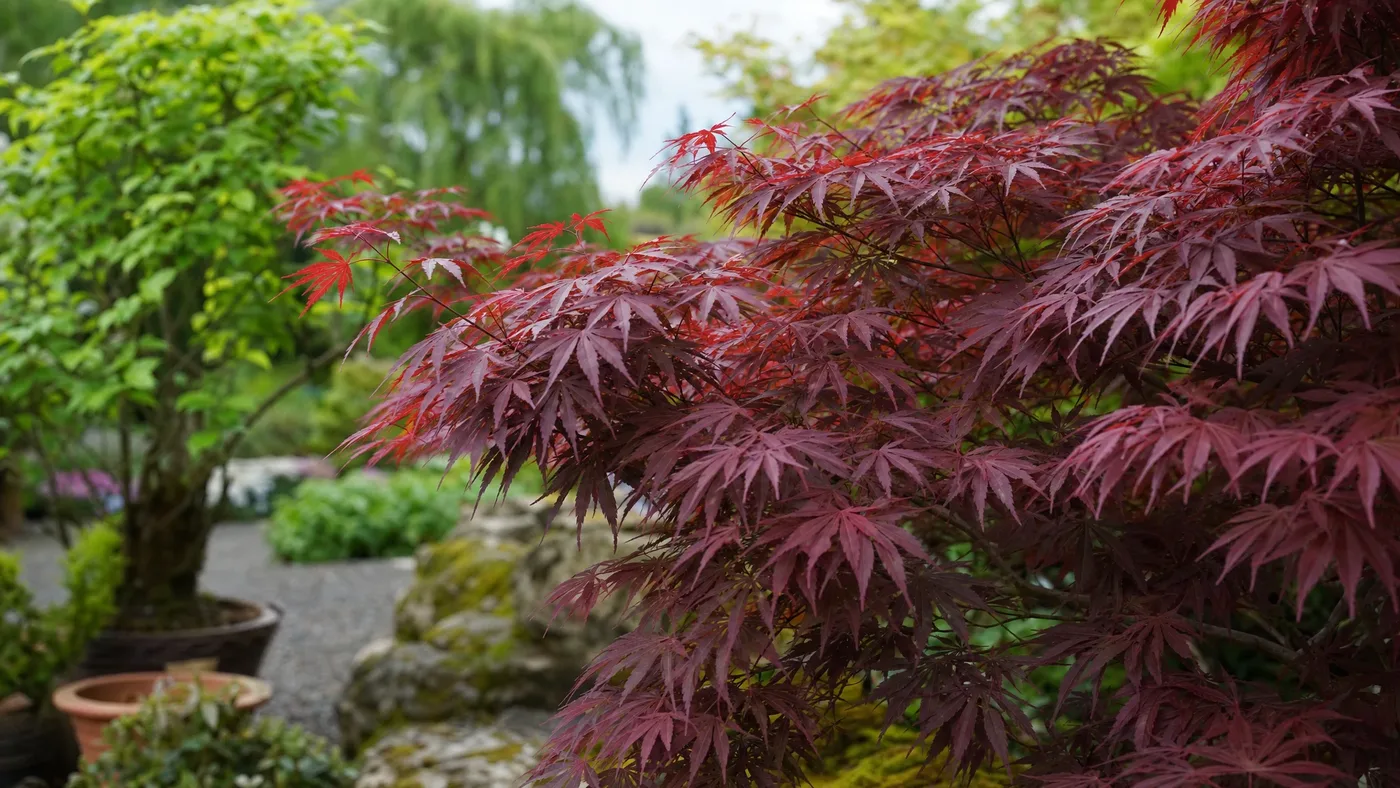
Japanese Red Maple Rootstock Suckers: Green Branches on a Red Tree
Green branches on a red Japanese maple are usually rootstock suckers: shoots that grow from below the graft union and belong to the vigorous green seedling the red cultivar was grafted onto. Pull or cut them flush at their origin the day you see them, in any season. Left alone, they gradually take over.
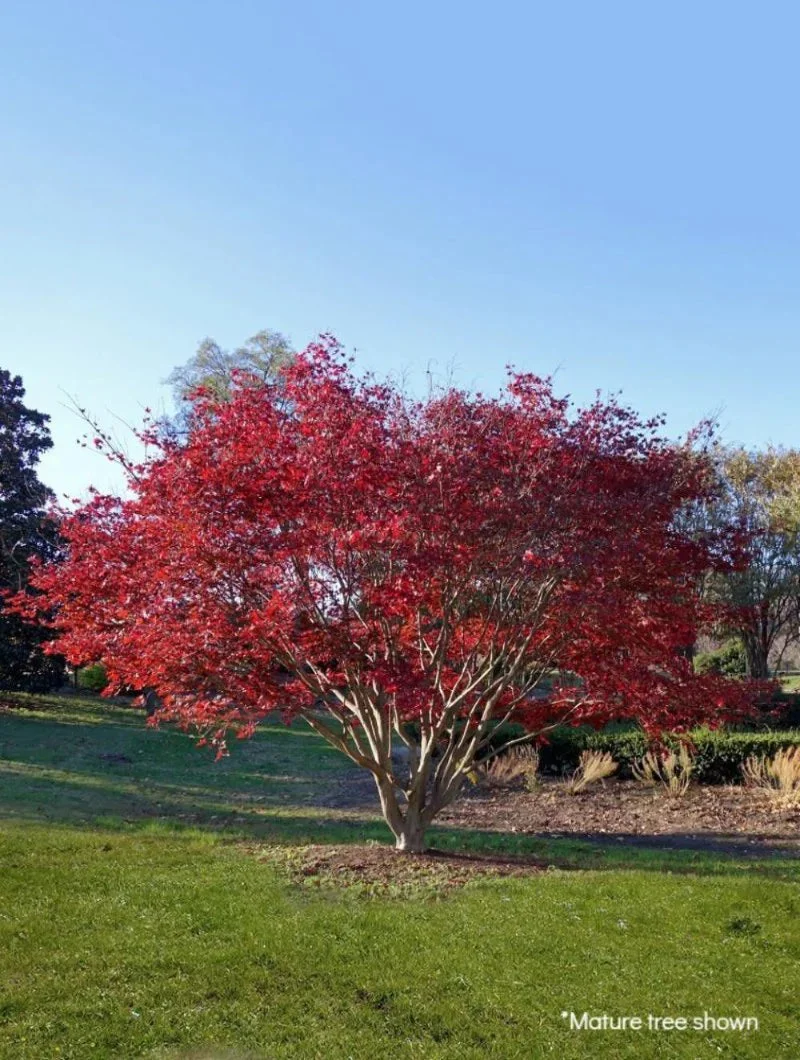
This is one small job inside the bigger picture of how and when to prune a Japanese red maple, and it is the one cut that ignores the usual calendar.
Symptom-to-cause at a glance
| What you see | Likely cause | What to do |
|---|---|---|
| Green, fast, straight shoot from the trunk base, below a swelling | Rootstock sucker | Remove flush at origin now |
| Whole canopy dulls to green in July, no new shoots | Heat or deep shade (color fade) | Adjust site, not pruning |
| One branch above the union with greener leaves | Cultivar variation or shade on that limb | Watch it; do not remove as a sucker |
| Green shoots on a plant with no swelling anywhere | Likely a seed-grown tree, not grafted | Check habit and color before cutting |
Understanding the problem
What is a rootstock sucker on a Japanese maple?
Named red cultivars are grafted: a cutting of the red variety is joined to the base of a green seedling. Any shoot that sprouts from the seedling part, below the join, is the rootstock itself. It is a different tree growing out of your red one.
Why do Japanese maple rootstock suckers grow so fast?
The rootstock is a vigorous seedling with a full root system, and it was never bred for slow, refined growth. Red cultivars grow roughly 6-12 in/year as a species-level range, but a sucker is not held to that pace. It often outruns the grafted top in a season or two.
What does "reversion" actually mean here?
Buyers call it reversion because the tree seems to turn green over time. In most cases the red wood is not changing at all. Rootstock growth is simply outcompeting it, branch by branch, until the green tree outweighs the red one.
Is this why my red maple turned green?
Often, on upright forms, yes. It is the real story behind a good share of "my red maple turned green" complaints. Color that fades across the whole canopy is a different problem: the species can shift greener in deep shade or intense summer heat, so rule that out too.
Finding the graft union
Where is the graft union on a Japanese red maple?
Look low on the trunk, usually within the first several inches above the soil line. You are searching for a swelling, a slight dogleg, or a change in bark texture where the trunk direction shifts. Part the mulch and run your hand down the trunk if you cannot see it.
Why does the graft union matter for pruning?
It is the dividing line. Everything above the union is the tree you paid for. Everything that emerges below it is rootstock and should go.
What if I planted too deep and buried the union?
Burying the union hides the diagnosis and can encourage the red scion to root on its own or stress the trunk. Set the root flare and union at or just above grade at planting. If mulch has piled up, pull it back to see what is happening.
Does a seed-grown red maple have a graft union?
No. Straight species and unnamed seedlings are grown from seed, so there is no join and no rootstock to sprout. A seed-grown tree can still show variable color and habit between branches, which is a different issue from suckering.
Telling a sucker from a normal branch
How can I tell a sucker from a regular branch?
Check three things. Does it originate below the union, is the leaf greener than the red canopy, and is it growing ramrod-vertical with unusual vigor? Origin below the union settles it, because color alone can mislead.
What if a branch above the union has greener leaves?
Do not call it a sucker. Branches above the union are the red cultivar, and shaded limbs commonly look greener than sunlit ones. Position and origin decide, not leaf color.
Can suckers come from the roots instead of the trunk?
Yes, rootstock shoots can surface a short distance from the trunk. Follow the shoot down: if it connects to the root system below the union rather than to the red wood, it is rootstock. Dig back to the point of origin before cutting.
Removing suckers
When should I remove Japanese maple rootstock suckers?
The day you see them, in any season. Normal structural pruning belongs in late fall to midwinter dormancy to avoid heavy sap bleed, but suckers are the exception. Our guide to when to prune a Japanese red maple covers the regular schedule.
How do I remove a sucker properly?
Rip young, soft shoots off by hand with a downward tug, which takes the dormant buds at the base with them. For woody ones, cut flush at the point of origin with clean bypass pruners or a saw. A stub left behind will resprout.
Will cutting a sucker harm the red tree?
No. Removing rootstock growth sends no signal to the red wood, and the wound is small when you act early. Late-season cuts bleed less sap on a thin shoot than a big structural cut would.
Should I spray the suckers with weed killer?
We would not. Brush killers can move into the trunk and root system you are trying to protect. Mechanical removal is the safer route; if you consider any chemical, always read and follow the label, since the label is the law.
What if the sucker has grown thick before I noticed?
Cut it flush anyway, even if it is thumb-sized. Make the cut in dormancy if it is large, then expect some regrowth at that spot and rub off the new shoots promptly. If suckers outweigh the red canopy, consult your local cooperative extension office or a certified arborist.
Prevention and big-picture questions
How often do I need to check for suckers?
Walk the base once a month during the growing season, and again after leaf drop when bare wood is easy to read. A 30-second check beats a rescue job in year five.
Is grafting still worth it, given this maintenance?
Yes. Grafting is how a named cultivar stays true to type, while seed-grown trees can vary in mature color and habit. The sucker chore is the price of predictability. If you want a nursery-grown tree to start from, see the sizes at our shop.
Who should avoid a grafted red maple?
Anyone who will not look at the base of the tree once a month. Neglect is what turns a minor chore into a takeover. A seed-grown red tree has no rootstock to sprout, though its color can vary.
Quick reference
| Task | Rule |
|---|---|
| Find the union | Dogleg or swelling low on trunk, above soil line |
| Identify a sucker | Starts below union, often greener, ramrod-vertical |
| Timing | Immediately, any season |
| Method | Rip young shoots; cut woody ones flush at origin |
| Avoid | Stubs, herbicides, burying the union |
| Inspection | Monthly in growing season, once after leaf drop |
| Normal pruning | Late fall to midwinter dormancy, dead, crossing or crowded wood only |
Japanese Red Maple
Nursery-grown Japanese Red Maple in sizes from 3 Gallon 2-3 ft, shipped to your door.
From $118.33
Shop Now →