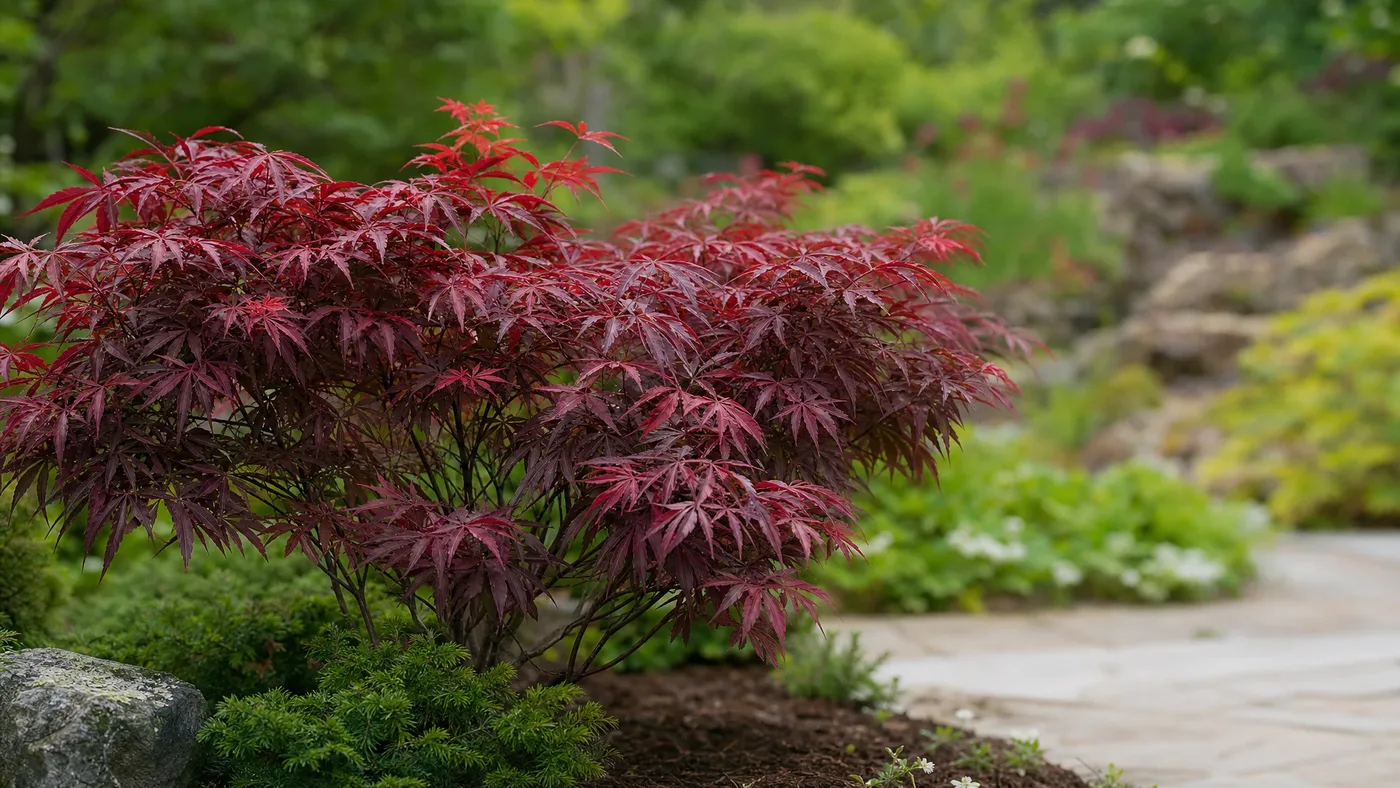
Japanese Red Maple Leaves Curling or Wilting
Japanese maple leaves curl or wilt because the roots are not delivering water to them. The two most common causes are opposites: soil that is too dry, and soil so waterlogged that the roots have rotted and cannot drink. Push a finger 3 inches into the soil before you touch the hose.
That check matters because the reflex fix, watering more, is roughly a coin flip to be exactly wrong. A drooping tree in soggy ground that gets another soak can decline fast. If you want the full routine for a healthy tree, our complete guide to watering Japanese Red Maples covers it. This article is the phone-call version: what to look at, in what order, and what to do.
Start Here: What the Pattern Usually Means
Look at where the problem shows up on the tree, then match it below. Do the soil check in the steps further down before acting on any row.
| Symptom pattern | Likely cause | First action |
|---|---|---|
| Whole tree droops or curls, soil dry at 3 in | Dry roots (underwatering, drying wind, heat) | Water slowly and deeply, then recheck |
| Whole tree droops or curls, soil soggy at 3 in | Drowned or rotting roots (root rot in poorly drained soil) | Stop watering and check drainage |
| Leaf edges crisp and brown, curling on hot, windy days | Leaf scorch (environmental, not a pathogen) | Add afternoon shade, wind cover and mulch; see the leaf scorch guide |
| One side or a single branch wilts while the rest looks normal | Possible verticillium wilt | Stop fertilizing, note which branches, ask your local cooperative extension office about confirming it |
| Only new growth curls, with sticky residue on leaves | Aphids | Rinse off with water, then work through IPM steps |
What You Need
- A trowel, soil probe or long screwdriver for checking moisture at 3 in depth
- A hose with a gentle, low-pressure setting, or a bucket
- Shredded bark or similar mulch
- Shade cloth or a temporary screen, if the tree gets hot afternoon sun
- Clean, sharp pruners (for later, not for today)
Step-by-Step: Diagnose and Fix
1. Check the soil at 3 inches, first
Dig down 3 inches about a foot out from the trunk, where the feeder roots are. Squeeze a pinch of soil. Crumbly and barely cool means dry. Dark, cold and clumping together, or water pooling in the hole, means soggy. Check in the morning, because leaves often droop a little in afternoon heat even when roots are fine.
2. If the soil is dry: water deeply, not often
Japanese Red Maples want consistent, even moisture, especially in the first 2-3 years after planting. Drought tolerance is low to moderate even once established. Run a slow trickle at the base until the soil is moist at 3 in depth, then let it settle. Recheck in a few days. A quick sprinkle only wets the top inch and encourages shallow roots, which makes the next dry spell worse.
3. If the soil is soggy: stop watering and find out why
Take the hose away. Dead or rotting roots cannot take up water, so the leaves wilt even though the ground is wet. Then look for the cause:
- Heavy clay or compacted soil that holds water around the root ball
- A planting hole that filled like a bowl and drains slowly
- Mulch piled against the trunk, or soil mounded over the root flare
- A container with blocked drainage holes, or a saucer holding standing water
Pull mulch back from the trunk and let the top few inches dry. For a container tree, clear the holes and empty the saucer. These trees want rich, well-drained loam, and they do not tolerate standing water.
4. Read the pattern on the tree
Once the water question is settled, use the table above. Whole-tree symptoms point back to roots and water. A one-sided or single-branch collapse is different: verticillium wilt is a soilborne fungal disease that blocks water movement in part of the tree. It has no home-garden cure, so ask your extension office how to confirm it before you remove anything. Sticky leaves with distorted new growth point to aphids. Rinse them off with a firm stream of water. If you consider a pesticide, always read and follow the pesticide label; the label is the law, and gentler IPM steps should come first.
5. Take the stress off while the roots recover
Spread a layer of shredded bark over the root zone, keeping it off the trunk itself. Where summers are hot, give the tree afternoon shade or a wind screen, since heat, wind and drought stress are the usual triggers for scorch. Skip the fertilizer. A tree with damaged roots cannot use it, and overfeeding causes leggy growth and weaker color. Salt tolerance is poor, so dissolved fertilizer salts and road-salt runoff can add to root stress.
6. Wait weeks, not days
Curled leaves will not flatten again. Judge recovery by the new growth, not the damaged leaves. A tree that was simply dry may start perking up within a few days, but expect to wait several weeks before you can say the fix worked. Resist the urge to prune now. Leave the damaged leaves on, and do any structural or corrective pruning in late fall to midwinter dormancy, as explained in when to prune a Japanese Red Maple.
Common Mistakes
- Watering on a schedule instead of by soil. The calendar does not know that last week was cool and rainy.
- Adding water to a tree that is already wilting in wet soil. This is the most damaging reflex.
- Fertilizing a stressed tree. Wait until it has put out healthy new growth.
- Cutting off all the curled leaves. They are still making food, and you cannot yet tell which branches are truly dead.
- Assuming it is verticillium. Whole-tree wilting is usually a water problem, and one-sided collapse is the pattern worth testing.
When This Tree Is the Wrong Fit
If your soil stays wet for days after rain and you cannot improve drainage, a Japanese Red Maple will keep struggling there. The same goes for a spot with reflected heat and constant wind, such as a south-facing wall with a gravel bed. Plant in early spring or fall, away from peak summer heat, in a spot with better drainage and some afternoon shade. If you have lost a tree and want to start over, nursery-grown trees are available at our shop, in sizes that settle in more easily than a large specimen.
What to Expect
With the right fix, the tree may stop drooping and start pushing new leaves over the following weeks. Scorched or curled leaves may stay marked until they drop in fall. A tree with extensive root rot or a confirmed vascular disease may not recover, and that is worth knowing early.
Quick Reference
| Check | Result | Do this |
|---|---|---|
| Soil at 3 in | Dry | Water slowly and deeply, recheck in a few days |
| Soil at 3 in | Soggy | Stop watering, fix drainage, pull mulch off the trunk |
| Whole tree affected | Yes | Treat as a root and water problem |
| One branch or side only | Yes | Possible verticillium; call your local extension office |
| Brown, crisp margins | Yes | Add afternoon shade and mulch |
| Sticky, curled new growth | Yes | Rinse off aphids, use IPM, follow the label |
| Fertilizer | Any | Hold off until the tree recovers |
| Pruning | Any | Wait for late fall to midwinter |
| Judging recovery | Any | Wait several weeks and watch new growth |
Japanese Red Maple
Nursery-grown Japanese Red Maple in sizes from 3 Gallon 2-3 ft, shipped to your door.
From $118.33
Shop Now →