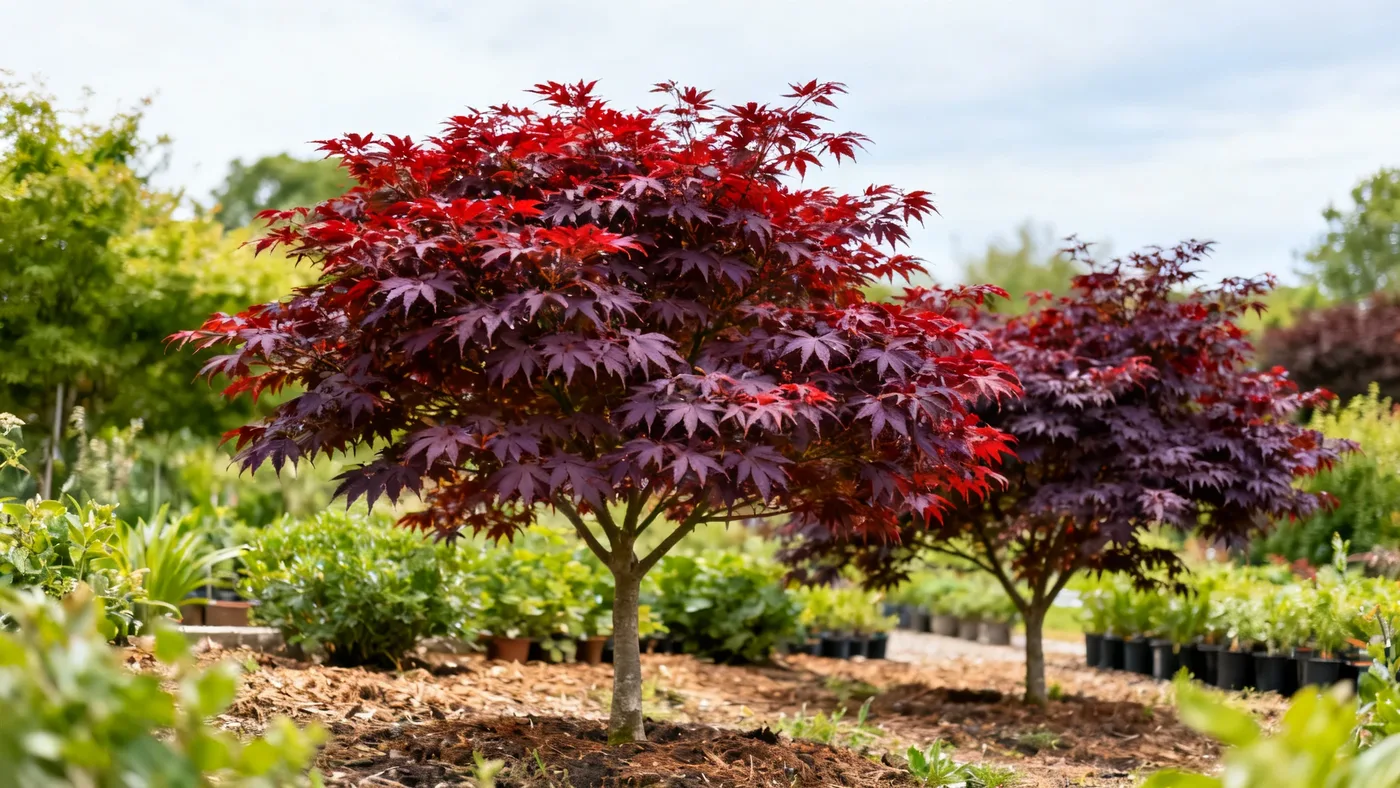
Fertilizing Japanese Red Maple: What, When and How Much
Do Japanese Red Maples Need Fertilizer?
The short answer: yes, but modestly. Japanese Red Maples are not heavy feeders and actually benefit from restraint when it comes to fertilizer. A well-sited tree in decent soil can thrive for years with little intervention. However, light feeding at the right time can support steady growth, deep red leaf color, and strong branch structure, especially during the first few years after planting.
The key is balance. Overfeeding Japanese Red Maples is one of the most common mistakes home gardeners make. Too much fertilizer, especially nitrogen-rich products, causes weak, spindly growth and dulls the red coloring that drew you to the plant in the first place.
Understanding Your Soil First
Before reaching for fertilizer, take a moment to understand what you already have in the ground. Japanese Red Maples prefer rich, well-drained loam high in organic matter, with soil pH roughly between 5.5 and 6.5 (slightly acidic). If you planted in decent garden soil amended with compost, your tree may need very little additional fertilizer.
If your soil is poor, sandy, or clay-heavy, light fertilization becomes more important. If you have not tested your soil pH recently and your maple's foliage looks yellowed or stunted, a soil test through your local extension service can reveal whether a pH adjustment or specific nutrient deficiency is the real issue.
Best Fertilizer for Japanese Red Maple
Choose a balanced, low-nitrogen fertilizer. Look for products labeled with three numbers, such as 10-10-10 or 5-10-10, where the first number (nitrogen) is lower than or equal to the phosphorus and potassium.
Common options include:
- Granular balanced fertilizers (10-10-10 or similar formulations)
- Slow-release pellet fertilizers designed for trees and shrubs
- Liquid fertilizers diluted to half strength
- Organic alternatives like fish emulsion or kelp extract, diluted per label
Avoid high-nitrogen fertilizers (where the first number is 20 or higher) unless your soil test confirms nitrogen deficiency. High nitrogen promotes soft, leggy growth at the expense of color and branch strength.
If you prefer organic approaches, composted manure worked lightly into the soil around the drip line, or a 2 to 3-inch layer of compost refreshed each spring, can provide steady, gentle nutrition without risk of overfeeding.
When to Fertilize Japanese Red Maple
Timing matters. The best window for fertilizing Japanese Red Maples is early spring, once the tree begins to break dormancy but before new growth hardens off. This means late winter to early spring, depending on your USDA zone. In zones 5 and 6, that's typically late February or March. In zones 7 and 8, aim for February or early March.
This timing aligns with the tree's natural cycle: it's ready to invest energy in new growth, and early-season nutrients support that push without encouraging tender growth that frost might damage later.
Do not fertilize in summer, especially in hot climates. Summer feeding can stress the tree and intensify heat scorch on the foliage. Never fertilize in late fall or winter; dormant trees cannot use the nutrients, and excess fertilizer can leach into groundwater or sit unused until spring, when it may promote tender growth vulnerable to late frost.
Japanese Red Maple Fertilizer Schedule: Young Trees vs. Established Trees
Your approach depends on the tree's age and establishment.
First 2 to 3 Years After Planting
Young Japanese Red Maples benefit from consistent moisture and light feeding. Apply a balanced, low-nitrogen fertilizer once in early spring. A half-strength liquid application or a light scattering of slow-release granules around the drip line (staying several inches back from the trunk) works well. Follow the product label for application rates, but err on the side of less rather than more.
Some growers skip fertilizer entirely if the tree was planted in amended soil and receives supplemental watering during dry spells. Monitor growth; if the tree is putting on healthy new leaves and steady branching, hold off on extra fertilizer.
Established Trees (3+ Years)
Once a Japanese Red Maple is established, fertilize only once per year in early spring, and only if the tree's growth and color suggest it would benefit. Many established trees thrive without any additional fertilizer beyond what naturally occurs as organic matter breaks down in the soil.
If you see yellowing foliage (chlorosis), weak growth, or diminished red coloring despite good sun exposure, a light spring feeding can help. If the tree looks vigorous and full, skip it.
Step-by-Step: How to Fertilize Your Japanese Red Maple
- Choose your moment. Apply fertilizer in early spring, once buds begin to swell but before leaves fully emerge. Check your local frost date and aim for 2 to 3 weeks before the last hard frost.
- Water the tree thoroughly. A day or two before fertilizing, water deeply around the base. Moist soil allows roots to absorb nutrients more efficiently and reduces the risk of fertilizer burn.
- Clear the base. Remove mulch, fallen leaves, and debris from a 3-foot radius around the tree, exposing the soil from the trunk outward to about the branch drip line (the outer edge of the canopy).
- Apply the fertilizer. For granular products, scatter the recommended amount evenly over the cleared area, staying 6 inches or more from the trunk to avoid burn. For slow-release pellets, rake lightly into the top inch of soil. For liquid fertilizers, dilute to half strength and apply around the base, following the product label for volume.
- Water it in. Water gently and thoroughly after applying. This helps move nutrients toward the roots and locks them into the soil.
- Replace mulch. Once the fertilizer is watered in, replace mulch in a loose 2-inch layer around the tree, keeping it pulled back from the trunk by at least 6 inches. Do not mound mulch against the bark.
- Observe through the season. Monitor the tree's growth and foliage color through spring and summer. If you see vigorous new leaves with strong red pigmentation, the fertilization was appropriate. If growth looks excessive or spindly, or if color is muted, reduce or skip fertilizer next year.
Container-Grown Japanese Red Maples
If your Japanese Red Maple is growing in a pot, especially a smaller or dwarf cultivar, fertilizing needs are slightly different. Container soil depletes nutrients more quickly than in-ground soil and cannot replenish itself through microbial activity and organic breakdown the way garden soil does.
For container trees, fertilize lightly every 2 to 3 weeks during the growing season (spring through early fall) using a diluted liquid fertilizer at half to quarter strength. This gentle, frequent approach works better than a single heavy application. Stop feeding by late summer to help the tree harden off before winter. Container-grown trees need root protection in freezing winters, so consider moving small pots to an unheated garage or wrapping the container in burlap if you are in zones 5 or 6.
Tips and Common Mistakes
Don't overfeed. Overfeeding is the number one error. Excess nitrogen causes weak, spindly branching and dilutes the red leaf pigment, turning the foliage dull green or brownish. Trust the "less is more" approach.
Don't fertilize newly planted trees immediately. If your tree was planted in amended soil, wait until late spring of the first year to assess whether fertilizer is actually needed. Many newly planted maples establish well without it.
Watch the timing. Late-season fertilizing (after August) can trigger tender new growth that frost will damage. Stick to early spring only for in-ground trees.
Check soil moisture before you feed. Dry soil plus fertilizer equals burned roots. Always water before and after applying fertilizer.
Match the fertilizer to your plant's stage. Young trees in their first few years benefit from light, regular feeding. Mature trees often thrive on little to none.
Know the difference between fertilizer and problem-solving. If your tree shows signs of disease (leaf spots, cankers) or pest damage (Japanese beetles, aphids, scale), fertilizer won't fix it. Address the underlying problem first. If the foliage is yellowing and the soil pH is off, adjusting pH is more important than feeding.
Expected Results
With appropriate fertilization, you may observe steadier branching development and slightly more vigorous spring leaf emergence over the first few years. Leaf color should remain rich red or reddish-purple, especially in cultivars bred for color. Growth in Japanese Red Maples is naturally slow to moderate, roughly 6 to 12 inches per year, so don't expect dramatic size changes even with fertilizer. The goal is supporting the tree's own potential, not forcing unnatural growth.
Quick Reference: Fertilizing Schedule at a Glance
| Stage | Timing | Fertilizer Type | Application Rate | Notes |
|---|---|---|---|---|
| Years 1-3 (Young) | Early spring | Balanced, low-nitrogen (10-10-10 or 5-10-10) | Light application per label; half-strength if liquid | Only if planted in poor soil or tree looks weak |
| Year 3+ (Established) | Early spring, optional | Balanced, low-nitrogen | Light application per label | Skip entirely if tree is vigorous and well-colored |
| Container trees | Every 2-3 weeks, spring to early fall | Diluted liquid, balanced formula | Quarter to half strength per label | Stop by late summer to harden off before winter |
| Never fertilize | Late summer, fall, winter | Any | N/A | Risk of tender growth or wasted nutrients |
More Resources
For comprehensive guidance on overall care, see our Japanese Red Maple care guide on sun, water, soil, and pruning. Fertilization is just one piece of the puzzle; consistent watering during establishment is equally important. Learn more in our complete guide to watering Japanese Red Maples.