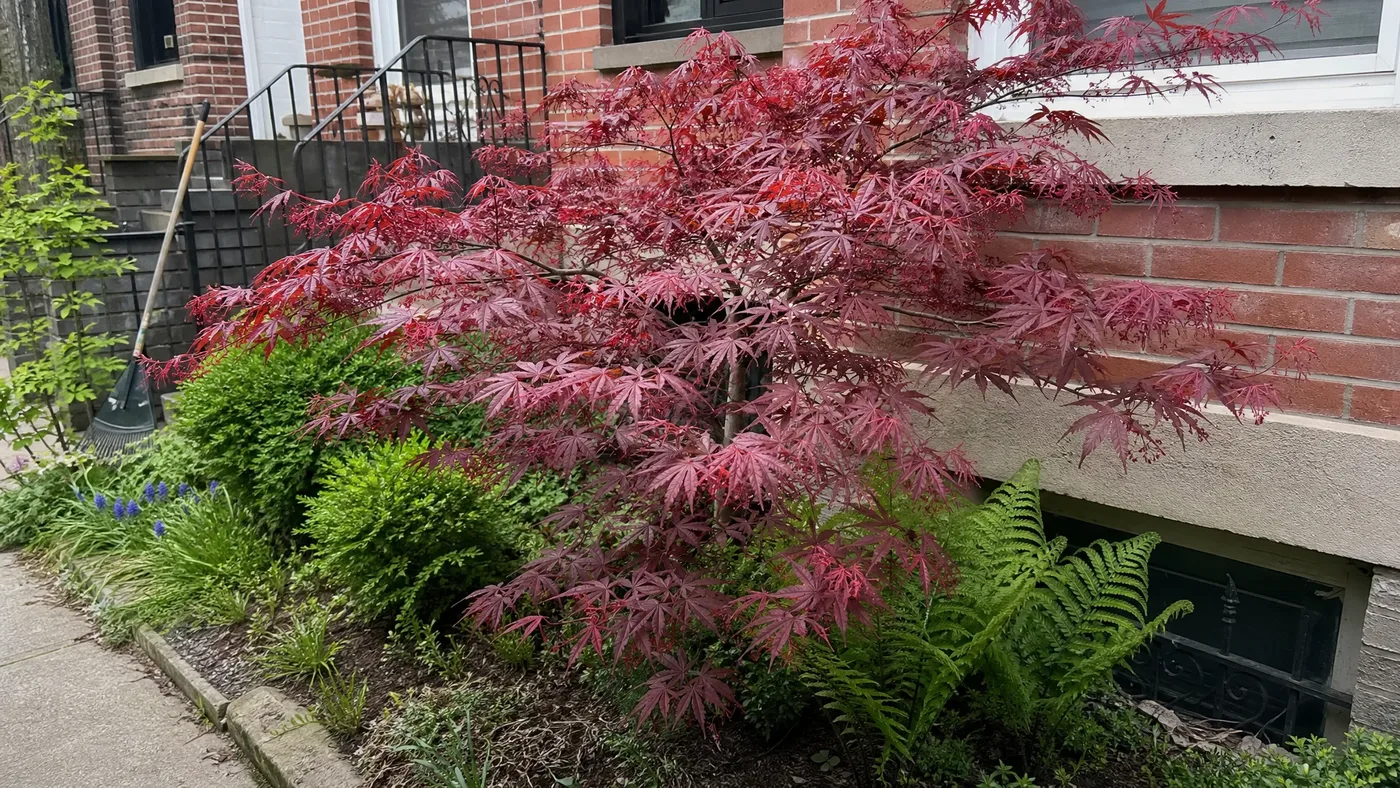
Japanese Red Maple Diseases: Leaf Spots, Mildew and Fungus
A page from our growing-row notebook, late May, after a week of rain: new leaves on the Japanese Red Maple rows carry brown-edged blotches. We wrote down the row, the weather and which leaves were hit, then left the sprayer in the shed. Walking the rows with a notebook before touching any product has saved us more sprays than it ever cost us.
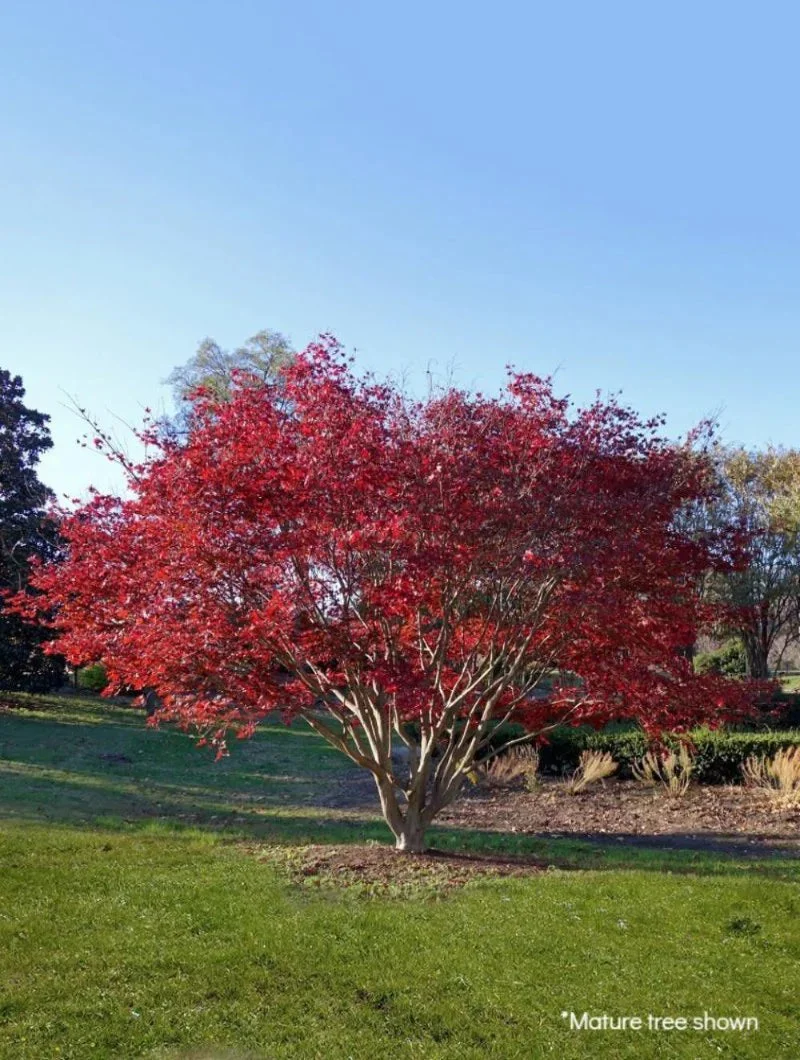
Japanese Red Maple is a red-leaved Acer palmatum, and its dark foliage hides early spotting while powdery mildew shows as a pale film rather than white dust. Most of what you find is cosmetic. A few problems are not, and knowing which is which keeps you from spraying a healthy tree or ignoring a failing one.
In this article, we'll go through spring leaf spots, late-summer mildew, tar spot, the siting and routines that kept our rows clean, and the few cases where fungicide earned its place.
What Wet Springs Taught Us About Japanese Red Maple
After several seasons of entries, the pattern was hard to miss. The bad leaf years were the wet-spring years, and the trees that looked worst were not the neglected ones. Feeding, pruning and summer heat explained far less than the number of days the new leaves stayed wet while they were still soft.
Why Rain Counts More Than Anything
Most of the fungi behind leaf spots on maples overwinter on fallen leaves and old twigs. Rain splashes spores onto leaves that are just unfolding, and a tender leaf that stays wet through a cool spell is easy to infect. That is why blotches show up days after the rain, not during it.
Our overview of Japanese Red Maple pests, diseases and common problems lists the main troubles in short form. Here we go one level deeper on the ones that mark the leaves, and on how dark red foliage changes what you see.
What We Write Down Each Week
The notebook is simple. For every row we record the date, the rain over the previous week, how far the leaves have opened, and where on the tree any marks appear, low and inside or high and outside. We also note whether the leaves are still deep red, since a tree fading toward green in summer heat shows symptoms differently than one holding color.
Photograph suspect leaves against a white card. Red and purple pigment swallows the first dull patches, and a white background makes them readable. Over a few seasons the entries tell you which spring conditions your own tree reacts to, which no general guide can do for you.
Brown Blotches on Young Leaves After Rain
The late May entry reads the same way across several years: the first flush opens, rain settles in, and a week later a scatter of brown blotches shows on the lowest, innermost leaves. Shoots that opened after the weather cleared came through clean. Damage that tracks the wet days is the clearest sign of a fungal leaf spot rather than a nutrient problem.
Anthracnose Along the Veins
Anthracnose, leaf scorch and frost damage can all occur on Japanese maple. Anthracnose lesions have distinct margins and sit along the leaf veins, where water lingers. On red foliage the early ones read as a slightly duller, browner patch beside a vein, easy to miss until it has spread.
Phyllosticta and Alternaria Spots
Leaf spots from Phyllosticta and similar fungi look different. They show as spots with yellow to brown centers and purple borders dotting the leaf, and the disease is unsightly but not serious. The purple border vanishes on a red leaf, so train your eye on the tan or yellow center. Round spots scattered over the blade suggest leaf spot, while blotches hugging the veins suggest anthracnose.
What We Did About It
On small trees we picked off the worst leaves and bagged them. On larger ones we did nothing, and the later leaves stayed clean once the weather dried. We did not spray, because by the time spots show, the infection has already happened and a spray cannot reverse it.
Scorch and frost can mimic these blotches. Scorch browns the leaf edges first and frost browns whole shoot tips, so check our guide to Japanese Red Maple leaf scorch before you blame a fungus.
White Powder Showing Up in Late Summer
By late August the notebook shifts from blotches to a pale, matte bloom on the upper side of the leaves, mostly on inner, shadier growth near the trunk. The trees in our rows did not drop their leaves early, and the next spring's flush was normal. Powdery mildew does not usually cause severe damage, though a heavy infestation may cause premature leaf drop.
How It Looks on Dark Leaves
On a green maple, mildew is a white dust. On a red one it reads as a gray or lilac haze, because the pigment shows through the thin film. Leaves that have faded toward green or bronze in summer heat show it more plainly, which is why it seems to arrive just as the color changes.
Telling Mildew From Dust and Spray Residue
One of the most common questions we get in late summer is whether the white is just dust. A thumb test settles most cases, and these checks cover the rest:
- Dust wipes off with a damp cloth and stays off. Mildew smears, thins and returns within days.
- Spray residue and hard-water spots dry as crusty dots or streaks in the pattern the water landed, usually on the side facing the sprinkler. Mildew spreads as a soft, patchy film.
- Mildew is worst on shaded, crowded inner leaves. Dust and residue ignore that pattern.
Management is cultural. Open up crowded growth, keep sprinklers off the leaves, and accept a pale film in September on a tree that will drop its leaves within weeks anyway.
Tar-Like Spots We Learned to Leave Alone
One late-summer entry in the notebook reads simply: raised black spots, glossy, like drops of tar, on a few leaves of one tree. We marked it, watched it and took no action. The tree leafed out normally the next spring, and the entry has been repeated in different words several times since.
Why It Looks Worse Than It Is
Tar spot is a fungal leaf spot that forms thick, shiny black patches on the leaf surface. It looks serious because it is bold and dark, but it changes the leaf's looks far more than the tree's health. Phyllosticta, also unsightly but not serious, belongs to the same cosmetic group. Your local extension service can confirm an identification if you are unsure.
A leaf is a short-lived part of the tree and drops in fall regardless. A spray on a cosmetic spot gives nothing back, and it adds cost and effort to a tree that was fine.
The Cosmetic Test We Use
Before we treat anything, we ask three plain questions. Are the marks confined to the leaves? Is the newest growth opening normally? Are all the branches leafing out and holding leaves? If the answers are yes, we note it and move on.
The answer changes when marks appear on twigs or bark, or when a whole branch wilts. That belongs to the serious list near the end of this guide.
Where Our Japanese Red Maple Rows Stayed Clean
In our rows, the cleanest trees sat at the windward end, on a slight rise, with morning light on them. The most spotted ones filled a low corner where water stood after storms and the crowns touched. Same stock, same fertilizer, same watering, so the difference was the site.
Airflow and Spacing
The species can spread 15 to 25 feet at maturity, and that is the figure to plan around, not the size of the tree in the pot. Branches that overlap or press on a wall keep leaves damp long after the rain stops. We grow ours with room between trees for this reason, and we suggest the same spacing at home.
The form matters too. A weeping cutleaf such as 'Dissectum Atropurpureum' stays about 5–8 feet tall and wide, but its dense mound holds damp air inside, so thin it more carefully than an upright tree.
Morning Sun, Afternoon Shade
The red-leaf form takes full sun of six or more hours or partial shade of 2 to 6 hours. Morning sun dries dew off new leaves early, which is what you want in a wet spring. Afternoon shade guards against scorch, so the best spot is usually one that gets sun first and shade later.
Drainage
The species wants evenly moist, well-drained soil, and the red-leaf form prefers acid soil. In our low corner, where water sat, leaves stayed spotted and growth stalled. If your bed holds water, raise the planting spot rather than reaching for fungicide. Soggy roots also set up the root problems covered later.
Raking, Pruning and Watering Habits for a Japanese Red Maple
One year a row was skipped at leaf fall because other work ran long. The next spring it carried more spotting than the raked rows beside it. One year is not proof, but it matched what we know about spores overwintering in leaf litter, so raking became a fixed job.
Leaf Cleanup
Rake as leaves drop, not once at the end, and focus on the ground under the canopy:
- Bag or haul off leaves that carried spots instead of leaving them in the bed.
- Pull back mulch that has matted with leaf litter, then refresh it and keep it off the trunk.
- Clear fallen leaves again in early spring before the buds swell.
Pruning for Air
Thin crossing and inward-growing branches while the tree is dormant, so wind reaches the center. Remove only what opens the canopy, since heavy cuts invite weak regrowth. Our guide on how and when to prune a Japanese Red Maple covers timing and cuts.
Water at the Root
Water at the base in the morning, with a hose on a trickle or a soaker, and keep sprinklers off the leaves. Foliage that stays wet overnight is exactly what spores need. The species' drought tolerance is rated moderate, so steady, even moisture beats heavy occasional soaking. Our watering guide covers how much and how often.
When Spray Earned Its Place on a Japanese Red Maple
Across all those notebook pages, we can point to one spray that paid off. A small young tree had lost most of its first leaves in a wet spring, and the following year we put a protectant fungicide on as the buds swelled, ahead of a wet forecast. That flush came through largely clean. Every other time we reached for the sprayer, the notebook said the tree would have been fine.
The Thresholds We Use
Common advice says to spray at the first spot. We disagree, because a fungicide protects leaves that are not yet infected and does nothing for spots already on the leaf. Timing is the whole decision.
We consider a protectant only when the same tree lost a large share of its new leaves in consecutive wet springs, or when the tree is young and small enough that every leaf counts. Read the label, and ask your local extension service which product and timing suit your area.
This table sums up how we weigh each problem.
| Problem | What it does | Our call |
|---|---|---|
| Anthracnose | Blotches along veins, can thin a young tree's first leaves | Rake, thin, protect only after repeat bad springs |
| Phyllosticta or Alternaria leaf spot | Unsightly, not serious | Leave alone |
| Powdery mildew | Rarely severe, late leaf drop at worst | Improve airflow, no spray |
| Tar spot | Cosmetic | Leave alone, rake in fall |
| Verticillium wilt | Incurable and often fatal | Spray cannot help |
Problems Spray Will Not Fix
Some conditions look like a leaf problem and are not. A branch that wilts in summer while its leaves stay attached may be Verticillium wilt, which is incurable and often fatal. Go straight to our Verticillium wilt guide if you see that.
Sunken or cracked bark with dieback beyond it points to canker, which calls for pruning out the branch in dry weather, not spraying. Wilting in wet soil points to root rot, and the fix there is drainage.
Notes From the Rows on Japanese Red Maple Health
Clean leaves on a Japanese Red Maple come mostly from site and habit: open air, morning sun, soil that drains, water at the root, and leaves raked up in fall. Most spotting, from anthracnose to Phyllosticta to tar spot, is cosmetic, and mildew is a late-season nuisance. Spray rarely beats waiting, and Verticillium is the one to act on fast.
Keep the notebook going. From bud break to leaf fall, write down once a week the date, the past week's rain, how far the leaves have opened, where on the tree any marks sit, what they look like and whether they are spreading, plus a photo on white card. At leaf fall, note when the leaves dropped. Next year's rows will tell you more than this year's.
Japanese Red Maple
Nursery-grown Japanese Red Maple in sizes from 3 Gallon 2-3 ft, shipped to your door.
From $118.33
Shop Now →Our Japanese Red Maples grow in well-drained, evenly moist soil, spaced so air moves through the canopy and the leaves dry soon after a spring shower. The growers who tend those trees also pot and pack each one by hand, and every plant is top quality. If keeping the foliage clean is on your mind, pick out a Japanese Red Maple for your own garden.