Japanese Red Maple Leaves Turning Yellow or Dropping Early
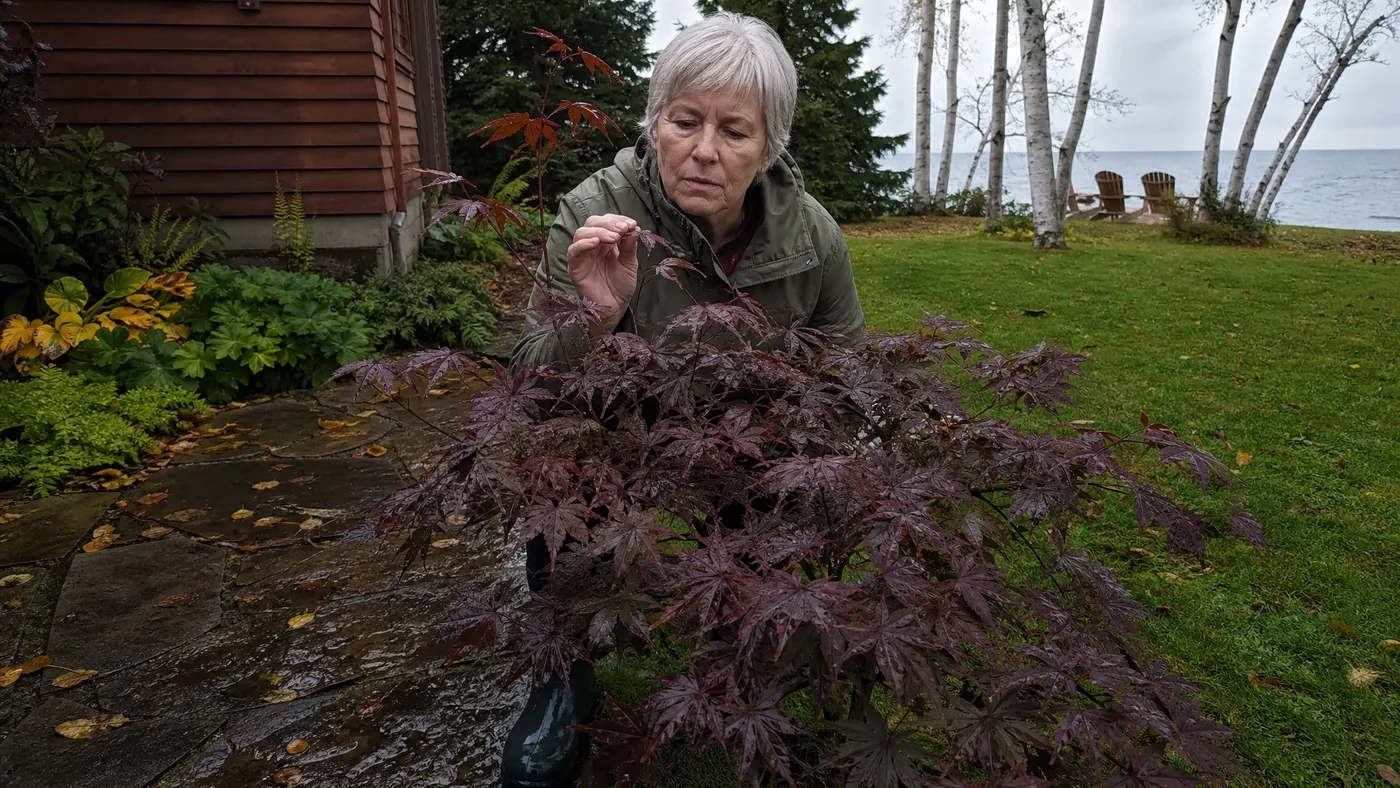
This season in our rows we tagged two Japanese Red Maples that both looked yellow from the path. One carried a single pale leaf. The other had lost its color on a whole side. Same complaint, different trees. So we start with one rule before any cause is named: count. Count the yellow leaves on one twig, then count how many twigs are affected, then note whether the yellow leaves are old ones by the trunk or new ones at the tips.
Below, you'll find out all about why a red-leaved Acer palmatum yellows or drops its leaves early, including pale new growth, wet roots, July heat, first-year transplant shock, a single dying branch and the autumn yellow that needs nothing from you. A wrong fix can cost you a season. The right one keeps the canopy.
Green Veins on Pale Japanese Red Maple Leaves
New leaves at the shoot tips that go pale between the veins while the veins stay green point to iron chlorosis. Utah State Extension says chlorotic leaves are yellow with a network of dark green veins, caused by iron deficiency, usually in soil with a pH above 7.0.
The iron is in the ground. The tree cannot reach it. On a red-leaved tree the pale areas can read as washed-out bronze, so judge by the veins, not the overall color.
Read the Soil Test
Run a soil test before you buy anything. Sample the top of the root zone under the canopy in two or three spots and send it to your state lab. The red-leaf form wants acid soil, below pH 6.0, though acid or neutral soil both suit it.
A reading above 7.0 under a tree with veined new leaves settles the question. Lime-based fill, a concrete foundation or drive nearby, and alkaline irrigation water are the usual sources.
A reading below 7.0 means look elsewhere. Wet roots are the next suspect, and they are covered below.
Fix It Slowly
Lowering soil pH takes a season or more, and it is not something to rush. Ask your extension office for a product and rate based on your test and soil type, because too much acidifier burns roots.
Ordinary iron products often do little in high-pH soil. USU names one exception: the only chelate that works well there contains FeEDDHA, so read the label for that word. Add shredded bark or leaf mold as mulch, and see our guide to soil pH, drainage and mix.
Judge progress on new growth only. Leaves already open and yellow will not turn back to green.
Yellow Japanese Red Maple Leaves in Wet Soil
Yellowing that starts on the lower or inner leaves, or spreads evenly over the whole tree, with soil that stays damp under the mulch, is a root problem. Waterlogging is among the causes of maple scorch, because leaves lose water faster than the roots can supply it.
Drowned roots cannot supply it. The leaves yellow, then brown, then drop, even though the soil is soaked. The species wants evenly moist, well-drained soil, and the second half of that phrase is the one trees fail on.
Check Drainage Depth
Dig a hole about a trowel's depth beside the root zone, then a deeper one with a spade. Look at the soil on the way down. Gray, sour-smelling or sticky clay means roots are short of air.
Fill the hole with water and come back the next morning. If water still stands there, the site holds water too long for this tree. If it drains within a few hours, drainage is probably not your problem, and you should look at pH or heat instead.
What Recovery Looks Like
Stop all supplemental watering until the top of the soil dries. Pull mulch back from the trunk so the root flare can breathe. If the planting hole is a bowl in heavy clay, the long-term fix is to lift the tree and replant it higher, with the root flare at or slightly above grade.
Recovery is slow. Yellowing should stop spreading within a couple of weeks of drier soil. The leaves already yellow stay yellow, and the real proof is healthy new growth the following spring.
Japanese Red Maple Leaves Dropping in July Heat
Green or bronze leaves that turn yellow at the edges and fall during a hot, rainless spell are the tree protecting itself. A leaf that is gone cannot lose water. The species' drought tolerance is rated moderate, which means a few dry weeks are survivable but not free.
The red-leaf form also adds its own signal. The leaves turn red or purple in spring but may fade to green or bronze in summer heat. Fading is color change. Yellow and falling is water loss.
How Much Water and When
We do not know your soil, so we give you a test and not a gallon figure. Push a finger into the soil at the drip line. If it is dry past the first knuckle, the tree needs a slow, deep soak that reaches the whole root zone. Do it again when the soil dries out to that depth.
For a weekly total and local rainfall thresholds, ask your county extension office. Our summer heat care guide covers shade and mulch for hot sites. The first leaves to go are the older ones nearest the trunk, while the tips stay firm.
When to Leave It Alone
Leave the drop alone if the soil is moist, the remaining leaves are firm, and the buds at the tips are plump. The tree will hold those buds into fall. If leaves keep falling while the soil is dry, water. If they keep falling while the soil is wet, go back to the section above.
Yellowing in the First Season After Planting
A newly planted Japanese Red Maple has been moved into soil it has never touched, and its roots are few. A young tree has little stored reserve to draw on. Some yellowing and early leaf loss in the first weeks is ordinary transplant shock.
The tree is balancing a full canopy against roots that need to re-establish. Growth is slow to moderate, so the tree is also slow to bounce back.
One of the most common questions we get is whether a tree that dropped half its leaves in week three is dead. Usually it is not.
This table sorts what you see in the first season by whether it is normal and what to do.
| What you see | Usually means | What to do |
|---|---|---|
| A few lower leaves yellow in the first weeks | Normal shock | Keep soil evenly moist and wait |
| Leaves drop early in summer, twigs stay green | Common, tree is conserving water | Water deeply when the soil dries |
| Whole canopy yellow, soil soggy | Wet roots or planting too deep | Check drainage and root flare |
| Twigs dry and brittle, buds shriveled | Serious loss | Scratch test, then ask the seller |
The deciding test is the twig, not the leaf. If a scratch shows green under the bark and the buds are plump, the tree is alive and will push new growth. Our first 30 days guide covers watering and shade for the early weeks.
Worry when yellowing keeps spreading across the second summer without a clear weather or soil cause.
One Yellow Branch on a Japanese Red Maple
One branch that yellows, wilts and drops while the rest of the tree looks fine is a different problem from everything above. Water, pH and heat act on the whole tree, so they rarely pick a single limb.
The Wisconsin Horticulture extension calls sudden yellowing and wilting that starts in one section of a tree a typical symptom of Verticillium wilt, and names maple as one of the trees most commonly and severely affected.
Do not guess. Check the wood.
- Pick a twig on the yellow branch and scratch a small patch of bark with a thumbnail or knife tip. Green and moist underneath means alive. Brown and dry means that twig is dead.
- Repeat on a twig from a healthy branch for comparison.
- Cut off one affected branch with clean pruners and peel back the bark near the cut. Brown or green streaking in the wood just under the bark is a sign of Verticillium.
- Look at the base of that branch and the trunk on the same side for wounds, a mower scar or a girdling root, which can also kill one section.
- Disinfect your pruners between cuts, and send a sample to your extension office if you see streaking.
The hard part is the answer. Wisconsin says infected trees cannot be cured and will likely die eventually. Our Verticillium guide covers what to do next.
If the scratch test and the wood both look clean, the cause is a local injury, and removing the dead branch is enough.
Autumn Yellow That Needs No Fix
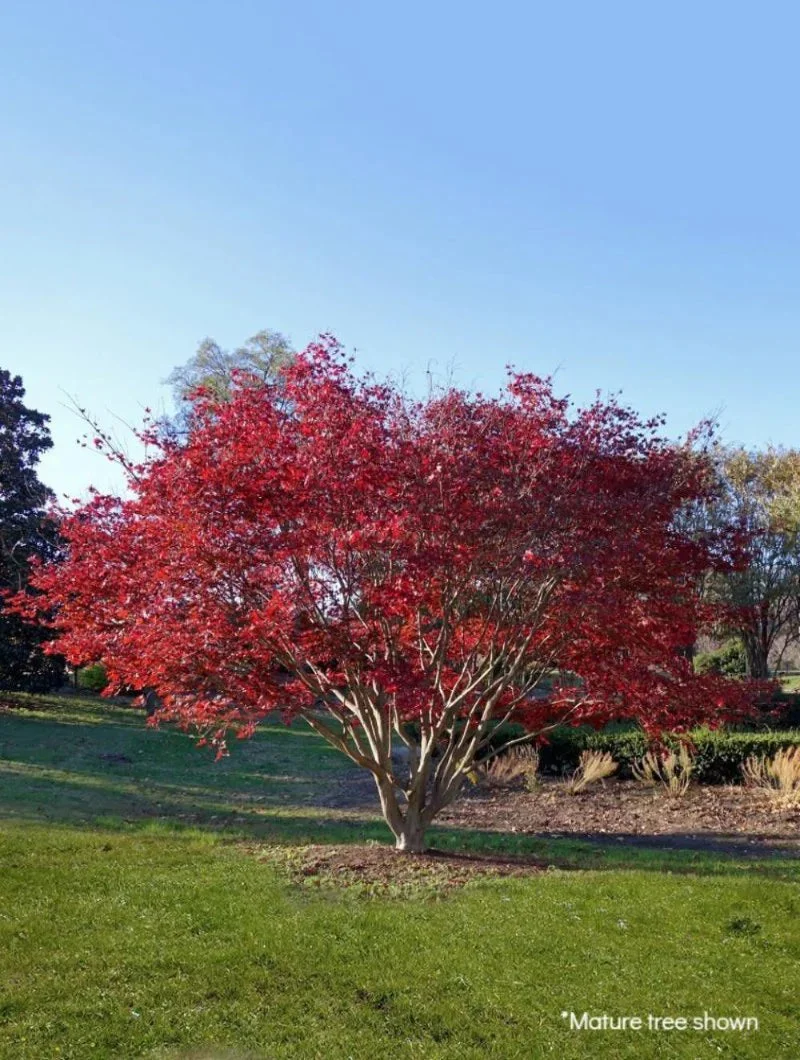
Leaves that change color evenly across the whole tree as nights cool are doing what a deciduous maple does. Do not treat it. The red-leaf form is hardy in zones 5a through 8b, so a tree in the north changes weeks before one in the south.
Your extension service can give you the average first frost date for your county, and because Japanese maples are late to change color, color and leaf drop usually follow it by a few weeks.
Three signs tell you it is natural. The change comes in the right season. It hits the whole canopy at about the same pace. The soil is neither soggy nor bone dry. Our fall color guide shows what a normal year looks like.
When Early Is Too Early
A stressed tree can shed leaves a few weeks ahead of its neighbors. That is a signal about the summer, not about autumn. Look for crisp brown edges, dry soil or a recent wet spell. If you find none, wait.
Do not fertilize, prune or water heavily in response. Feeding late pushes soft growth that frost will kill, and pruning a tree that is already shutting down gains nothing.
Reading Japanese Red Maple Yellow by Pattern
When more than one clue shows up at once, work through them in a fixed order. First, ask whether the yellow is on one branch only. If it is, stop and run the scratch test, because that is the only pattern here with no cure and the one that rewards early action.
Second, ask whether it is on the new growth at the tips with green veins. If so, test the soil pH. Third, ask whether it is on the older, inner leaves or all over. If so, check drainage with a hole before you do anything about water.
Fourth, look at the weather and the calendar. Yellow and falling leaves after hot dry weeks, with firm tips and plump buds, are heat drop. Yellow in the first months after planting, with a green scratch test, is shock. Yellow in the right autumn weeks, evenly across the tree, is just autumn.
Speed adds a second filter. Yellowing that creeps over weeks is usually soil: pH or wet roots. Yellowing that appears in days is usually water, heat or a vascular problem, and a single limb going in days is the one to take seriously.
Always take the check you can do with a trowel before the one that needs a lab. If two causes seem to fit, fix the cheaper one first and watch what spreads.
Count First, Then Treat Your Japanese Red Maple
Most yellow Japanese Red Maple leaves come from the soil: a pH above 7.0 or roots sitting in water. Heat and transplant shock cause yellow and fall but leave the twigs alive. A single yellow branch is the pattern to check first, and autumn color needs nothing from you. None of these gets better by guessing, so write down what you see before you act.
Here is a dated rule of thumb. Note the pattern today, check the same leaves in ten days, and treat only what has spread. Leaves that stayed the same were not the problem.
Japanese Red Maple
Nursery-grown Japanese Red Maple in sizes from 3 Gallon 2-3 ft, shipped to your door.
From $118.33
Shop Now →Each Japanese Red Maple we raise gets loose, acid, well-drained soil with steady moisture, since that is the footing this tree asks for. Our small business of growers raises every plant we sell, and we look over the leaf color and roots before a tree goes out so your first season goes smoothly. If you would like to avoid the yellowing and early leaf drop covered above, start with a healthy tree from our nursery.