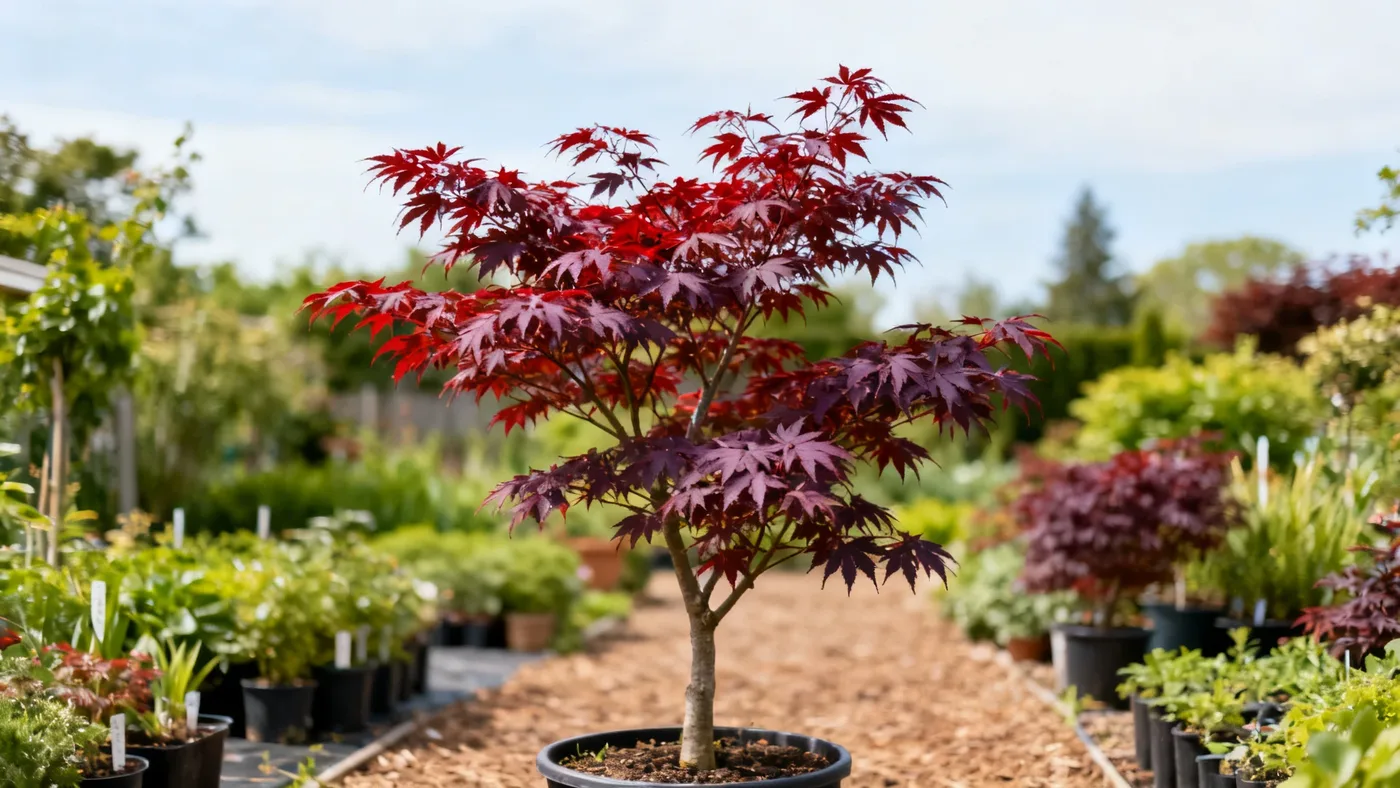
Japanese Red Maple FAQ: Answers to the Top Questions
Whether you've just planted a Japanese Red Maple or are thinking about adding one to your garden, common Japanese maple questions pop up quickly. This Japanese red maple FAQ covers the most practical care questions grouped by topic so you can find answers without hunting. We focus on real growing scenarios and the specific numbers that matter.
Planting and Site Selection
When should I plant a Japanese Red Maple?
Plant in early spring or fall, avoiding peak summer heat. Early planting allows roots to establish before summer stress; fall planting lets roots grow through cool months before spring growth resumes. Summer planting stresses young trees and should be avoided.
How far from my house should I plant a Japanese Red Maple?
Standard upright red forms should be 10 to 15 feet away from your home or other trees to accommodate their mature width of 12 to 20 feet. If you've chosen a dwarf or weeping cultivar, these typically reach only 8 to 12 feet wide, so you can space them closer. Always confirm your specific plant's mature spread before deciding placement.
Can I fit a Japanese Red Maple in a small yard?
Yes, if you select a dwarf or cutleaf cultivar. These compact forms typically mature at 6 to 10 feet tall and 8 to 12 feet wide, making them practical for limited space. Verify the exact cultivar or cultivar group at purchase to ensure it will fit your space.
What soil does a Japanese Red Maple need?
Plant in rich, well-drained loam high in organic matter, with a soil pH between 5.5 and 6.5 (slightly acidic). If your soil is heavy clay or neutral to alkaline, amend it thoroughly with compost before planting. Proper soil preparation is one of the best investments for long-term tree health, so don't skip this step. See our guide on how to plant a Japanese Red Maple tree for detailed soil preparation.
Watering and Drainage
How often should I water a Japanese Red Maple?
Water consistently and moderately, especially for the first 2 to 3 years after planting. Young trees need regular watering to keep soil evenly moist; neither soggy nor bone-dry. Once established, continue watering during dry spells rather than assuming rainfall is enough.
Is a Japanese Red Maple drought-tolerant?
Drought tolerance is low to moderate, even for established trees. Young trees are especially sensitive to drought stress and require consistent moisture. During prolonged dry periods, water more frequently to prevent leaf scorch and stress.
What happens if my Japanese Red Maple stays wet?
Japanese Red Maple does not tolerate standing water or poorly drained soil. Root rot develops quickly in waterlogged conditions, potentially killing the tree within a season. If your site is naturally soggy, improve drainage with gravel and organic matter amendment, or choose a better-drained location.
Can I tell if my Japanese Red Maple has a watering problem?
Drought stress shows as leaf scorch (brown, papery leaf edges) and premature leaf drop. Overwatering causes root rot, wilting despite wet soil, and leaf yellowing. Both problems are easier to prevent than fix, so getting soil moisture right in the first 2 to 3 years is critical.
Light and Leaf Color
How much sun does a Japanese Red Maple actually need?
Japanese Red Maple grows in full sun to part shade. In hot-summer regions, afternoon shade preserves vibrant red color and prevents leaf scorch, which is especially important for young trees. If your climate has intense midday heat, plan for some afternoon protection.
Why is my Japanese Red Maple turning green instead of red?
Color fading happens when trees are planted in deep shade or exposed to intense summer heat. Some cultivars also naturally shift greener in deep shade or heat depending on genetics. If you want consistent red color, ensure at least part of the day receives direct sun and consider afternoon shade in your hottest months.
What is leaf scorch and how do I prevent it?
Leaf scorch is environmental damage (not disease) caused by hot sun, wind, or drought stress drying leaf edges, turning them brown and papery. Prevent it by maintaining consistent soil moisture, providing afternoon shade in hot climates, and sheltering young trees from harsh wind. This condition resolves with improved care and typically does not indicate a serious problem.
Will a Japanese Red Maple in part shade still have red fall color?
Yes, even part-shaded trees produce striking fall color, though intensity may be less vivid than sun-grown specimens. Most cultivars deliver reds and oranges in autumn regardless of spring and summer light, so don't worry if your tree is partly shaded.
Growth Rate and Size
How fast does a Japanese Red Maple grow?
Growth is slow to moderate at roughly 6 to 12 inches per year. This means you are committing to a long-term tree; plan for 10 to 15 years before it reaches significant landscape size. Patience is part of growing Japanese Red Maple, but the payoff is a graceful, long-lived specimen.
How tall will a standard Japanese Red Maple get?
Standard upright red forms mature to 15 to 25 feet tall. Dwarf and cutleaf forms are much shorter, typically 6 to 10 feet tall. Cultivar selection is critical if height is a limiting factor in your space.
How wide does a Japanese Red Maple spread?
Standard forms reach 12 to 20 feet wide at maturity. Dwarf and weeping types spread 8 to 12 feet. These widths are why spacing from your home and neighboring plants matters from day one.
Pruning and Maintenance
Does a Japanese Red Maple need lots of pruning?
Minimal pruning is required if the tree is sited correctly with good light and adequate space. Remove only dead, crossing, or crowded branches to maintain a natural, graceful form. Excessive pruning weakens the tree and spoils its elegant branching structure.
When is the best time to prune a Japanese Red Maple?
Prune during late fall to midwinter dormancy to avoid heavy sap bleed. Do structural or corrective work while the tree is leafless; avoid major cuts in spring and summer when the tree is actively growing. This timing minimizes stress and reduces disease risk.
Should I fertilize my Japanese Red Maple?
Light feeding with a balanced, low-nitrogen fertilizer in early spring is usually sufficient. Overfeeding causes leggy growth and weaker color, so avoid heavy fertilization unless a soil test shows a genuine deficiency. Most established trees need no fertilizer if planted in organic-rich soil.
Problems and Solutions
My young tree has dark streaks on the trunk. What is that?
This is likely sunscald, which occurs on young tree trunks in full sun when temperature swings between sunny days and cold nights crack the bark. In the first few years, whitewash the trunk or wrap it loosely with tree guard material, especially in winter. This problem resolves once the tree is larger and bark thickens.
What pests bother Japanese Red Maple?
Common pests include aphids, scale insects, borers, and Japanese beetles. Most infestations are minor and resolve on their own or with minor intervention. Major outbreaks warrant targeted treatment, though healthy, established trees rarely experience serious damage.
What diseases should I watch for?
Diseases include verticillium wilt, anthracnose, and root rot (in poorly drained soil). The best prevention is proper siting with good drainage, air circulation, and light. If disease appears, improve the growing conditions and consult a local extension service for species-specific advice.
Will deer eat my Japanese Red Maple?
Deer find Japanese Red Maple only moderately resistant, so they will browse it, especially when the tree is young and tender. In high-deer areas, protect saplings with fencing or barriers until they are large enough to tolerate some browsing without serious damage.
Hardiness and Regional Growing
Which USDA zones can grow Japanese Red Maple?
Japanese Red Maple is hardy in zones 5 through 8, with some cultivars tolerating zone 9 if given afternoon shade. Check your local zone and ask your nursery whether your specific cultivar can handle your climate's summer heat before purchasing.
Can I grow Japanese Red Maple in a very cold climate?
Zone 5 is the cold limit for most red-leaved forms. If you are in zone 5, select cultivars known for cold tolerance and provide mulch and windbreaks for young trees. If you are in zone 4 or colder, this plant is not reliable for your climate.
Container Growing
Can I grow a Japanese Red Maple in a pot?
Yes, especially dwarf and smaller-growing selections thrive in containers. Use a large pot (at least 20 gallons) with drainage holes and rich, well-draining potting soil. Container-grown trees reach smaller mature sizes than in-ground specimens and can be moved seasonally. See our care guide for sun, water, soil, and pruning for container-specific tips.
How do I winter a potted Japanese Red Maple?
Container-grown trees need root protection in freezing winters because soil in pots freezes solid, unlike insulated in-ground soil. Move the pot to a sheltered location like a garage or shed, or wrap the pot with burlap and insulation. In mild zones, mulching the pot surface helps, though moving it is safest.
How long will my Japanese Red Maple live?
With good siting and care, a Japanese Red Maple can live 80 to 100+ years or more. This is a true long-term landscape investment, so establish good care practices from the beginning and plan for a tree that will outlive you.
Quick Reference Checklist
| Care Factor | Specifications |
|---|---|
| USDA hardiness zones | 5–8 (zone 9 with afternoon shade) |
| Mature height | 15–25 ft (standard); 6–10 ft (dwarf) |
| Mature width | 12–20 ft (standard); 8–12 ft (dwarf/weeping) |
| Annual growth rate | 6–12 inches per year |
| Sun exposure | Full sun to part shade; afternoon shade in hot climates |
| Soil pH | 5.5–6.5 (slightly acidic) |
| Soil type | Rich, well-drained loam high in organic matter |
| Water needs | Consistent moisture; low drought tolerance when young |
| Spacing from structures | 10–15 ft (standard); less for dwarf types |
| Best planting time | Early spring or fall |
| Critical establishment period | First 2–3 years |
| Years to significant size | 10–15 years |
| Pruning window | Late fall to midwinter dormancy |
| Container suitable? | Yes (dwarf cultivars preferred) |
| Expected lifespan | 80–100+ years |