
Propagating Japanese Red Maple: Seed, Cuttings and Grafting
There are three ways to make a new Japanese red maple, and they are not equally good. Seed is easy and rewarding. Cuttings are hard and usually fail. Grafting is how nurseries make the named trees you see for sale, and it takes practice. If you are propagating Japanese maple for the first time, start with seed, and go in knowing what you will and will not get.
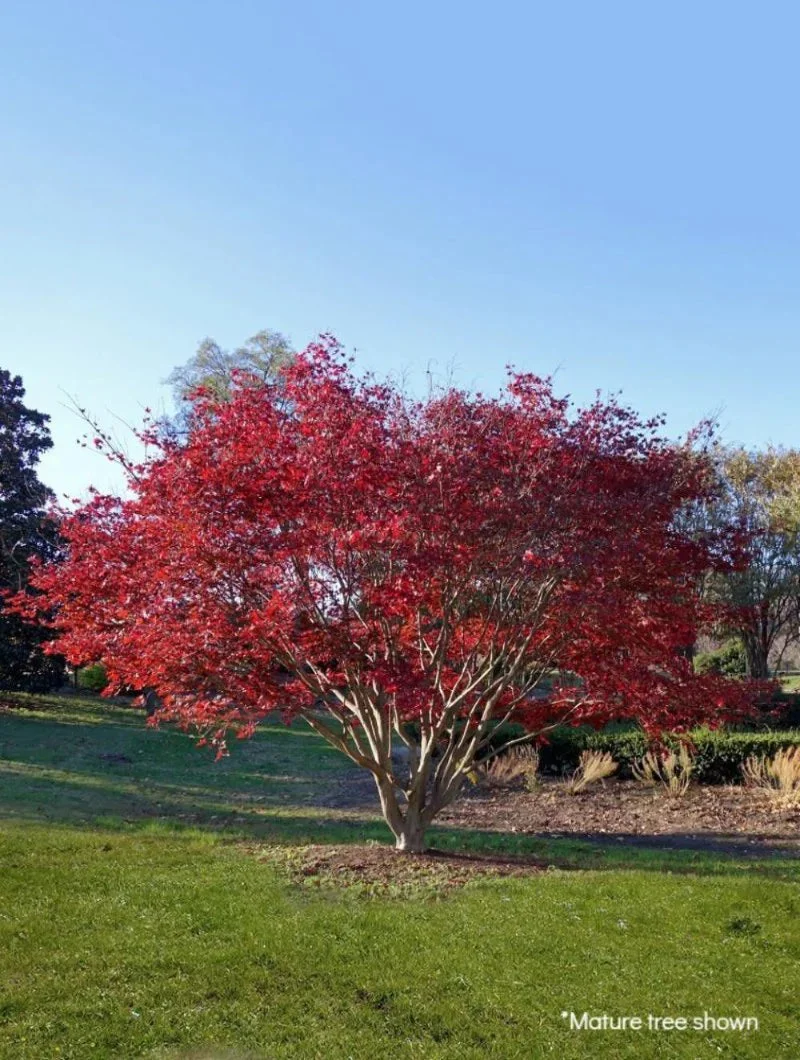
The short version of our position: grow seeds for the joy of it, and buy a grafted tree if you want a specific look. Which look is a separate question, and our comparison of Japanese red maple varieties and cultivars covers it.
Which Method Fits You
| Method | Difficulty | Best season | What you get |
|---|---|---|---|
| Seed | Easiest | Collect in fall, sow in spring | A maple, not necessarily the parent |
| Softwood cuttings | Hard | Early summer | A clone, if one survives |
| Grafting | Learnable, expect early failures | Winter | A true-to-type clone of a named cultivar |
Who should skip all three: anyone who needs a particular leaf color or size by a certain date. A seedling takes years to show its habit, and this tree is slow. Growth is roughly 6 to 12 inches a year, and significant landscape size takes 10 to 15 years.
Path 1: Japanese Maple From Seed
Growing Japanese maple from seed is the right first project. The seeds are free, the method is forgiving, and the tree you end up with is a real Acer palmatum.
The big caveat: seedlings segregate
Red-leaved Japanese maples grown from seed do not come true. Seedlings of a red tree segregate, meaning the offspring vary. Expect some to be reddish-purple like the parent, some to turn green, and a spread of sizes and habits. This is why unnamed, seed-grown stock is sold as a generic red selection (often under the Atropurpureum Group label) rather than as a named cultivar. You get a maple. You do not get that maple.
Materials
- Fresh samaras (the paired winged seeds) from a healthy tree
- A zip-top bag or lidded container
- Damp (not wet) peat moss, vermiculite or sand
- Refrigerator space
- Seed trays or small pots with well-drained mix
- Plant labels and a marker
Steps
- Collect in fall. Pick samaras once they turn brown and papery. Seeds from green, unripe samaras are the most common reason for no germination.
- Remove the wings and clean the seed. Rub off the wings. Discard seeds that are flat, shriveled or have visible holes (often insect damage).
- Stratify in the refrigerator. Mix seed with damp medium in a bag and keep it cold and moist for 90 to 120 days. This follows the cold-moist stratification guidance in university extension propagation references, which treat it as the way to break dormancy in maple seed. Label the date on the bag.
- Check monthly. The medium should feel like a wrung-out sponge. Open the bag briefly for air. Toss any seed that molds.
- Sow in spring. Once the cold period is complete, sow into a free-draining, humus-rich mix and cover lightly. Keep evenly moist, never soggy, because root rot in poorly drained soil is a documented problem for this species.
- Give light shade. Young seedlings scorch easily in hot sun and wind.
- Pot up when crowded. Move each seedling to its own pot as roots fill the tray. Our guide to repotting a Japanese red maple covers root handling and timing.
Expected results
With fresh seed and a full cold period, you may see a good share germinate in spring, though rates vary by tree and year. Seedlings are slow, so plan on several seasons in pots before any are ready for the ground. Flowers may appear within a few years. Keep every seedling until fall color and leaf color show, then decide which ones earn a garden spot.
Path 2: Japanese Maple Cuttings (Honest Odds)
Japanese maple cuttings are the method that most often disappoints. Softwood cuttings taken in early summer can root under mist or high humidity, but strike rates are low even for professional propagators with misting benches. Most home attempts fail. We would rather say that plainly than have you lose a prized branch to a hopeful afternoon.
Materials
- Sharp, clean pruners or a razor blade
- Rooting hormone
- Sterile, fast-draining rooting mix
- Small pots and a clear dome or humidity tent
- A bright, shaded spot out of direct sun
Steps
- Take cuttings in early summer from new, flexible growth that is still soft but starting to firm up.
- Cut a few inches long below a node. Strip the lower leaves and halve the remaining ones to reduce water loss.
- Dip in rooting hormone and stick into pre-moistened mix.
- Hold humidity high under a dome, with bright shade and no direct sun.
- Be patient and expect losses. Do not pull cuttings to check for roots. Resistance when you tug gently is the signal.
Common mistakes
- Taking wood that is too old or too soft
- Letting the mix dry once, even briefly
- Putting the dome in direct sun, which cooks the cutting
- Starting with one or two cuttings instead of a dozen
The upside: a cutting that roots is a clone of the parent. The downside: cutting-grown plants are often weaker than grafted ones, and the odds are poor. Treat it as an experiment.
Path 3: Grafting Japanese Maple
Grafting a Japanese maple is how named cultivars such as 'Bloodgood', 'Emperor I' and 'Fireglow' are produced. A shoot (the scion) from the cultivar you want is joined to a rooted seedling (the understock). It is the only way to clone a named maple at scale, because seed will not reproduce it and cuttings root too unreliably.
Home grafting is a learnable winter skill. Plan on failing the first year. Even a clean cut that looks perfect often fails to take.
Materials
- Potted, established seedling understock (grown from seed as above)
- Dormant scion wood from the cultivar you want to copy
- A very sharp grafting knife
- Grafting tape or rubber strips
- A cool, protected spot and a way to keep humidity steady around the union
Steps
- Collect scion wood while dormant. Choose healthy, pencil-sized shoots and keep them cool and damp until use.
- Prepare the understock. Use a seedling with a clean, straight stem, in a pot you can move to shelter.
- Make matching cuts. Cut the scion and the understock so their cambium layers (the thin green layer under the bark) line up on at least one side.
- Join and wrap. Fit the pieces tightly and wrap with tape so nothing shifts.
- Protect the union. Keep it in a cool, humid, frost-free spot while it heals.
- Watch for bud break. Swelling buds on the scion in spring are the first sign of a take. Remove growth from the understock gradually, not all at once.
What commonly goes wrong
- Cambium layers not aligned
- Scion wood that dried out before use
- A loose wrap that lets the union move
- Letting understock shoots take over (see the guide to rootstock suckers and green branches)
Why a Grafted Tree Costs What It Costs
A named cultivar is not seed-grown, so every one has been grafted by hand onto an understock that itself had to be grown first. That is years of nursery labor and space before a tree is ready to ship. The price reflects that work, not markup. If you want a specific color, a specific mature size, or a dwarf or weeping habit, buying the graft is the dependable route, and a seedling is a gamble.
If you simply want a good red Japanese maple for the yard, our nursery-grown trees are available at the shop in 3-gallon, 5-gallon and 7-gallon sizes. Check our stated sizes against your site, and note that the exact cultivar of unnamed seedling-grown stock can vary.
Tips for Any Method
- Choose a healthy parent tree with no signs of verticillium wilt or leaf scorch. A weak parent gives weak seed and weak scion wood.
- Check that the finished tree suits your zone. Japanese red maple is generally rated for USDA zones 5 to 8, and some cultivars tolerate zone 9 with afternoon shade.
- Remember that patent or plant-variety protections may apply to some cultivars. Check before you propagate one to share or sell.
- For region-specific timing, ask your local cooperative extension office.
Quick Reference
| Item | Seed | Cuttings | Grafting |
|---|---|---|---|
| Difficulty | Easiest | Hard | Learnable, expect first-year failures |
| Timing | Collect in fall, stratify 90 to 120 days, sow in spring | Early summer, softwood | Winter, dormant scion |
| True to parent? | No, seedlings vary (many go green) | Yes, if it roots | Yes |
| Needs | Fridge, damp medium, pots | Mist or humidity, hormone | Seedling understock, sharp knife |
| Best for | A fun, low-cost project | Experiments only | Making a named cultivar |
Japanese Red Maple
Nursery-grown Japanese Red Maple in sizes from 3 Gallon 2-3 ft, shipped to your door.
From $118.33
Shop Now →