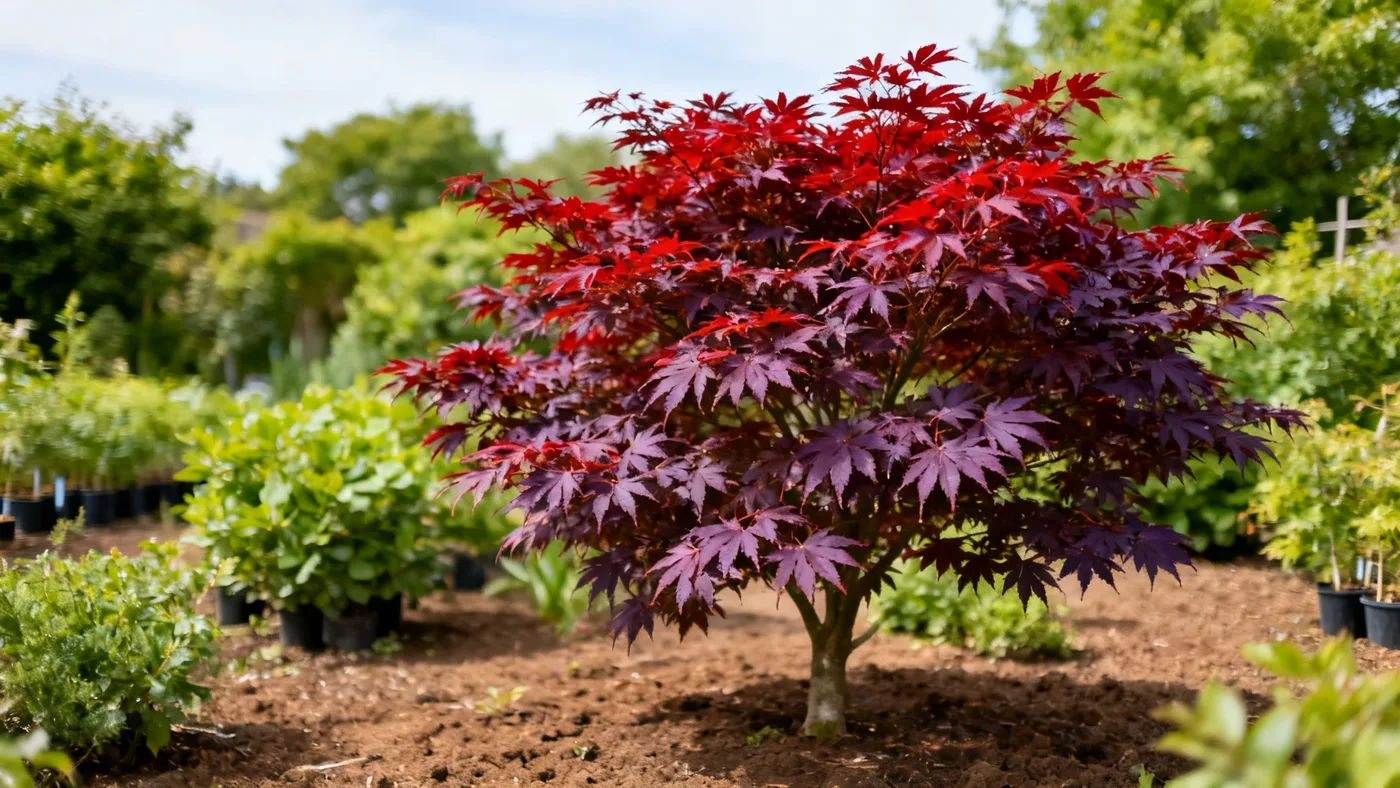
Where Does Japanese Red Maple Come From? Origin and History
Japanese red maples have captivated gardeners worldwide for centuries, but their story begins in the forested mountains of East Asia. Understanding the origin and history of Acer palmatum reveals why this tree thrives in certain conditions and what makes its red-leaved forms so prized. This FAQ explores the geographic roots, botanical classification, and journey of Japanese red maple from native habitat to gardens across North America and Europe.
Geographic Origin and Native Range
Where is Japanese red maple native to?
Japanese red maple (Acer palmatum) is native to Japan, Korea, and parts of China. These temperate woodland regions provide the cool, moist climate that shaped the species' growing requirements. The species naturally grows in mountainous areas with consistent moisture and moderate sunlight, which is why modern gardens that replicate these conditions see the healthiest specimens.
Is Japanese maple native to the United States?
No, Japanese maple is not native to the United States. The species evolved in East Asian forests and was deliberately introduced to American gardens by horticulturists in the 19th century. While it now grows successfully across USDA zones 5-8 (and zone 9 with afternoon shade), it remains a non-native ornamental tree entirely dependent on intentional cultivation here.
What is the native range of Acer palmatum exactly?
The native range of Acer palmatum spans Japan (where it is most widespread), Korea, and portions of China. Within these regions, the species occupies cool, moist woodlands and forest understories, typically in areas with afternoon shade and rich, well-drained loam high in organic matter. This natural habitat directly informs the ideal growing conditions gardeners should provide.
Does Japanese red maple grow wild in Japan today?
Yes, Japanese red maple still grows wild in Japanese forests, particularly in mountainous and woodland areas. Both green and red-leaved forms occur naturally in the wild, though the dramatic red foliage we prize in 'Atropurpureum Group' selections and cultivars like 'Bloodgood' represents centuries of human selection and cultivation. Modern wild populations and cultivated varieties are distinct, with the red forms being refined through deliberate breeding.
Are Japanese maples found naturally in Korea and China?
Yes, Acer palmatum populations exist in the wild in both Korea and parts of China as part of the species' native range. However, the red-leaved forms commonly grown in Western gardens are primarily descended from Japanese-selected cultivars. Chinese and Korean populations contribute genetic diversity to the species but have not been intensively cultivated for ornamental characteristics in the same way Japanese populations have.
Botanical Classification and Nomenclature
What is the botanical name for Japanese red maple?
The botanical name is Acer palmatum, with red-leaved forms often sold under 'Atropurpureum Group' or as unnamed seedling-grown red selections at quart size. The family is Sapindaceae, formerly classified as Aceraceae. "Acer" is the genus name for maples worldwide, while "palmatum" refers to the palmate (hand-shaped) leaf structure with five to seven lobes.
Why is it called "Acer palmatum"?
The name "Acer palmatum" comes from the tree's deeply lobed leaves that resemble an open hand (palm). "Acer" is the Latin genus name for maple trees, and "palmatum" means "palmate" or "hand-shaped" in botanical Latin. This naming perfectly describes the defining visual feature of the species: its distinctly palmate foliage.
What family does Japanese red maple belong to?
Japanese red maple belongs to the Sapindaceae family, which was formerly classified as Aceraceae. This family includes soapberry trees and horse chestnuts in addition to maples. The reclassification in modern taxonomy reflects genetic and biochemical studies that group these plants more accurately than earlier systems did.
Are there other names for Japanese red maple?
Common alternative names include red-leaf Japanese maple, Japanese maple (red form), and Atropurpureum maple. In Japan, it is known by regional names reflecting local populations. These synonyms reflect both the geographic origin and the distinctive red foliage that distinguishes ornamental selections from wild green-leaved forms.
History and Introduction to Western Gardens
When did Japanese red maple arrive in Europe and North America?
Japanese red maples were introduced to Europe in the early-to-mid 19th century, with significant expansion of cultivar development and distribution occurring from the 1870s onward. North American gardens received them somewhat later, with widespread adoption in the United States and Canada accelerating in the early 20th century. The availability of specific red cultivars like 'Bloodgood' in the mid-20th century further increased popularity.
How did Japanese red maple cultivation spread globally?
Plant explorers, Japanese gardeners, and Western horticulturists facilitated the spread through seeds, grafted specimens, and detailed cultivation documentation. Named cultivars were propagated via grafting to ensure true-to-type red foliage and growth habit. Nursery networks in Japan, Europe, and North America expanded distribution, making Japanese red maple a standard offering in temperate-zone garden centers by the late 20th century.
Why did Japanese maples become popular in Western gardens?
Japanese red maples were prized for their year-round visual interest: delicate spring foliage, consistent red or reddish-purple summer color, vivid red and crimson fall color, and graceful branching structure in winter. Their slow to moderate growth rate (roughly 6-12 inches per year) and manageable mature size (15-25 feet for standard upright forms) made them ideal for residential landscapes. The cultural fascination with Japanese aesthetics and garden design also elevated their status as symbols of refinement and horticultural sophistication.
What role did Japanese gardening philosophy play in the tree's rise?
Japanese gardening principles emphasizing naturalness, asymmetry, and deliberate simplicity aligned with Western Romantic garden movements of the 19th century. Japanese red maple became a focal point in Japanese and Zen-style garden installations across Europe and America. Its integration into high-status private gardens and public botanical collections elevated it from a mere exotic import to an essential specimen tree in temperate landscape design.
Botanical Development and Cultivars
How many cultivars of Japanese red maple exist?
Over 300 named cultivars of Acer palmatum have been developed and documented, with ongoing selection and registration continuing. However, only a fraction are widely available in the commercial nursery trade in North America and Europe. Common varieties include 'Bloodgood', 'Emperor I', 'Fireglow', and 'Crimson Queen' (a weeping dissectum form), each selected for specific color, form, or growth characteristics.
What is Atropurpureum Group?
Atropurpureum Group comprises seedling-grown red forms of Acer palmatum that are not individually named cultivars. Trees sold as generic "Japanese Red Maple" at quart size typically belong to this group, which means mature height, width, and precise fall color may vary significantly from plant to plant. This group represents the historical standard for red maples before modern cultivar specialization, and remains the most affordable option for home gardeners.
When were popular cultivars like 'Bloodgood' developed?
Many of the most popular red cultivars, including 'Bloodgood', were developed in Japan and selected/refined by Western nurseries during the 20th century. The exact date of origin for individual cultivars is often obscure, as Japanese horticulture transmitted cultivars through oral tradition and practice rather than detailed published records. 'Bloodgood' and similar long-standing cultivars have proven their hardiness and landscape value over 50-100 years of cultivation, making them reliable choices for USDA zones 5-8.
How is cultivar identity maintained in Japanese red maple trees?
Named cultivars are propagated through grafting to preserve exact genetic characteristics and ensure true-to-type red foliage and form. Seed-grown selections like those in Atropurpureum Group will show variable color and habit because they are sexually reproduced. Understanding whether your plant is a grafted cultivar or a seedling-grown selection helps predict its mature appearance and landscape role.
Distinguishing Japanese Red Maple from Native Species
Is Japanese maple the same as native American red maple?
No, Japanese maple (Acer palmatum) and native North American red maple (Acer rubrum) are entirely different species in different geographic origins. Acer rubrum is a large native shade tree that can exceed 50 feet, while Acer palmatum reaches 15-25 feet and serves as a specimen or accent plant. Despite the confusing common name "red maple" for both, they are unrelated in terms of origin, growth pattern, and landscape use.
Why are Japanese maple and Acer rubrum confused?
Both species are commonly called "red maple," referring to their red flowers, fruit, or fall foliage. However, Acer rubrum is native to eastern North America and behaves very differently from the Japanese species. The naming confusion has created a significant problem for gardeners unfamiliar with Acer palmatum's East Asian origin, sometimes leading people to dismiss the Japanese form as redundant.
What is the key difference in native range?
Acer palmatum originates from Japan, Korea, and China, while Acer rubrum is native to the eastern United States and Canada. This fundamental geographic separation means the two species evolved under different climate and soil conditions. Acer rubrum is a native American tree used for natural restoration, while Acer palmatum is a deliberately cultivated ornamental import.
Are there any safety concerns unique to origin-based species confusion?
Acer rubrum wilted or dried leaves are toxic to horses, but Acer palmatum is not generally listed as toxic to pets or people. However, this distinction can be easily missed when someone confuses the two species by common name alone. Always verify that you are planting true Japanese red maple (Acer palmatum) if the purpose is ornamental or close to equine areas.
Growing Characteristics Rooted in Origin
Why does Japanese red maple prefer afternoon shade in hot climates?
The species evolved in cool, moist East Asian woodland understories with dappled light, so full sun in hot-summer regions (zone 9 and warmer) causes leaf scorch and color fading. Afternoon shade in these climates preserves the red foliage that makes the tree ornamentally valuable. This origin-driven preference is built into the plant's physiology, not a caprice of cultivation.
What soil requirements stem from the tree's native habitat?
Japanese red maple naturally grows in rich, well-drained loam high in organic matter with slightly acidic pH around 5.5-6.5. The species does not tolerate standing water or drought extremes, reflecting its forest understory origins where moisture is consistent but not stagnant. Replicating this origin-based soil composition prevents root rot and other establishment problems.
How long do Japanese red maples live?
With good siting and care, Japanese red maples live 80 to 100+ years or longer. This lifespan is typical for temperate-zone trees and reflects the species' ability to adapt to cultivation outside its native range. The slow to moderate growth rate means trees continue to expand and mature for decades, providing multigenerational landscape value.
Do all red-leaved forms have identical growing requirements?
Most red-leaved Acer palmatum selections share the same general requirements for moderate moisture, slightly acidic soil, and part shade to full sun conditions across zones 5-8. However, cultivar-specific hardiness can vary by a full zone depending on the genetic line, so checking your local extension service is wise for zone boundaries. Weeping and deeply lobed dissectum forms (like 'Crimson Queen') may be slower-growing and require more shade protection than upright standard forms.
Quick Reference: Japanese Red Maple Origin at a Glance
| Characteristic | Details |
|---|---|
| Native Range | Japan, Korea, parts of China |
| Botanical Name | Acer palmatum (red-leaved forms, often Atropurpureum Group) |
| Plant Family | Sapindaceae (formerly Aceraceae) |
| Native Habitat | Cool, moist woodlands; forest understory with afternoon shade |
| USDA Zones | 5-8, some cultivars tolerate zone 9 with afternoon shade |
| Introduced to West | Early-to-mid 19th century (Europe); widespread by late 20th century (North America) |
| Not Native To | United States or any place outside East Asia |
| Key Cultivars | 'Bloodgood', 'Emperor I', 'Fireglow', 'Crimson Queen' (dissectum) |
| Propagation | Named cultivars: grafted for true-to-type; Atropurpureum Group: seed-grown, variable |
| Confused With | Acer rubrum (native North American red maple, a completely different species) |
| Typical Lifespan | 80-100+ years with good care |
| Growth Rate | Slow to moderate, roughly 6-12 inches per year |
| Soil Preference | Well-drained loam high in organic matter, pH 5.5-6.5 (slightly acidic) |
| Light Preference | Full sun to part shade; afternoon shade in hot-summer climates |
| Water Needs | Moderate; consistent, even moisture; does not tolerate standing water or drought |
| Hardiness Risk | Young trees vulnerable to trunk sunscald; leaf scorch from hot sun, wind, or drought stress |
Once you understand where Japanese red maple comes from and how it arrived in Western gardens, proper care follows naturally. Learn more about optimal growing conditions in our Japanese Red Maple care guide covering sun, water, soil, and pruning, which applies these origin-based principles to landscape success.